
Key Takeaways
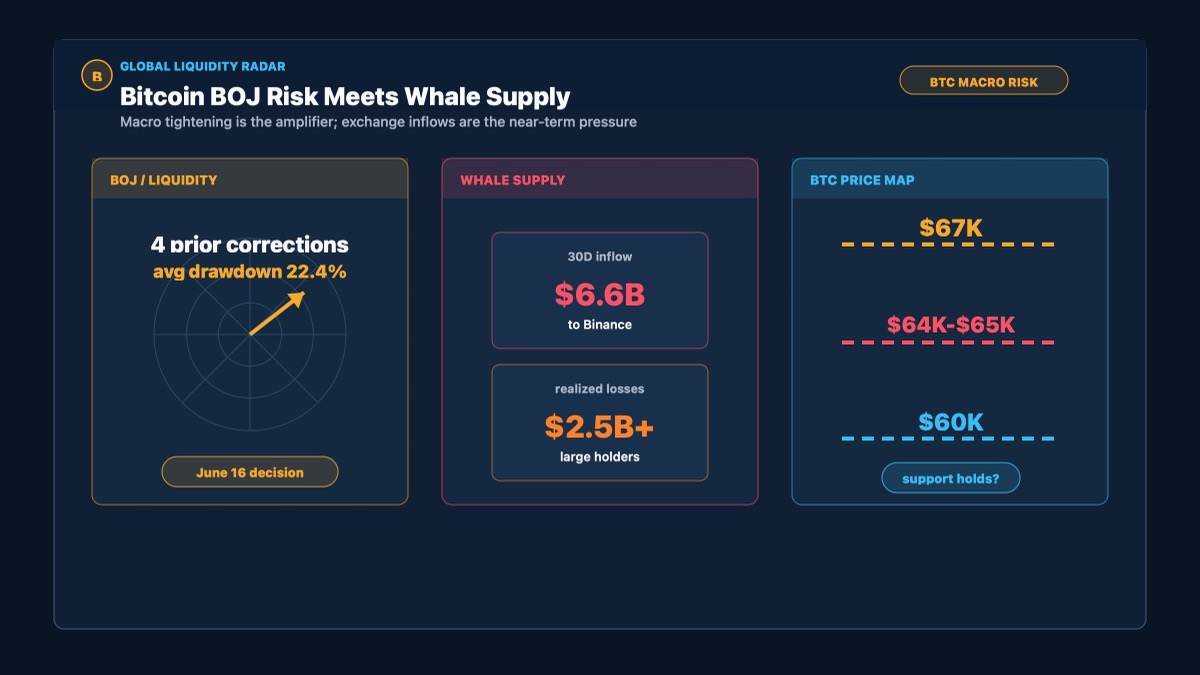
- Bitcoin has seen four major corrections after Bank of Japan rate hikes since 2024, with drawdowns averaging about 22.4%.
- The BOJ decision matters, but current whale exchange inflows and realized losses may be the more immediate BTC price pressure.
- BTC needs to reclaim $64K-$65K to reduce downside risk; losing $60K would reopen the deeper stress scenario.
What Happened
Bitcoin traders are watching the Bank of Japan again, which is not a sentence crypto people wanted to keep saying, but here we are.
According to the Cointelegraph article, Bitcoin has posted four major corrections after BOJ rate hikes since 2024. The reported drawdowns ranged from 18% to 28%, with an average decline of 22.4%. That history is why the BOJ's June 16 policy decision is getting attention.
The logic is not mystical. Japan spent years with ultra-low rates, which made the yen a popular funding currency for carry trades. Investors could borrow cheaply in yen and move capital into higher-yielding or higher-beta assets. When the BOJ raises rates, some of that structure becomes less comfortable. Traders may cut leverage, reduce risk, or unwind positions. Bitcoin can get pulled into that.
But the article makes an important distinction: BOJ policy may not be the only, or even the most immediate, issue for BTC right now.
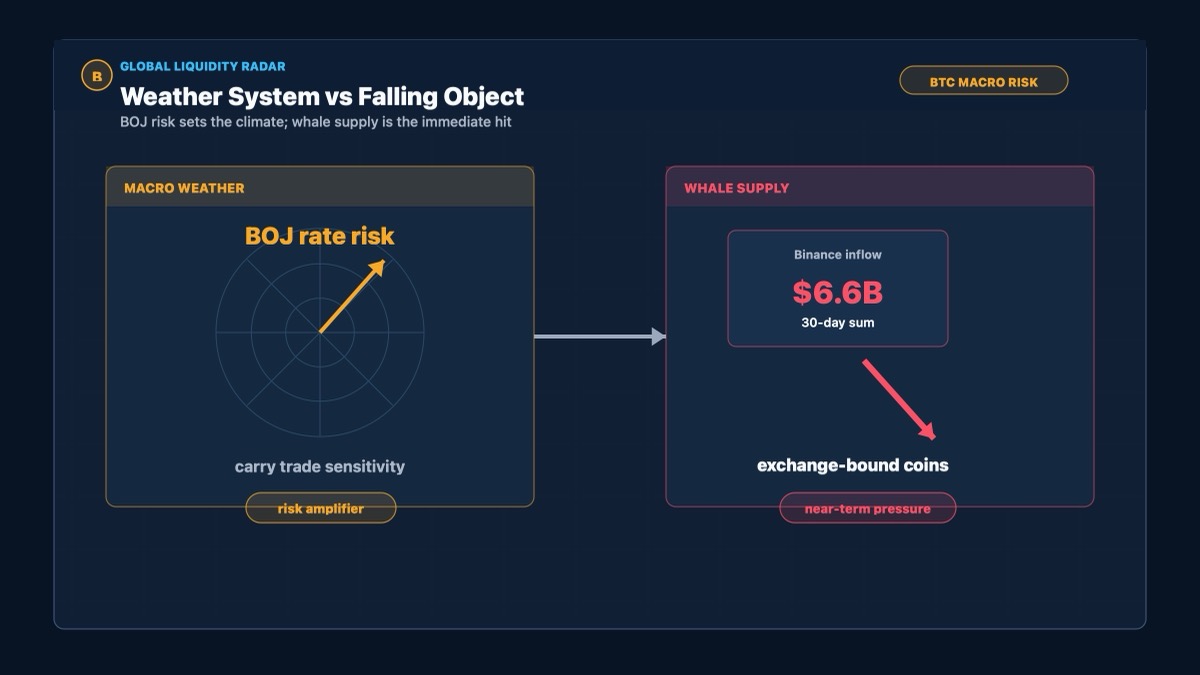
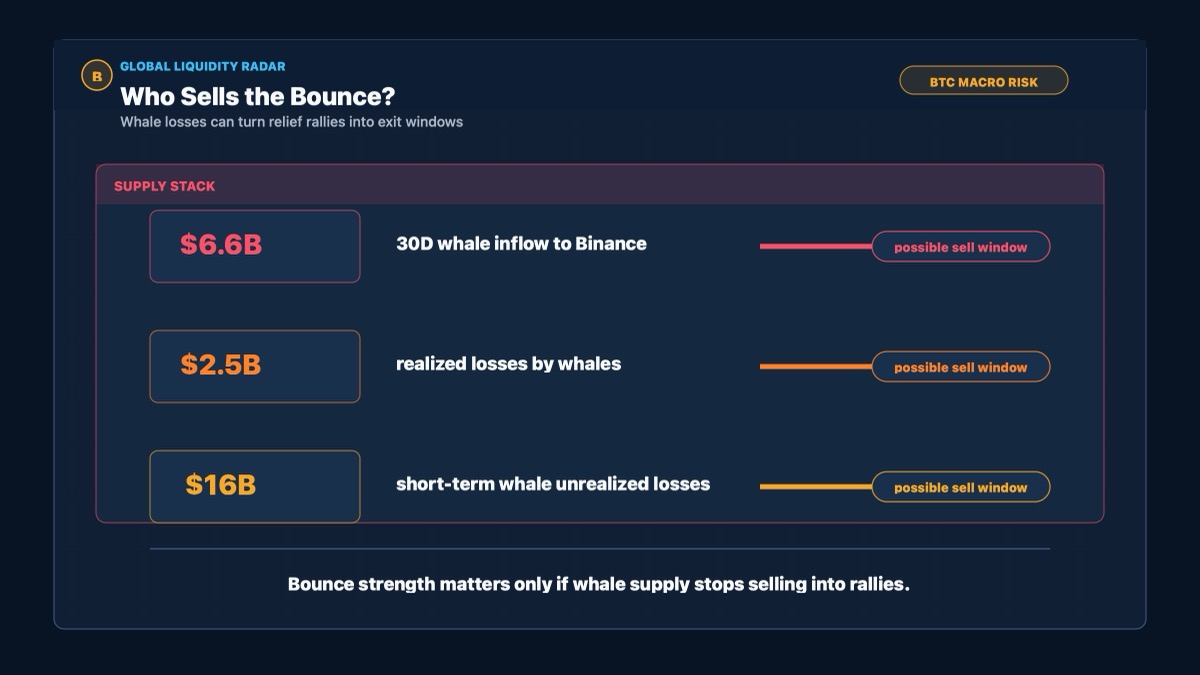
On-chain data points to rising whale inflows to Binance from wallets holding 100-1,000 BTC and 1,000-10,000 BTC. The article says Binance's 30-day whale inflow sum has climbed to $6.6 billion. It also notes that short- and long-term whales have locked in more than $2.5 billion in losses during the decline, while short-term whales are carrying roughly $16 billion in unrealized losses.
That is the part of the story that matters for the next few candles.
The BOJ is the weather system. Whale supply is the object currently falling off the shelf.
Why This Matters for Bitcoin and Crypto Markets
The easy version of the story is: BOJ hikes, Bitcoin falls.
The better version is more annoying, because it has more moving parts.
BOJ tightening matters because Bitcoin is a liquidity-sensitive asset. When global funding conditions tighten, carry trades become less attractive, risk appetite shrinks, and assets that depend on abundant liquidity can lose their support faster than traders expect. The July 2024 yen carry-trade unwind is the cleanest example: the shock was not only about Bitcoin, but Bitcoin behaved like part of the global risk machine.
Still, a historical pattern is not a law of physics. The article points out that the prior BOJ-related sell-offs happened under different conditions. March 2024 came after Bitcoin's ETF-driven breakout to new highs. July 2024 came during a broader carry-trade shock. The 2025 drawdowns followed rallies and demand contraction in both spot and futures markets.
So the BOJ decision is best understood as a risk amplifier. If Bitcoin is already strong, it may absorb the event. If Bitcoin is already fragile, the event can make existing pressure worse.
Right now, BTC does look fragile. The whale inflow data matters because coins moving to exchanges often create potential sell-side supply. Realized losses matter because they show that large holders are no longer just sitting through pain. Some are actively reducing exposure. Unrealized losses among short-term whales matter because rebounds can become exit windows rather than recovery ramps.
That is why the market is not only asking, "Will the BOJ hike?"
It is asking a more practical question: if BTC bounces, who uses that bounce to sell?
Historical Parallel
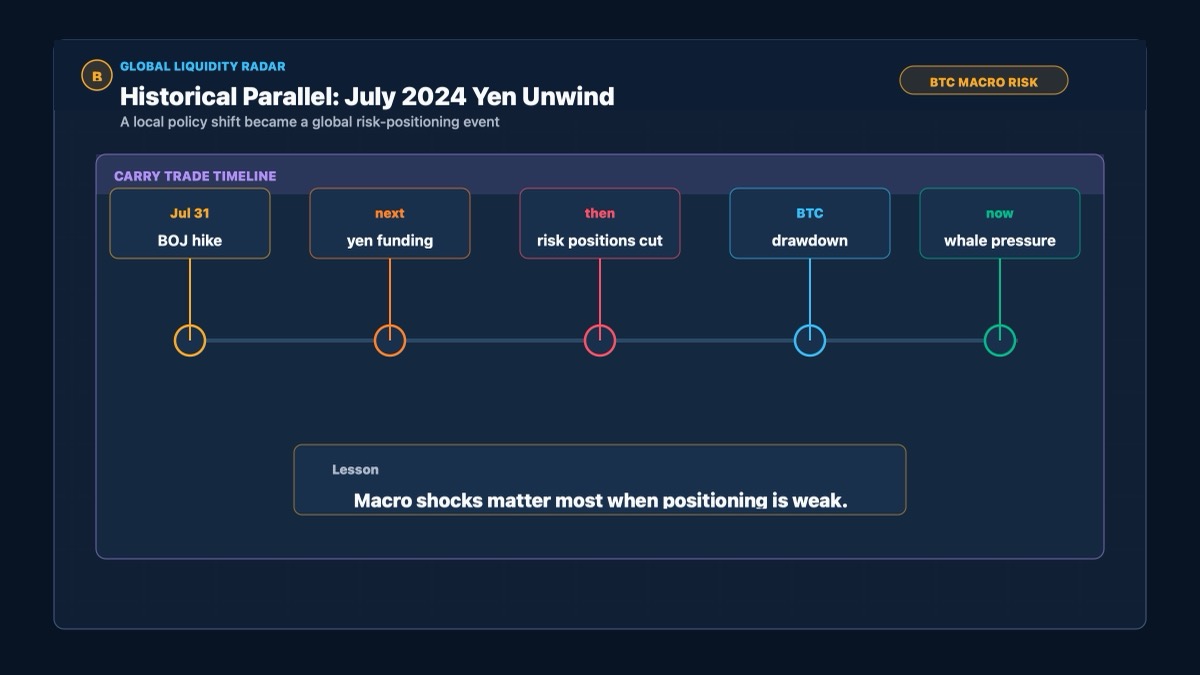
The clearest historical parallel is the July 2024 yen carry-trade unwind. The BOJ raised rates on July 31, 2024, and global markets quickly had to reprice a trade that had been quietly sitting underneath a lot of risk appetite. Bitcoin was not the only asset hit. Equities, crypto, and other crowded risk positions all felt the stress because the issue was not just one central bank decision. It was the sudden realization that cheap yen funding was becoming less cheap.
That episode matters because it shows how a local policy shift can become a global liquidity event. A rate hike in Japan does not mechanically sell Bitcoin. There is no BOJ trader pressing a red BTC button. What happens is more indirect: funding costs rise, leverage becomes less comfortable, portfolios get simplified, and assets with large speculative ownership can become sources of cash.
The similarity to the current setup is obvious. Bitcoin is again heading into a BOJ decision after a period of price weakness, and traders are again asking whether yen-funded risk positions could be reduced. The psychological setup is familiar: everyone knows the event is coming, but no one knows how much positioning still depends on the old liquidity regime.
The difference is important. July 2024 was a sharper carry-trade shock because it came as Japan was still moving away from the negative-rate era and global markets were less prepared for the unwind. Today, the BOJ has already raised rates to 0.75%, and Japanese bond yields are already much higher than they were in early 2024. That means another hike may be less surprising as a policy direction, even if it still matters.
The lesson for BTC is not "BOJ hike equals crash." The lesson is that macro shocks become dangerous when they meet weak positioning. If whales are sending coins to exchanges, demand is contracting, and BTC is failing reclaim levels, the BOJ decision can become the match near dry wood.
Bitcoin Price Reaction and K-Line Analysis
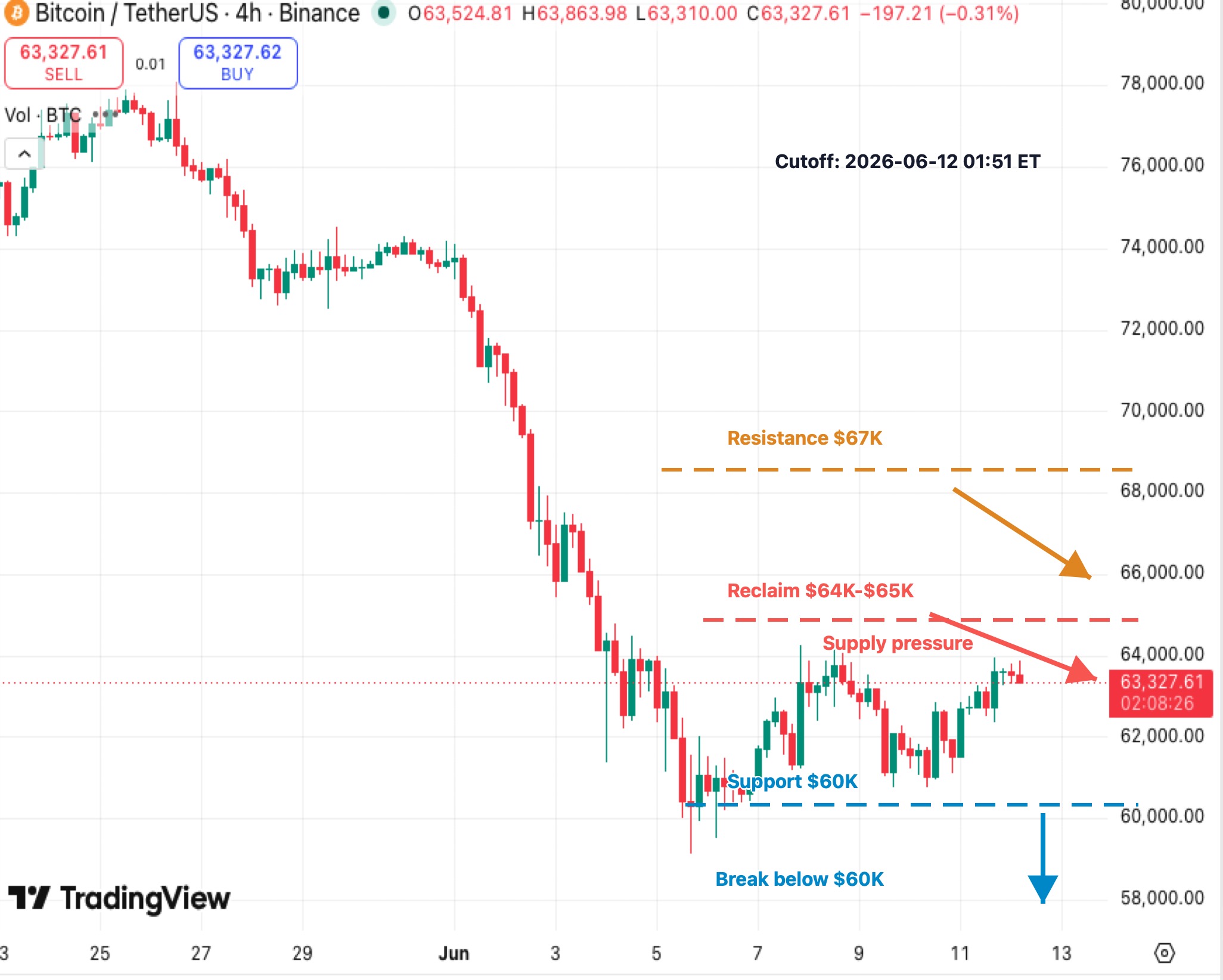
The BTCUSDT 4H chart is trying to bounce, but it is not repaired yet.
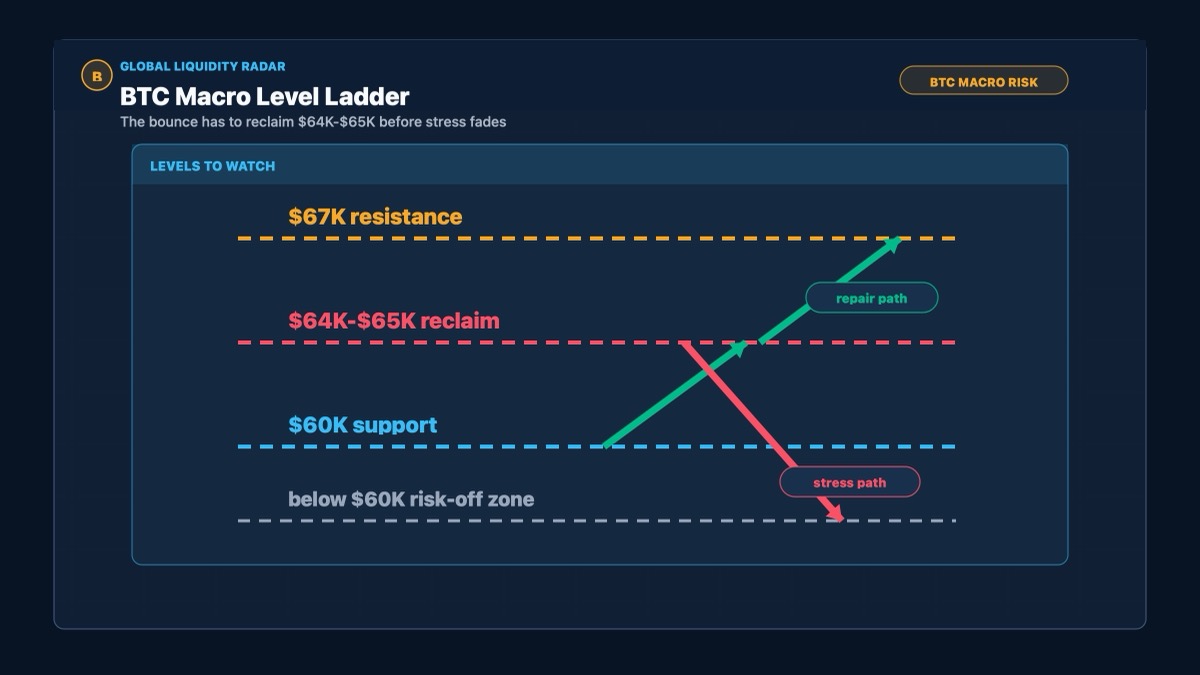
Bitcoin fell hard from the upper $70K area into the $60K support zone. That move created real technical damage. The rebound from $60K matters, but it is still sitting below the first meaningful reclaim area around $64K-$65K.
That zone is the near-term test. If BTC can push through $64K-$65K and hold it, the market can argue that the worst of the immediate whale-pressure selling has been absorbed. It would not erase BOJ risk, but it would show that buyers are willing to defend the bounce.
If BTC keeps failing below that zone, the chart remains vulnerable. In that case, every macro headline becomes easier for sellers to use, because the market structure is already weak.
The next resistance area is around $67K. A move there would suggest a stronger recovery and would reduce the chance that the current bounce is only a relief move inside a larger downtrend.
The key downside level is still $60K. That is the floor holding the current structure together. If BTC breaks below $60K with momentum, the article's concern about macro pressure and whale supply stops being theoretical. It becomes visible on the chart.
Key Levels to Watch
- $64K-$65K: The first reclaim zone. BTC needs this area to make the bounce more credible.
- $67K: The next resistance area, where supply may reappear after the breakdown.
- $60K: The key support zone. Holding it keeps BTC in repair mode.
- Below $60K: The danger zone. A breakdown would reopen deeper downside risk.
Conditional Forecast
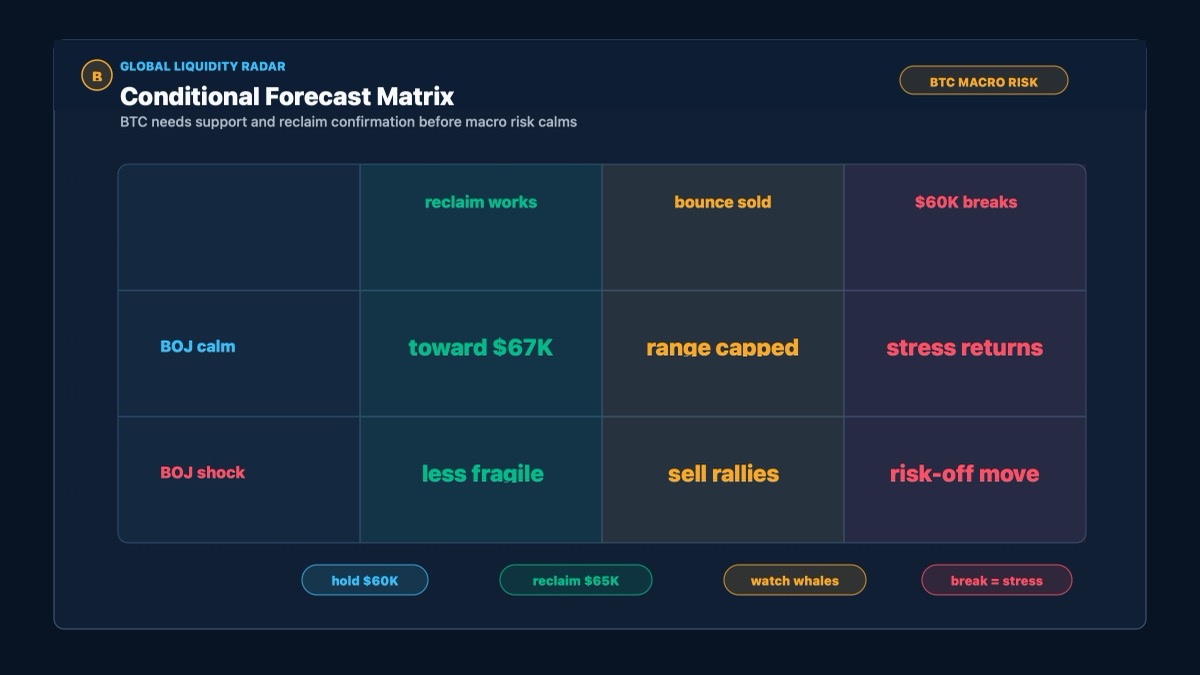
If BTC holds $60K and reclaims $64K-$65K, the market can begin treating the BOJ risk as manageable. That would suggest sellers are not fully controlling rebounds, and BTC could attempt a move toward $67K.
If BTC fails below $64K-$65K, the bounce remains suspect. In that scenario, whale supply and macro caution may continue to cap upside, especially if traders use strength to reduce exposure before the BOJ decision.
If BTC loses $60K, the setup deteriorates quickly. The market would likely stop debating whether the BOJ risk is overblown and start pricing a deeper risk-off move.
Investment Takeaway
The BOJ story matters, but it should not be treated like a magic crash button.
The more useful model is this: BOJ tightening can pressure liquidity, but Bitcoin's immediate vulnerability depends on positioning. Right now, rising whale inflows, realized losses, and a weak technical structure make BTC more sensitive to bad macro timing.
For investors, the chart gives the cleaner instructions. Above $65K, Bitcoin starts to look less fragile. Above $67K, the recovery earns more respect. Below $60K, the market is back in stress mode.
Until then, the right posture is not panic.
It is caution with a ruler.
Sources
- Cointelegraph via TradingView: Pending Bank of Japan rate decision may impact Bitcoin price
- Bank of Japan: Monetary Policy Meetings
- Trading Economics: Japan Interest Rate
- Trading Economics: Japan 10 Year Government Bond Yield
- FRED: Japan 10-Year Government Bond Yield
- TradingView: BTCUSDT chart
|
DISCLAIMER:
1. All content on this website (including but not limited to articles, data, charts, and analyses) is for general informational purposes only and does not constitute any form of investment advice, trading recommendation, or financial guidance. 2. Cryptocurrencies and digital assets are subject to extreme price volatility and high investment risk; you may lose part or all of your principal. Past performance does not predict future results. 3. The information on this website is based on sources we believe to be reliable, but we do not guarantee its accuracy, completeness, or timeliness. Any investment decisions made based on this website’s information are at your own risk. 4. We strongly recommend that you conduct your own thorough research and consult an independent, licensed financial advisor before making any investment decisions. |
Recommended reading
Latest News