$430M Oil Short Reveals Crypto's New Role: Geopolitical Risk Pricing Is Shifting
2026-04-23 10:24:46
**Traders placed a $430 million short position on oil prices just before Trump extended the Iran ceasefire agreement.** On the surface, this looks like smart energy market timing. But dig deeper: **this trade signals a fundamental shift in how geopolitical risks are priced—and crypto markets are becoming the new battleground.**
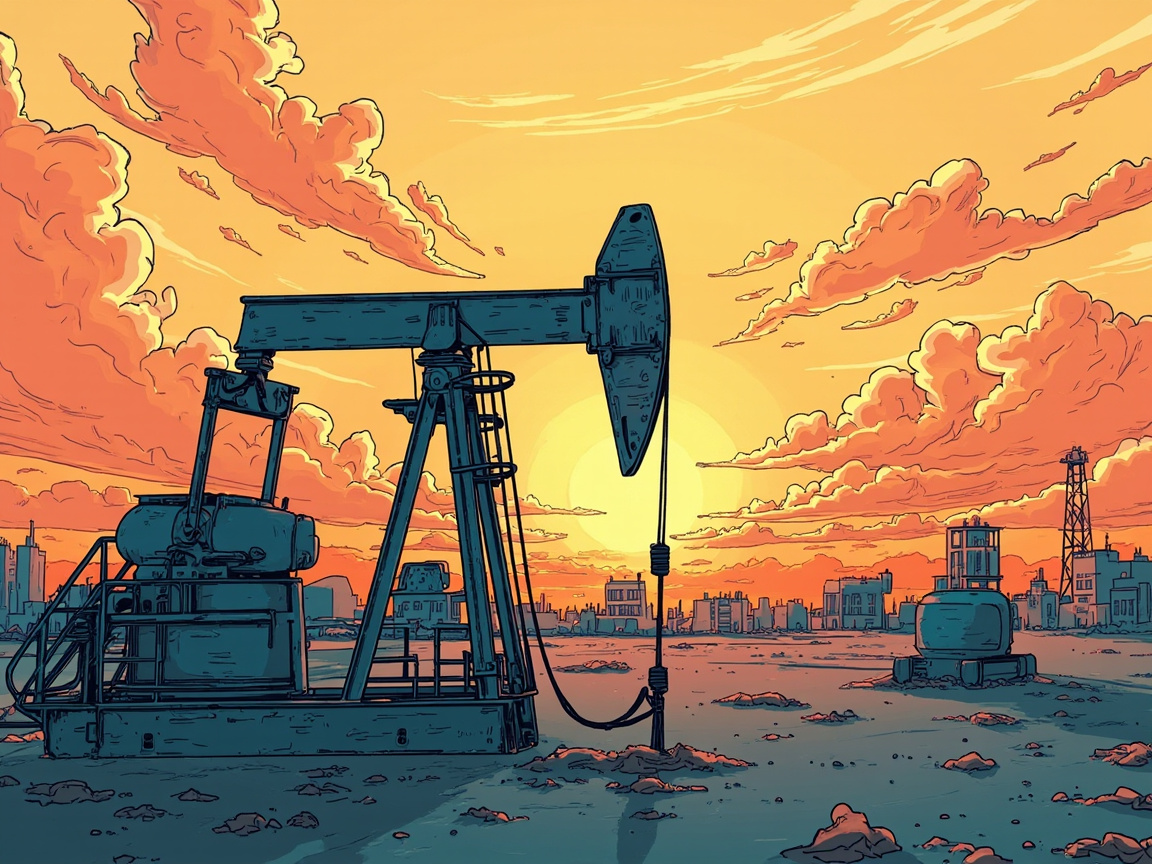
WTI crude had spiked to $160 per barrel in April, yet prices barely moved after the ceasefire news. Why? The market is shallow—daily notional value approaches $50,000, but actual trading volume is just $514. A 5% price move requires only $1,955.
**That $430 million short wasn't a gamble; it was a lock.** Traders weren't betting the ceasefire would extend; they bet that **even if it did, oil wouldn't rally.** The key takeaway: geopolitical risk pricing is no longer about events themselves, but about market structure.
### Prediction Markets Are Eating Analysts' Lunch
Traditional analysts track US-Iran talks and OPEC+ output. The $430 million short says that's outdated. Prediction markets gave a clearer signal: YES shares traded at just 1 cent, implying a mere 1% probability oil would hit $160 without a major geopolitical shock.
**Probability pricing is ruthless.** That 1-cent price offered 100x potential returns, yet no one bought. Markets are pricing "black swan" events with extreme precision—indicating current geopolitical risks are already priced in.
### What This Cuts Deep
This cuts through the old risk-pricing logic. Geopolitical risks used to be analyzed through reports and news; now they're priced through real capital. $430 million isn't an opinion—it's a position. Positions are more honest than opinions.
For crypto, this means two things:
**1. Macro narratives are being quantified.** Iran, Middle East tensions, oil supply—these big themes are becoming specific probabilities and prices. Crypto markets excel at processing this structured data.
**2. Liquidity migration has begun.** $430 million might be noise in traditional futures markets, but in prediction markets, it locks down pricing power. Where capital flows, pricing power follows.
### What to Watch Next
Forget headlines—by the time news breaks, the money's already been made. Watch these instead:
**1. Market depth shifts**
If depth suddenly increases in similar markets, big money might be positioning for the next geopolitical flashpoint—Russia-Ukraine, Taiwan Strait, or other risk events.
**2. Options implied volatility**
YES shares at 1 cent show extremely low implied volatility. If that ticks up to even 2 cents, it means markets are repricing risk.
**3. Crypto-native prediction products**
If geopolitical bets start appearing on-chain in prediction markets, that's the real signal—crypto is eating traditional risk-pricing's lunch.
### The Bottom Line for Crypto
This isn't about oil—it's about a paradigm shift in risk pricing. Crypto has always been an expectations game, and geopolitical risk is among the hardest expectations. Now, pricing power for those risks is in flux.
The $430 million short's brutal truth: it didn't care whether the ceasefire would extend; it cared whether **markets still believed ceasefires could move oil prices.**
Markets didn't believe.
That disbelief could spread. If geopolitical risk pricing breaks down, what about inflation narratives, rate-cut stories, or ETF hype? **All macro narratives face the same pressure test: do markets still buy them?**
The results will feed directly into Bitcoin's volatility. Low volatility isn't bullish—it means markets are numb to all narratives. Numb markets need bigger shocks to wake up.
The question now: what's the next shock? And how much capital will lie in wait like that $430 million?
The answer isn't in headlines. It's in positions. Watch the money, not the news.
DISCLAIMER:
1. All content on this website (including but not limited to articles, data, charts, and analyses) is for general informational purposes only and does not constitute any form of investment advice, trading recommendation, or financial guidance.
2. Cryptocurrencies and digital assets are subject to extreme price volatility and high investment risk; you may lose part or all of your principal. Past performance does not predict future results.
3. The information on this website is based on sources we believe to be reliable, but we do not guarantee its accuracy, completeness, or timeliness. Any investment decisions made based on this website’s information are at your own risk.
4. We strongly recommend that you conduct your own thorough research and consult an independent, licensed financial advisor before making any investment decisions.