• Thai-listed company DV8 has announced plans to build a corporate treasury of 10,000 Bitcoin.
• Blockchain AI Convergence: Fact-Check & Market Guide (2026)
• Polygon's mainnet will undergo the Giugliano upgrade on April 8.
• DoorDash, Chainlink & Oblong Market Shifts Guide (2026)
• PsiQuantum has started building its million-qubit quantum facility. Scientists say a machine this po
• Anthropic Discontinues Subscription Support for Third-Party Tools
• XRP ETF Forecasts & Bitmine’s $20B ETH Bet: 2026 Analysis
• Crypto & Tech Market Trends 2026: Pi, XRP, Robotaxi Safety
• DoorDash, Chainlink & Oblong Market Shifts Guide (2026)
• SEC v. Ripple Case Ends: XRP Outlook & Monero 51% Attack (2026)
Google's Marvell AI Chip Talks: Nvidia's Trojan Horse or Inevitable Power Play?
2026-04-15 06:19:51
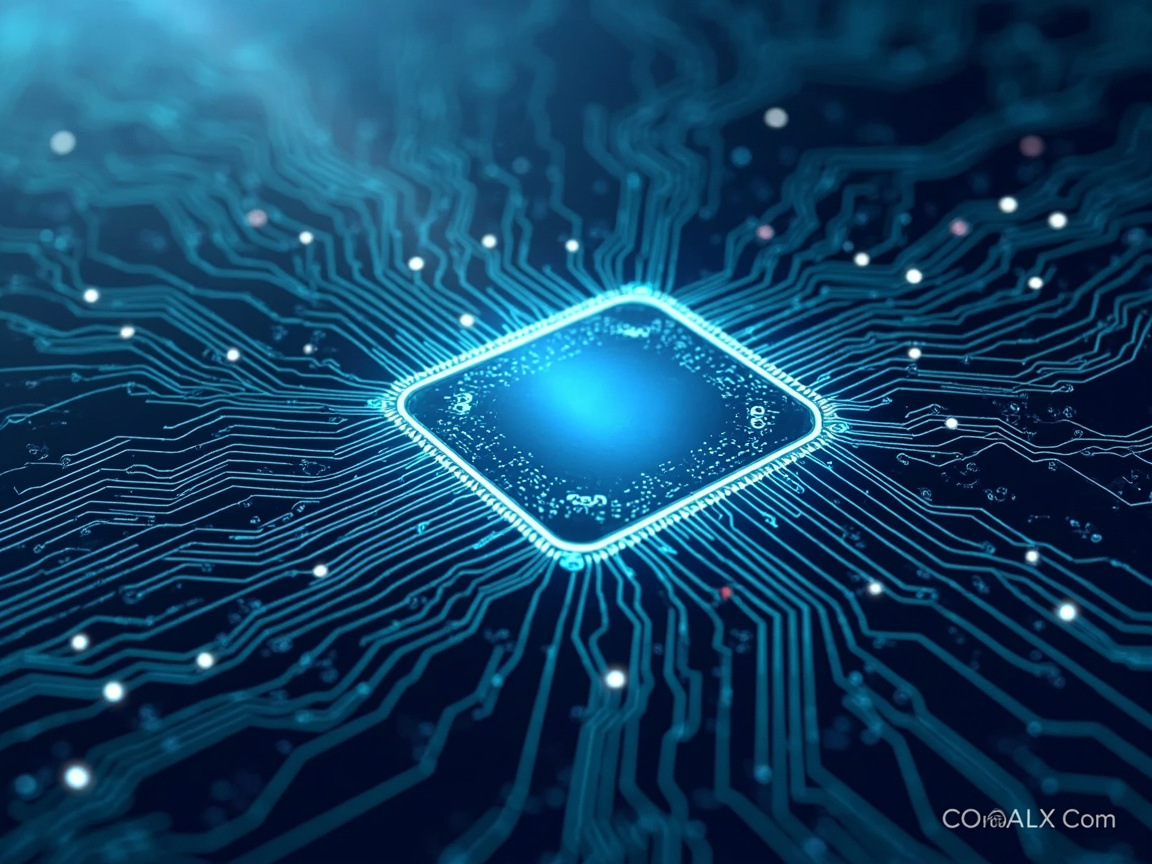
Google is in talks with chip designer Marvell Technology to customize Tensor Processing Units (TPUs) and develop specialized chips for large language model inference. On the surface, this looks like routine supplier diversification. But the real story is Marvell's emerging role as the critical connector between Nvidia's empire and cloud giants' in-house compute ambitions—potentially serving as a strategic bridge in the AI infrastructure war.
## The Real Play: Beyond Supplier Diversification
Just days after extending its TPU and networking partnership with Broadcom through 2031, Google is now courting Marvell. This isn't about finding a backup supplier.
**Here's what matters:** Google's AI infrastructure spending is exploding, and the company needs to break its over-reliance on single suppliers—particularly Nvidia. While TPUs are Google's own AI accelerators, they still require design partners like Broadcom and Marvell for development and production. Bringing Marvell into the fold serves two purposes: maintaining pricing leverage against Broadcom, and tapping Marvell's expertise in high-speed interconnect technology—the exact capability needed to optimize AI chip performance while reducing latency and power consumption.
**For investors:** Don't just track Google's spending. Watch where the cuts land—specifically in AI compute's **cost structure** and **technical sovereignty**. When cloud giants pour billions into custom chips, they're fighting for pricing power and ecosystem control in the future AI economy. This is fundamentally about reducing the "compute tax" imposed by Nvidia's GPU dominance.
## Marvell's Strategic Positioning: Between Nvidia and Cloud Giants
Marvell's timing is impeccable.
Last month, the company secured a $2 billion strategic investment from Nvidia, with plans to collaborate through NVLink Fusion—designing custom XPUs and NVLink-compatible networking solutions that integrate directly into Nvidia's rack-scale AI architecture.
**Now it's at Google's table** discussing two things: TPU customization as a design partner, and co-developing a chip optimized specifically for LLM inference (essentially a specialized LPU).
**What this means:** Marvell is becoming the "universal interface" for AI compute infrastructure. It's deeply embedded in Nvidia's ecosystem while simultaneously serving Google's "de-Nvidiazation" efforts. This dual positioning gives its custom ASIC business (currently around $1.5 billion annual revenue) serious strategic premium.
**What to watch:** Not contract values, but whether Marvell can truly become that connector. If it successfully bridges Nvidia's closed ecosystem with cloud giants' open, in-house approaches, its valuation shifts from ordinary chip designer to critical AI infrastructure node.
## The Inference Battlefield: Where the Real Money Will Flow
The LLM inference chip discussion deserves special attention.
While training chips like Nvidia's H100 get headlines, inference is where AI applications generate ongoing revenue. Inference chips prioritize efficiency and cost—whoever delivers the best performance per dollar will capture the lion's share when AI applications scale.
Google and Marvell exploring specialized inference chips signals that the battle has expanded from "training arms race" to "inference warfare." The business logic is simple: training is a one-time cost; inference is ongoing. Optimizing inference costs means optimizing AI service margins for the next decade.
**Implication:** Watch companies with unique inference chip architectures. If Marvell-Google collaboration materializes, it could establish new inference design paradigms that reshape the entire AI chip competitive landscape.
## What Comes Next: Evolution and Investment Angles
**Short-term:** Whether Marvell secures Google's business. A win would add a high-value revenue stream to its custom ASIC portfolio.
**Medium-term:** How Marvell balances relationships with Nvidia and Google (and potentially other cloud giants). Will it become Nvidia's "Trojan horse" infiltrating cloud giants' in-house systems with Nvidia standards like NVLink? Or will it serve as cloud giants' leverage against Nvidia's ecosystem? These narratives will determine its valuation ceiling.
**Long-term:** Whether Marvell's high-speed interconnect and silicon photonics expertise translates into actual performance and cost advantages—defining how deep its "critical node" moat runs.
**For crypto veterans:** This isn't just tech news. AI compute is digital oil, and chips are refineries. Marvell's role resembles designing refinery equipment for multiple oil-producing nations. Its value isn't in extracting oil, but making it cheaper and more usable. As compute costs drop and inference efficiency improves, we'll see more affordable AI applications emerge—potentially disrupting existing internet structures and creating new native crypto-economic opportunities.
**Bottom line:** Watching Marvell's stock price is noise. Watching how it redefines AI chips' "connection value" is signal. These negotiations mark the shift from hardware arms race to ecosystem alliance-building in the compute wars.
| DISCLAIMER: The information on this website is provided as general market commentary and does not constitute investment advice. We encourage you to do your own research before investing. |
Recommended reading






Markets
2026-02-26
Markets
2026-03-23
Latest News