Top Law Firm's AI Blunder in FTX Case Exposes Crypto Legal Risk
2026-04-22 14:13:34
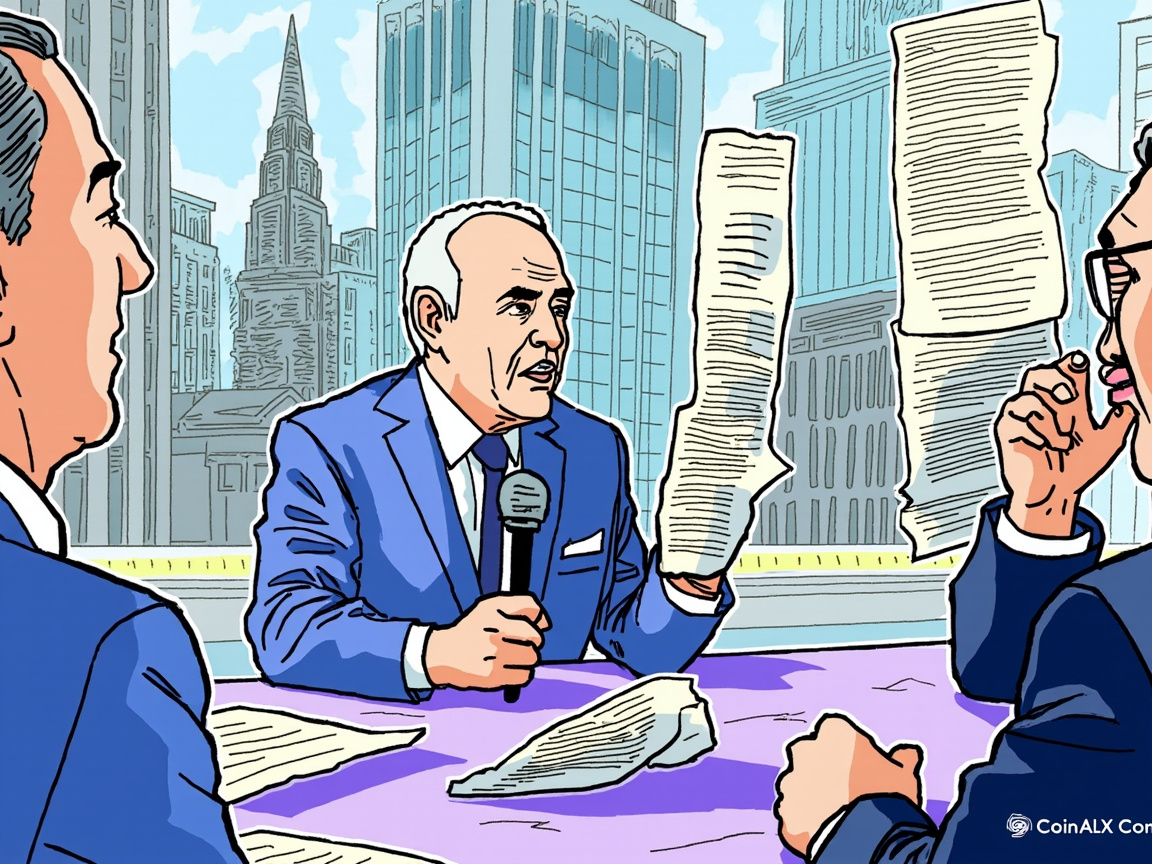
When Sullivan & Cromwell—one of Wall Street’s elite law firms and the lead counsel in the FTX bankruptcy—apologized to a federal judge for about 40 citation errors in court documents, it wasn’t just another tech mishap. The mistakes stemmed from **AI hallucinations**, and they spotlight a deeper, unsettling shift: as crypto legal battles turn increasingly tech-driven, the tools aren’t yet reliable enough to shoulder the load.
### Why This Cuts Deep
Sullivan & Cromwell isn’t some rookie outfit; by revenue, it ranks among America’s top firms. Its internal AI policies—including review protocols—were reportedly **not strictly followed**, letting fabricated citations slip into official filings. More tellingly, rival firm Boies Schiller Flexner caught the errors first, highlighting how competitors can weaponize AI slip-ups in high-stakes crypto litigation.
This isn’t isolated. Legal tech expert Damien Charlotin’s database logs over 1,300 AI-hallucination incidents globally, with 900+ in the U.S. alone. Most involve fake references; some even include AI-invented legal arguments. The pattern signals **systemic risk**, not one-off glitches.
### What Crypto Investors Should Watch
Don’t dismiss this as “AI fails again.” The real takeaway: **crypto’s legal arena is shifting from human-intensive to tech-intensive, but the tech remains unproven.** Sullivan & Cromwell has launched an internal review, but if a giant with robust resources can’t control AI outputs, what about smaller firms advising crypto projects?
Investors should focus on **where errors cluster**. Fabricated citations are the prime failure point. When you review legal documents—be it a project whitepaper, compliance opinion, or court filing—scrutinize every citation. Ask: *Is this reference real? Was it verified?* Blind trust in legal authority is now a liability.
### How This Unfolds Next
This won’t end with an apology. Three trends are emerging:
1. **Tighter Regulation**: Judges like Martin Glenn of the U.S. Bankruptcy Court for the Southern District of New York won’t settle for “sorry.” Expect stricter AI-use guidelines, possibly mandating disclosure of AI-generated content in filings.
2. **Intensified Competition**: Rivals like Boies Schiller Flexner have shown that auditing opponents’ AI work pays off. More firms will follow, potentially raising legal costs as human review becomes non-negotiable.
3. **Trust Reshuffling**: Confidence in legal documents will dip short-term. Firms that demonstrate transparent, reliable AI processes will gain a premium; those that don’t risk becoming the next cautionary tale.
### The Bottom Line for Crypto
Sullivan & Cromwell’s “regret” doesn’t fix the core issue: as AI becomes standard in legal work, **how do we prevent it from seeding systemic risk?** For crypto participants, the lesson is blunt: **question the surface authority of every legal document.** Pay extra attention to sections dense with case law or regulatory citations—AI hallucination hotspots.
Watch for two signals in coming months: whether courts enact concrete AI rules, and if other crypto-focused firms adjust their AI strategies. If both happen, the system is self-correcting. If not, risk keeps building.
AI isn’t going away—it’s scaling. But scale doesn’t equal reliability. In an already high-risk field like crypto, eroded trust in legal documents adds another layer of exposure. And this time, there’s no one to cover the loss.
DISCLAIMER:
1. All content on this website (including but not limited to articles, data, charts, and analyses) is for general informational purposes only and does not constitute any form of investment advice, trading recommendation, or financial guidance.
2. Cryptocurrencies and digital assets are subject to extreme price volatility and high investment risk; you may lose part or all of your principal. Past performance does not predict future results.
3. The information on this website is based on sources we believe to be reliable, but we do not guarantee its accuracy, completeness, or timeliness. Any investment decisions made based on this website’s information are at your own risk.
4. We strongly recommend that you conduct your own thorough research and consult an independent, licensed financial advisor before making any investment decisions.