Oil's Peace-Driven Plunge: Why Crypto Investors Should Watch the Macro Shift
2026-04-20 13:01:31
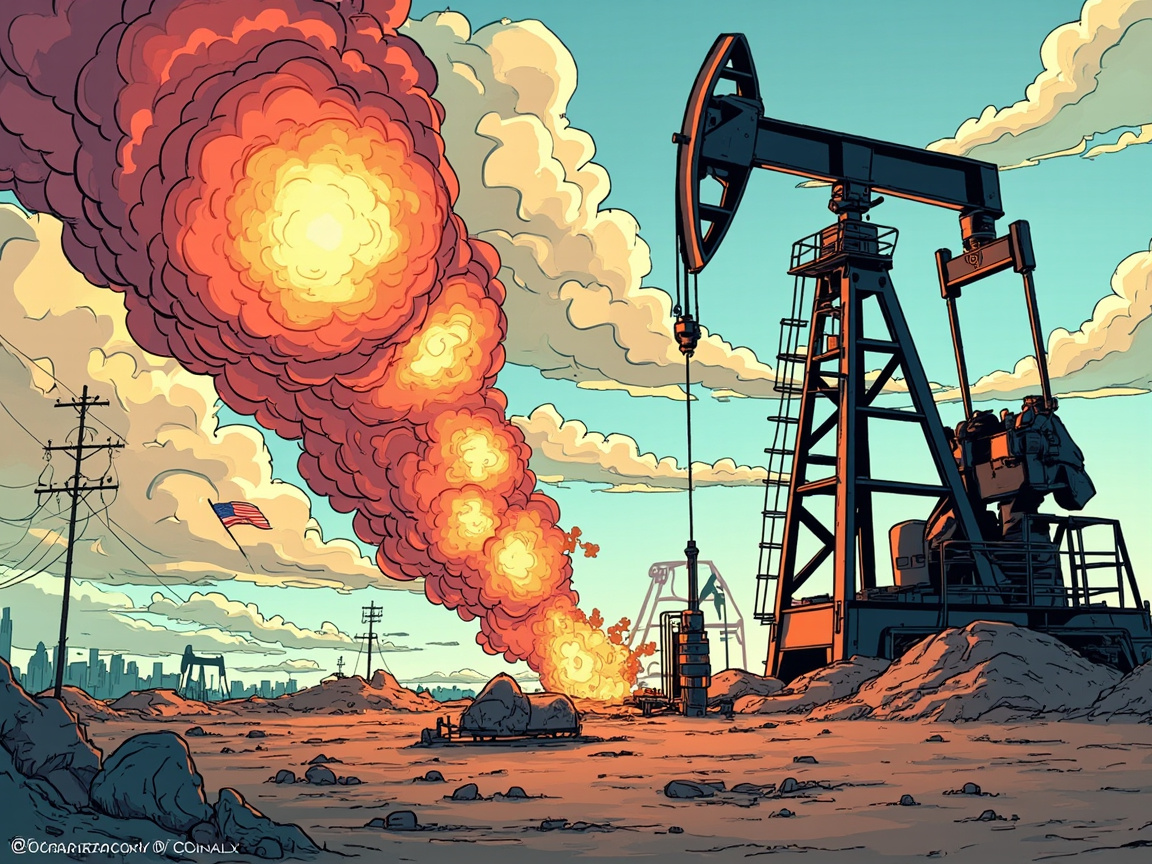
Recent signs of easing tensions between the U.S. and Iran have sent oil prices tumbling. WTI crude futures briefly touched $160 per barrel before retreating, with market volatility dropping from 3% to 1.4% in a week. On the surface, this looks like a standard market reaction to receding geopolitical risk. But the real takeaway is quieter and more significant: **this shift is quietly rewriting crypto's macro narrative.**
## How Peace Expectations Drain Safe-Haven Flows
Falling oil prices signal one thing clearly: markets are pricing in lower odds of major conflict. After Trump and Iranian officials signaled openness to dialogue, traders quickly priced out scenarios of crude spiking dramatically.
Key data point: WTI's daily notional value stands at $72,164, but actual USDC traded is just $704. That means only $1,655 in volume can move the market 5 points. The earlier 25-point volatility spike shows how sensitive this market is to large orders—yet peace expectations have firmly capped upward momentum.
**What this means for crypto:**
Traditional safe-haven sentiment is ebbing. For months, geopolitical conflict has propped up narratives around gold and oil. Now that narrative is cracking. As capital flows out of safe havens, risk assets get repriced—and Bitcoin, as a hybrid risk/hedge asset, will inevitably get caught in this reallocation wave.
## The "Inflation Relief" Narrative Behind Stable Oil
If U.S.-Iran talks make tangible progress, oil markets will stabilize. For oil-importing economies, that means **imported inflation pressure could ease**.
Don't underestimate this shift.
For two years, high inflation has been the Fed's core justification for hawkish policy, which has weighed on risk assets. Oil is a key inflation driver—its stability or decline directly undermines the market's "stubborn inflation" thesis.
**What investors should watch:**
Not oil prices themselves, but how market expectations for Fed policy shift. If inflation fears ease, rate-cut bets will resurge—that's the macro environment where Bitcoin thrives.
## What Markets Are Betting On
Markets are sending a clear signal: traders are broadly betting on normalized transit through the Strait of Hormuz and stable supply routes. The June 2026 crude futures contract faces downward pressure above $90, with 73 days to target.
More telling are prediction market odds: if crude hits $160, YES shares pay $1, implying a 71.4x return. But winning that bet requires failed peace talks or renewed military escalation—neither scenario has market support right now.
**What this means:**
Markets are voting with real money that peace is far more likely than conflict. Once this consensus forms, it becomes a trend that's hard to reverse short-term.
## How This Could Play Out
Geopolitics never moves in a straight line. Trump's next move, Iran's response to the April 22 ceasefire expiry, Pentagon operations, OPEC production decisions—any variable could quickly reshape the landscape.
But the core logic is clear:
1. **Short-term:** Peace expectations dominate sentiment, oil faces pressure, safe-haven appeal fades.
2. **Medium-term:** If inflation data follows oil lower, the Fed pivot narrative gains stronger footing.
3. **Long-term:** As geopolitical risk premiums compress, capital will hunt for yield—crypto is a potential destination.
## Practical Takeaways for Crypto Investors
Don't get distracted by oil's noise. This matters for crypto on three levels:
**First: Macro narrative shift.** From "conflict drives inflation" to "peace eases inflation pressure"—the latter is Bitcoin-friendly.
**Second: Capital flow changes.** As safe-haven flows recede, some liquidity could spill into crypto, especially with traditional risk assets (like tech stocks) looking expensive.
**Third: Sentiment transmission.** Markets are growing more resilient to "bad news," meaning risk asset sell-offs may ease barring extreme geopolitical shocks.
Watching these three layers unfold is more useful than predicting oil's exact price.
## The Bottom Line
This oil drop cuts through a simplistic logic: that conflict automatically means higher inflation. Markets are learning to price risk with more nuance: peace can bring stability, stability can ease policy pressure, and policy shifts can open upside for risk assets.
For Bitcoin, this isn't an instant catalyst—but it's a clear **marginal improvement in macro conditions**. As markets start trading the "peace dividend," crypto investors shouldn't chase pumps or dumps. Instead, recalibrate your narrative map—because the next wave of capital flows may be hiding in these seemingly distant macro shifts.
Reality check: Geopolitical risk is cooling, the inflation narrative is loosening, and a policy pivot window is quietly cracking open. Bitcoin doesn't need conflict to rise—it just needs a less hawkish macro backdrop. Right now, that backdrop is brewing.
DISCLAIMER:
1. All content on this website (including but not limited to articles, data, charts, and analyses) is for general informational purposes only and does not constitute any form of investment advice, trading recommendation, or financial guidance.
2. Cryptocurrencies and digital assets are subject to extreme price volatility and high investment risk; you may lose part or all of your principal. Past performance does not predict future results.
3. The information on this website is based on sources we believe to be reliable, but we do not guarantee its accuracy, completeness, or timeliness. Any investment decisions made based on this website’s information are at your own risk.
4. We strongly recommend that you conduct your own thorough research and consult an independent, licensed financial advisor before making any investment decisions.