Hormuz Strait Crisis: How Geopolitical Risk Is Reshaping Bitcoin Market Expectations
2026-04-20 02:40:53
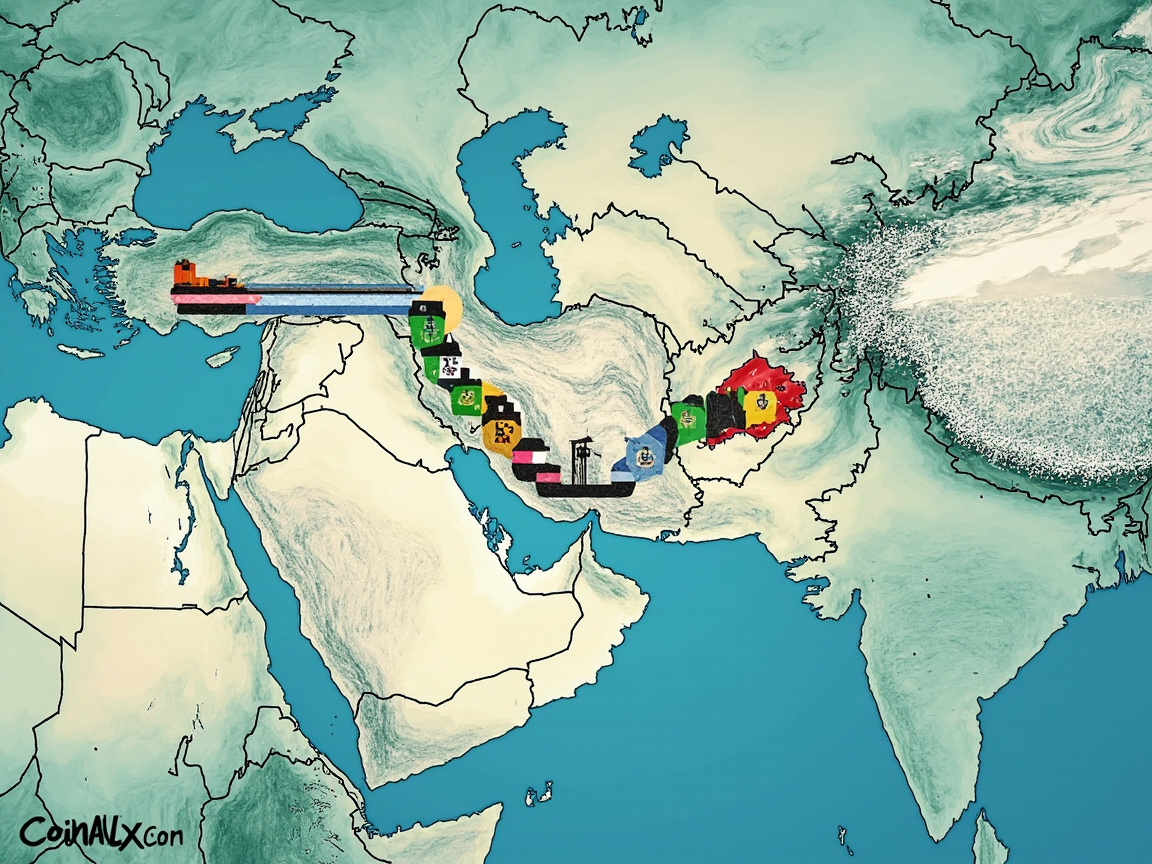
The UK Maritime Trade Operations (UKMTO) has raised the threat level for the Hormuz Strait and Gulf of Oman to 'critical.' On the surface, this is a shipping security alert. But the real story lies deeper: any disruption to this chokepoint could tighten global energy supplies, fuel market anxiety—and Bitcoin often becomes the first port of call for fleeing capital.
## This Isn't a Drill—Markets Are Pricing Real Risk
The 'critical' rating isn't routine. UKMTO warns of navigation interference and potential attacks. Markets are already voting: the probability of normal traffic resuming by late April has dropped to just 8%.
Why does this matter? The Hormuz Strait handles roughly 20% of global oil shipments daily. Block the passage, oil prices spike, inflation expectations rise, and central banks face even tighter policy constraints.
Bitcoin traders shouldn't just stare at charts—they need to understand how geopolitical shocks of this magnitude translate into capital flow pressure.
## Prediction Markets Are Betting on Naval Escalation
Markets move faster than headlines. Odds of the UK deploying warships through the strait have dropped from 12% to 8.5% in a single day. Lower odds mean the market sees military action as more likely.
Put simply: real money is betting the Royal Navy will sail.
On prediction markets, YES tokens (betting on warship passage) currently trade around $0.08. If the event occurs, each token redeems for $1—an 11.76x return. The betting window closes in 12 days. This isn't a long-term investment; it's a precise wager on a near-term risk event.
The market structure itself signals that geopolitical risk is shifting from 'potential' to 'imminent.'
## Bitcoin's Haven Play—This Time It's Different
Traditional safe havens are gold and U.S. Treasuries. But this crisis sits at the world's energy jugular, directly impacting global trade costs and liquidity expectations.
Bitcoin's haven characteristics tend to strengthen in two scenarios: when fiat credibility wobbles, or when global liquidity faces structural gaps. The Hormuz crisis brushes against both.
Higher oil prices → rising inflation expectations → constrained central banks → tighter liquidity → risk assets under pressure.
Yet Bitcoin isn't purely a risk asset. When capital searches for an exit, it often becomes that 'alternative exit.'
## What to Watch Next: Three Key Triggers
1. **UK Ministry of Defence announcements**: Confirmation of warship deployment would trigger instant repricing in prediction markets. That's not just a military move—it's a signal of escalating risk.
2. **Actual transit data through the strait**: With only an 8% chance of normalcy by April's end, markets already assume short-term gridlock. Prolonged congestion means higher oil prices and inflation expectations.
3. **Bitcoin-gold correlation**: If both strengthen together, haven logic is driving markets. If Bitcoin rallies alone, it may signal crypto-native capital repositioning.
## Don't Get Swept Up in Crisis Narratives
Geopolitical events often trigger emotional trading. Bitcoin investors should avoid chasing headlines.
The real opportunity lies not in the event itself, but in how the market misprices it.
Prediction markets currently imply an 8.5% probability of warship deployment, yet YES token pricing reflects more aggressive expectations. That discrepancy speaks volumes.
If you believe the crisis persists, Bitcoin's haven role gets repriced. If you think it fades quickly, current market anxiety is overdone.
## Where the Pain Lands
Right in global liquidity's fragile spots.
The Hormuz Strait crisis appears as a shipping issue but strikes at strained energy supply chains. That strain transmits to monetary policy, asset prices, and ultimately, capital flows.
Bitcoin has repeatedly proven its unique position in this transmission chain over recent years—not as a substitute for traditional havens, but as a transit hub for migrating liquidity.
So don't just ask, 'Will Bitcoin rise?' Ask, 'Where is the money flowing?'
When a single waterway chokes 20% of the world's oil, the escape routes aren't always obvious.
DISCLAIMER:
1. All content on this website (including but not limited to articles, data, charts, and analyses) is for general informational purposes only and does not constitute any form of investment advice, trading recommendation, or financial guidance.
2. Cryptocurrencies and digital assets are subject to extreme price volatility and high investment risk; you may lose part or all of your principal. Past performance does not predict future results.
3. The information on this website is based on sources we believe to be reliable, but we do not guarantee its accuracy, completeness, or timeliness. Any investment decisions made based on this website’s information are at your own risk.
4. We strongly recommend that you conduct your own thorough research and consult an independent, licensed financial advisor before making any investment decisions.