The 15-Minute Retreat: How Geopolitical Brinkmanship Is Rewriting Crypto's Risk Playbook
2026-04-19 13:59:10
When Iranian Parliament Speaker Mohammad Bagher Ghalibaf revealed the details of a mid-April naval standoff in the Strait of Hormuz, the headline was dramatic: Iranian forces warned the U.S. that advancing further would trigger immediate fire. The U.S. response? A request for 15 minutes, after which they ordered a full retreat.
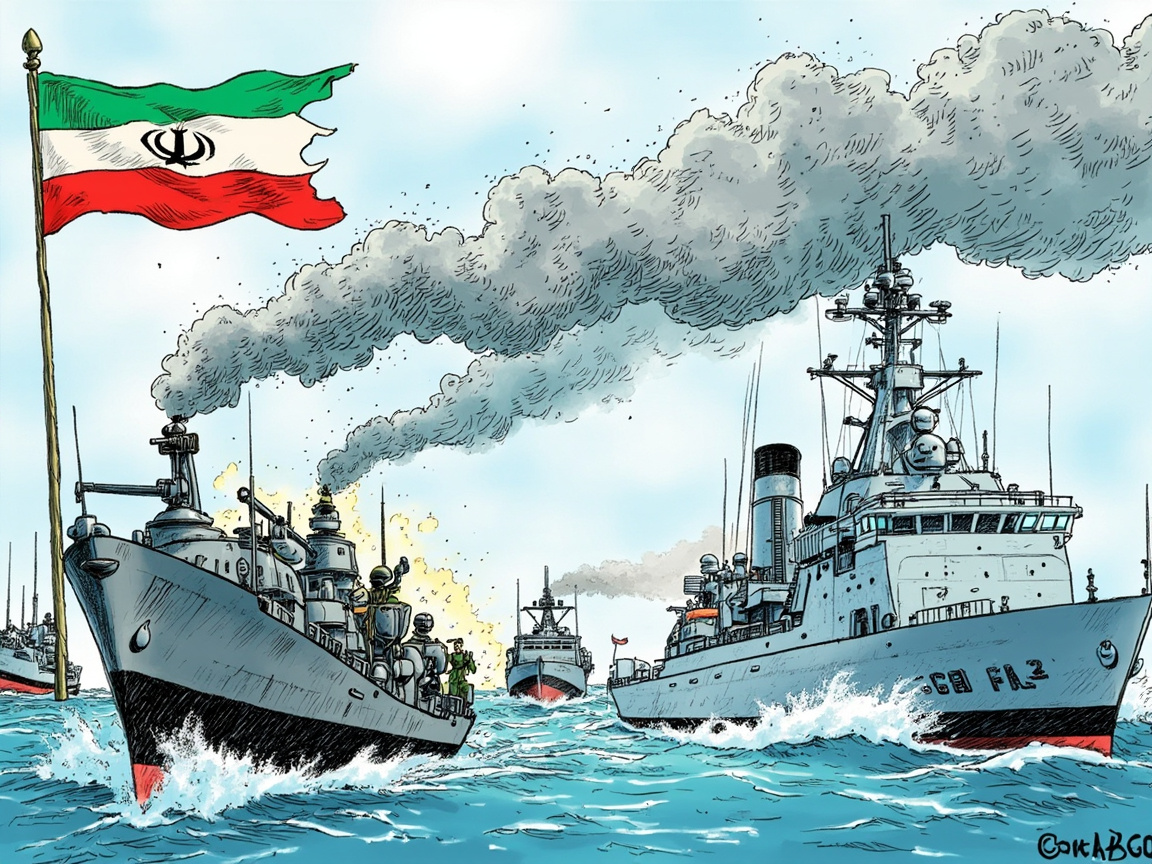
Forget the saber-rattling. The real story is what happened in those 15 minutes—and what it signals for markets. This wasn't about tactics; it was a real-time risk calculation. The Strait handles 21% of global seaborne oil trade. A conflict there would send oil prices into historic territory and rupture supply chains. Washington's retreat was a cold cost-benefit analysis: the marginal cost of escalation had just exceeded any political gain.
**For crypto, the lesson is blunt: geopolitical risk is shifting from 'black swan' to 'gray rhino'—and capital now reacts in minutes, not quarterly reports.**
### The New 'Red Line' Map
Ghalibaf noted the talks produced "a more pragmatic understanding"—diplomatic code for both sides mapping explicit red lines. The U.S. retreat demonstrated those boundaries in practice. We're entering an era of 'managed tension': neither full escalation nor genuine détente.
**Investors should watch not for peace breakthroughs, but for clarity in this red-line map.** When risks become predictable (even if the prediction is sustained tension), capital finds an anchor for pricing. Bitcoin's safe-haven narrative needs to evolve from 'digital gold in chaos' to a **precision risk-pricing instrument**.
### Why Capital Flows Are Changing
The U.S. retreated because modern conflict carries instant, catastrophic costs: oil spiking 30%+, supply chain breakdowns, and a flood into traditional havens like dollars and Treasuries. Yet crypto's reaction path is diverging.
During the 2022 Russia-Ukraine war, Bitcoin fell with stocks—still viewed through an 'all-risk' lens. Now, each Middle East escalation sees increased crypto allocation from regional capital. The shift is fundamental: geopolitical risk is no longer just about **fleeing risk**, but **reallocating it**. Traditional havens have limited capacity and remain exposed to the same political forces. Crypto, especially Bitcoin, is becoming a sovereign-grade hedge.
### Three Signals to Watch Now
1. **Strait of Hormuz shipping data.** Track daily oil tanker traffic and insurance premiums. This is the direct risk thermometer. Normal flow means tension is contained; a drop signals accumulating real risk.
2. **Middle Eastern crypto exchange flows.** Monitor BTC/USD pair depth on exchanges in the UAE, Turkey, and similar hubs. Inflows here represent institutional reallocation, not retail speculation—often preceding news by 1–2 trading days.
3. **U.S. Treasury implied volatility.** Treasuries are the classic haven, but capacity is nearing limits. If geopolitical risk spikes without a corresponding volatility surge in bonds, it means capital is seeking a new exit. That exit is increasingly crypto.
### The Two Illusions Shattered
This disclosure cuts through two market fantasies:
**First, that geopolitical risk will be 'resolved.'** Ghalibaf stated a final deal remains distant. Tension is the new normal—and normal risk requires normal hedging tools. Bitcoin must shift from **event-driven** to **sustained allocation** logic.
**Second, that major-power conflict will 'spiral out of control.'** The 15-minute retreat proves both sides use precise cost-calculation models. That's **good for markets**: measurable risk is priceable risk.
The task now isn't predicting *if* something will happen, but calculating the **price differential between action and inaction**. That differential is migrating from politics to finance—and crypto sits at the transfer point.
**Bottom line:** Next time Middle East tensions flare, don't panic-sell. Check if tankers are still moving through the Strait. Check if buy-side volume is expanding on Middle Eastern exchanges. If both hold—tension without disruption, plus crypto inflows—that's not a threat. It's a **pricing opportunity**. Markets now compute in 15 minutes what once took 15 days to assess. Is your strategy keeping pace?
DISCLAIMER:
1. All content on this website (including but not limited to articles, data, charts, and analyses) is for general informational purposes only and does not constitute any form of investment advice, trading recommendation, or financial guidance.
2. Cryptocurrencies and digital assets are subject to extreme price volatility and high investment risk; you may lose part or all of your principal. Past performance does not predict future results.
3. The information on this website is based on sources we believe to be reliable, but we do not guarantee its accuracy, completeness, or timeliness. Any investment decisions made based on this website’s information are at your own risk.
4. We strongly recommend that you conduct your own thorough research and consult an independent, licensed financial advisor before making any investment decisions.