MARA's Q1 Miss Shows the Cost of Running Mining and AI on One Ticker
2026-05-12 19:01:53
## MARA's Quarter Looked Like Two Businesses Pulling in Different Directions

On May 12, [Cointelegraph](https://cointelegraph.com/news/mara-shares-sink-on-q1-revenue-miss-1b-net-loss) reported that MARA Holdings posted first-quarter revenue of $174.6 million, down 18% year on year, and a $1.3 billion loss for the quarter ending March 31. The same report said MARA shares fell 3.4% in after-hours trading after the company missed Wall Street expectations on revenue and earnings per share. It also said the loss was driven largely by unrealized markdowns on MARA's 38,689-Bitcoin treasury and by the sale of more than 15,100 BTC worth $1.1 billion in the final week of March.
That mix matters because it shows two different risk engines in one ticker. One is the mining business, which can be modeled around production, cost, and power. The other is the Bitcoin treasury, which moves with price and can overwhelm a quarter even if the operating side is behaving normally. MARA's print is not just a weak revenue quarter. It is a reminder that the market is pricing a balance-sheet-heavy hybrid.
## Where the $1.3 Billion Loss Came From
The first layer is straightforward. Revenue missed expectations, the loss widened from $533.4 million a year earlier, and earnings per share came in at a loss of $3.31 versus an expected loss of $2.20. Those are not small deviations. They say the quarter was weak before anyone started adjusting for treasury effects.
### The treasury line made the headline worse
The more important detail is that much of the damage came from unrealized losses on Bitcoin holdings while BTC itself fell 23% during the quarter. That does not mean the company stopped mining or that the operating story broke. It means the accounting side of a large Bitcoin treasury can dominate the income statement when the asset reprices quickly. For readers, the key separation is between mining output, which is operational, and mark-to-market losses, which can turn a normal quarter into a severe one.
### Selling BTC improved liquidity, but it did not reset the story
MARA also sold more than 15,100 BTC for about $1.1 billion in the final week of March. That likely helped cash flexibility and may have reduced some near-term exposure. But it does not erase what the quarter says about the business mix. When a company realizes part of its treasury during a down move, the market usually reads that as balance-sheet management rather than as proof of stronger growth.
## The AI and HPC Pivot Is a Capital Plan, Not a Second Revenue Line Yet
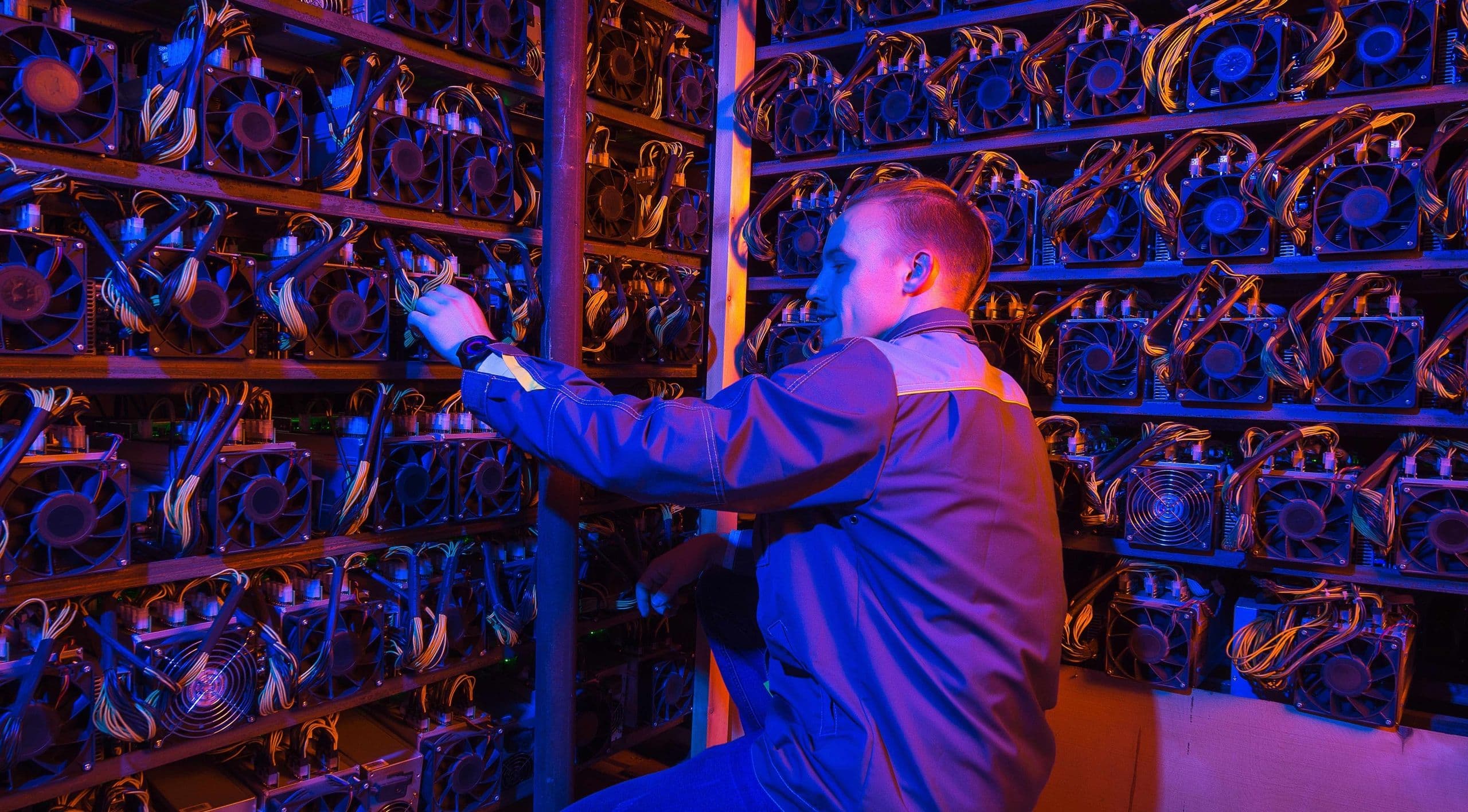
MARA said Bitcoin mining remains its operational foundation even as it expands into AI and high-performance computing. The company has a partnership with Starwood Capital to convert mining sites into AI and HPC data centers, and it acquired Long Ridge Energy & Power for $1.5 billion in late April. MARA said that site could eventually support 600 megawatts of AI computing capacity and that about 90% of its non-hosted mining capacity could be redeployed for AI and IT compute.
That is a serious strategic move, but it is still a plan. A converted site only becomes meaningful once power, networking, contracts, and utilization show up together. The risk is reading capital spending as diversification before the economics are proven. In other words, the AI angle can improve the story, but it does not yet replace the dependence on Bitcoin cycles.
### The right test is utilization, not announcement cadence
If the AI and HPC buildout is going to matter, the next questions are concrete: how fast MARA can turn acquired infrastructure into operating capacity, how much of that capacity is contracted, and whether the new load can offset pressure on mining margins. Without those signs, the pivot is better understood as a way to reposition power assets than as proof that a second earnings engine has arrived.

That distinction matters because MARA is trying to live in two different capital cycles at once. Mining cash flow is short-cycle and price-sensitive. AI conversion is long-cycle and contract-sensitive. Once those two lines sit inside the same ticker, the market stops asking only whether the company can mine profitably and starts asking whether the new load is actually contracted. Until that answer is visible, the AI story mostly changes the mix of risk, not the basic valuation problem.
## Why the Sector Backdrop Still Matters
MARA is not dealing with a unique problem. The report said Bitcoin was still trading more than 35% below its all-time high of $126,080, while mining difficulty had risen nearly 30% over the past year. It also said MARA has fallen from the largest Bitcoin miner by market cap to seventh place as rivals have pushed harder into AI.
That backdrop explains why this quarter matters beyond one company. Miners can be technically efficient and still see profits turn into losses if the price environment and difficulty curve move against them at the same time.
- Bitcoin remains far below its prior peak.
- Mining difficulty continues to push costs higher.
- Treasury holdings amplify gains and losses when the coin moves fast.
That is why this quarter should be read as a sequencing problem, not a one-off earnings miss. If BTC weakens while difficulty rises, mining becomes a cash engine with less slack. If AI capex runs ahead of contracted utilization, the company buys time but not return. MARA needs the mining base to keep paying for the pivot long enough for the pivot to begin paying for itself.
For MARA, the useful question is no longer whether mining alone is enough. It is whether the company can keep the mining base intact while the AI and HPC plan turns into actual contracted load. Until that happens, the stock is still being priced as a hybrid of operating company and Bitcoin proxy, and hybrid stories usually trade with more volatility than the sum of their parts.
---
Author: [Alex Chen](https://x.com/AlexC0in) | Alex has followed blockchain technology since 2021, focusing on DeFi and on-chain data analysis
Source: [cointelegraph.com](https://cointelegraph.com/news/mara-shares-sink-on-q1-revenue-miss-1b-net-loss)
DISCLAIMER:
1. All content on this website (including but not limited to articles, data, charts, and analyses) is for general informational purposes only and does not constitute any form of investment advice, trading recommendation, or financial guidance.
2. Cryptocurrencies and digital assets are subject to extreme price volatility and high investment risk; you may lose part or all of your principal. Past performance does not predict future results.
3. The information on this website is based on sources we believe to be reliable, but we do not guarantee its accuracy, completeness, or timeliness. Any investment decisions made based on this website’s information are at your own risk.
4. We strongly recommend that you conduct your own thorough research and consult an independent, licensed financial advisor before making any investment decisions.