Scaramucci's $21 Trillion Bitcoin Call: Wall Street Math or Digital Gold's Real Endgame?
2026-04-20 03:32:39
**Wall Street veteran Anthony Scaramucci just threw out a staggering number: Bitcoin's market cap could eventually hit $21 trillion.**
On the surface, this looks like another "million-dollar Bitcoin" prediction. But what matters here is the shift it signals in how Wall Street views Bitcoin—from a speculative asset to a *must-have store of value*. This cuts right to the core of traditional finance's evolving stance on crypto.
---
### **The Trust Game: From Cotton to Code**
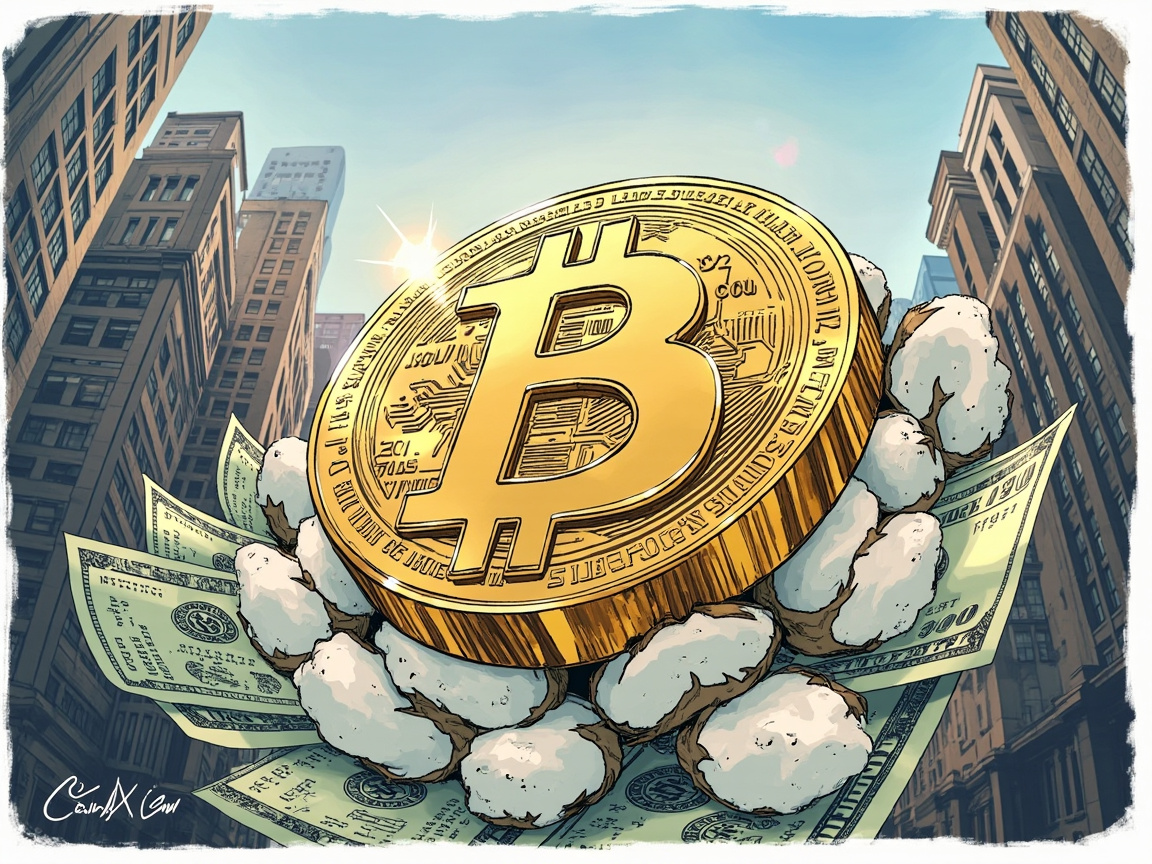
Scaramucci noted, "Dollar bills are made of linen and cotton." That's a light but loaded statement.
He's pointing to the essence of money: **trust**. The dollar is the dollar because the world believes in it. Over 16 years, Bitcoin has built a trust system through code and a decentralized network—no middlemen required.
Now, Wall Street is seeing it.
Morgan Stanley's moves, institutions adding Bitcoin to model portfolios—these aren't accidents. They mean traditional finance is starting to acknowledge: **Bitcoin's trust foundation is solid enough.**
---
### **The $21 Trillion Math: Simple, But Not to Be Ignored**
How do you get to $21 trillion? Simple: 21 million Bitcoin × $1 million each.
Anyone can do that math. But Scaramucci putting it out there carries weight.
- **First**, $21 trillion is still below gold's total global market cap. That means Bitcoin's "store of value" narrative has plenty of room to run.
- **Second**, he emphasized Bitcoin is "faster to transfer and easier to store" than gold. This isn't just tech praise—it's telling institutions: **Bitcoin is more practical.** Practicality drives replacement.
Math doesn't lie, but markets do. The key isn't the number itself, but how many people start believing it.
---
### **What to Watch Next: The Institutional Allocation Shift**
Predicting an endgame is pointless, but watching the path is crucial.
Voices like Scaramucci's mean Bitcoin is moving from "should we buy?" to "*how much* should we buy?" For investors, focus less on price and more on two things:
**1. Changes in institutional allocation percentages**
If Bitcoin becomes a standard piece of model portfolios, its share of institutional assets will creep from fractions of a percent to single digits. Every uptick means real buying pressure.
**2. The penetration rate of traditional financial products**
ETFs, trusts, structured products—Wall Street is wrapping Bitcoin in tools it understands. Faster adoption means steadier inflows.
---
### **The Bottom Line: The Price of Confidence Matters More Than Math**
Will Bitcoin hit $21 trillion? Nobody knows.
But a figure like Scaramucci publicly throwing out that number is a signal: Bitcoin's narrative has shifted from "geek experiment" to **"financial infrastructure."**
For crypto OGs, that might not sound exciting. For the broader market, it's a fundamental change.
Short-term, these predictions bring volatility and skepticism. Long-term, every Wall Street endorsement raises Bitcoin's **trust floor**.
Here's the takeaway: Don't fixate on $21 trillion. Watch for which major institution head says "Bitcoin belongs in portfolios" next.
**Their moves are worth more than any prediction.**
DISCLAIMER:
1. All content on this website (including but not limited to articles, data, charts, and analyses) is for general informational purposes only and does not constitute any form of investment advice, trading recommendation, or financial guidance.
2. Cryptocurrencies and digital assets are subject to extreme price volatility and high investment risk; you may lose part or all of your principal. Past performance does not predict future results.
3. The information on this website is based on sources we believe to be reliable, but we do not guarantee its accuracy, completeness, or timeliness. Any investment decisions made based on this website’s information are at your own risk.
4. We strongly recommend that you conduct your own thorough research and consult an independent, licensed financial advisor before making any investment decisions.