Spirit Airlines Has a 100% Chance of Bankruptcy by May 31: Merger Blocked, Oil Soars, No Bailout—The
2026-05-05 03:57:58
## The Market Has Already Delivered Its Verdict: Spirit Won't Survive May
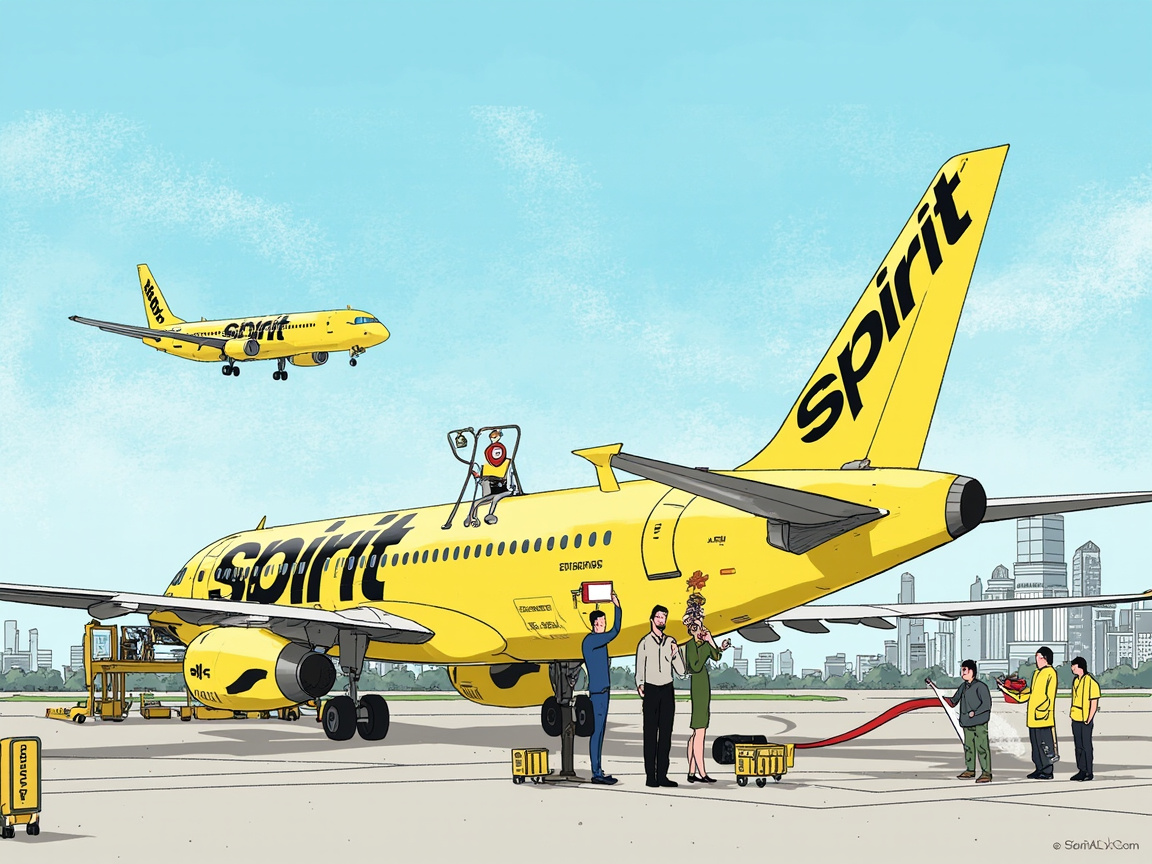
According to market pricing, Spirit Airlines has a 100% probability of shutting down or liquidating by May 31. This isn't a prediction—it's the market betting real money on the outcome. On the surface, it's a financial crisis at a budget airline. But what really matters is this: **when regulation, costs, and capital all slam the door shut, how a company gets systematically eliminated.**
## Merger Blocked: The First Blow from Regulators
Spirit's core problem is losing its only lifeline—the merger with JetBlue. After regulators blocked the deal, Spirit's standalone viability was exposed. Senator Elizabeth Warren's opposition was criticized as a key factor, but her office notes that high fuel costs were the real killer.
**Where did this hit?** It hit Spirit's business model. Low-cost carriers operate on razor-thin margins, relying on high turnover and low costs. The merger would have provided scale and pricing power. Without it, Spirit faces soaring costs and weak demand alone.
## Bailout Talks Fail: Capital Abandons It
After the merger fell through, Spirit sought rescue options but negotiations failed. That means capital markets have decided: this company isn't worth saving. The reason is simple—even with a cash infusion, its business model can't turn profitable under current fuel prices and competition.
**So what?** Investors should recognize this isn't a liquidity crisis but a structural elimination. When a company's unit costs are higher than competitors' and it can't compensate through scale or differentiation, bankruptcy is just a matter of time.
## High Oil Prices: The Final Straw
Fuel is the biggest variable cost for airlines. Spirit's fleet is mostly older A320s, less fuel-efficient than rivals'. When oil rises, its cost disadvantage widens. Worse, budget airlines have low pricing power—raising fares loses customers, but not raising them means losses.
**Where did this hit?** It hit every line of the income statement. Spirit's margins were already thin; higher fuel pushed them negative.
## Market Expects 100%: What Happens Next?
The market has priced in the worst, but the real shockwaves are yet to come.
- **For the airline industry:** Spirit's collapse will reduce low-cost capacity, likely pushing up overall fares. But competitors like Southwest and Frontier will quickly fill the gap, limiting long-term impact.
- **For investors:** Spirit's stock and bonds will go to zero. Funds and institutions with exposure will take losses, but systemic risk is low.
- **For regulators:** Warren and others may cite this as a victory against the merger, but the cost is thousands of lost jobs.
## What Investors Should Watch
1. **Liquidation announcement:** Spirit may formally announce a liquidation plan before May 31. If confirmed, the stock will go to zero.
2. **Regulatory moves:** If regulators soften and allow another company to buy some assets, it could cause short-term volatility. But odds are extremely low.
3. **Fuel prices:** A sharp drop in oil could extend Spirit's survival window. But the market clearly doesn't expect that.
## Conclusion: Twilight of the Low-Cost Carrier
Spirit's bankruptcy isn't an accident—it's the inevitable result of the low-cost model under rising costs, tighter regulation, and capital flight. Its story reminds us: **when the market bets 100% on a company's death, don't look for a miracle.** For investors, the real lesson is learning which business models can survive headwinds and which are just house of cards.
Spirit's end may only be the beginning of an industry shakeout.
DISCLAIMER:
1. All content on this website (including but not limited to articles, data, charts, and analyses) is for general informational purposes only and does not constitute any form of investment advice, trading recommendation, or financial guidance.
2. Cryptocurrencies and digital assets are subject to extreme price volatility and high investment risk; you may lose part or all of your principal. Past performance does not predict future results.
3. The information on this website is based on sources we believe to be reliable, but we do not guarantee its accuracy, completeness, or timeliness. Any investment decisions made based on this website’s information are at your own risk.
4. We strongly recommend that you conduct your own thorough research and consult an independent, licensed financial advisor before making any investment decisions.