• Thai-listed company DV8 has announced plans to build a corporate treasury of 10,000 Bitcoin.
• DoorDash, Chainlink & Oblong Market Shifts Guide (2026)
• Blockchain AI Convergence: Fact-Check & Market Guide (2026)
• Polygon's mainnet will undergo the Giugliano upgrade on April 8.
• PsiQuantum has started building its million-qubit quantum facility. Scientists say a machine this po
• Anthropic Discontinues Subscription Support for Third-Party Tools
• XRP ETF Forecasts & Bitmine’s $20B ETH Bet: 2026 Analysis
• Crypto & Tech Market Trends 2026: Pi, XRP, Robotaxi Safety
• DoorDash, Chainlink & Oblong Market Shifts Guide (2026)
• SEC v. Ripple Case Ends: XRP Outlook & Monero 51% Attack (2026)
The $40 Billion Inference War: How Nvidia and OpenAI Are Betting Big on AI's Next Frontier
2026-04-18 11:26:38
**The $40 billion question isn’t about buying chips—it’s about who controls the engine of the AI economy.**
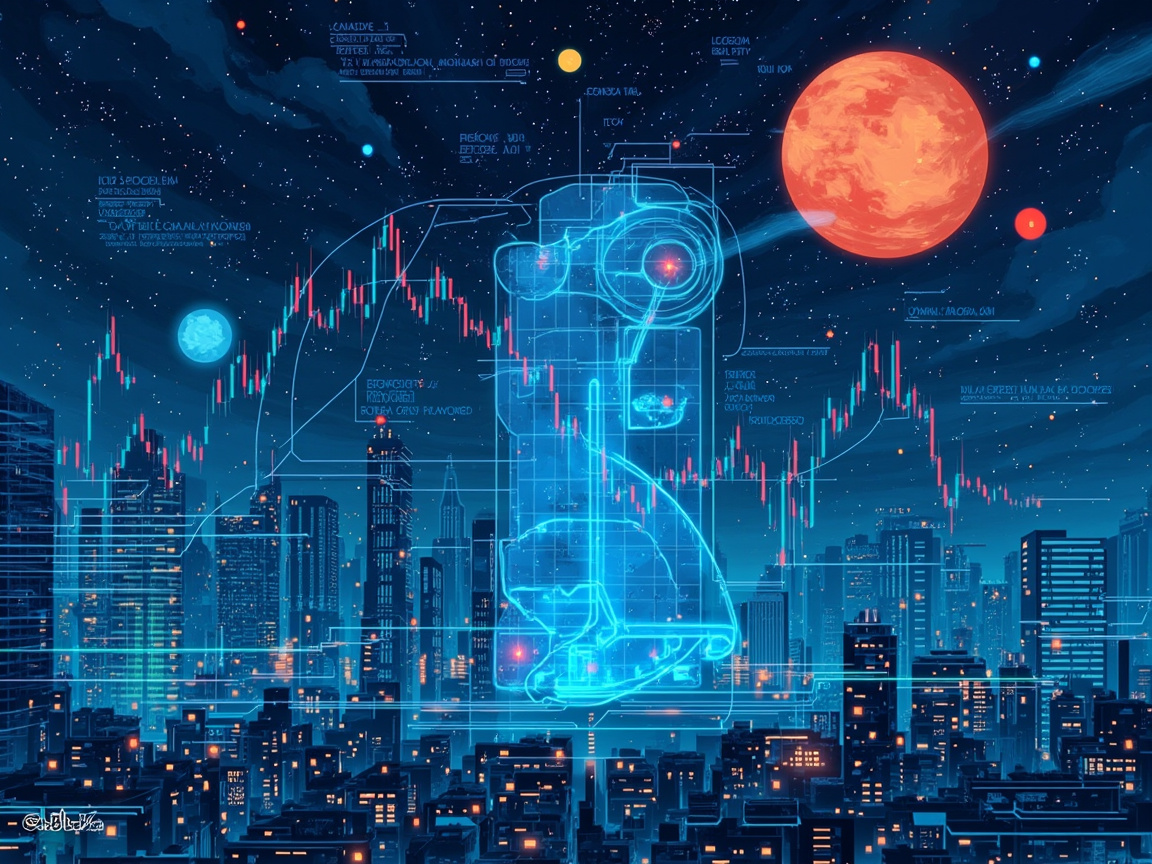
In late 2025, Nvidia quietly spent $20 billion to acquire AI chip startup Groq. Four months later, OpenAI announced a $20 billion chip procurement deal with Cerebras, plus an option to take up to a 10% stake. On the surface, these look like straightforward supply-chain moves. But dig deeper, and you’ll see the real story: the AI compute war has shifted from training models to **inference**—the process of running those models for billions of daily queries—and the winners will define the next decade of AI.
### Why Inference Is Eating the World
Training gets the headlines, but inference is where the money flows. Think of it this way: training a model like GPT-4 is a one-time event; serving it to millions of users is continuous. By 2025, inference already accounted for 50% of AI compute spending. In 2026, it’s projected to hit **two-thirds**. Industry leaders like Lenovo’s CEO have framed it even more starkly: the 80/20 split between training and inference is flipping to 20/80.
That means the most lucrative slice of the AI pie is moving from training chips to inference chips—and the architectures needed for each are fundamentally different.
### Nvidia’s Achilles’ Heel: GPUs Built for Training, Not Speed
Nvidia’s H100 and H200 are beasts for training, optimized for massive parallel computation. But inference has a different bottleneck: **memory bandwidth**.
When you ask ChatGPT a question, the chip must fetch the model’s weights from memory to the compute cores. That “fetch” step—not the calculation itself—is what creates latency. Nvidia’s GPUs use high-bandwidth memory (HBM) that’s separate from the cores, introducing delays that scale painfully at ChatGPT’s volume. OpenAI’s engineers hit this wall internally: no amount of tuning could overcome the architectural limit.
Nvidia’s weakness in inference isn’t a effort problem—it’s a design problem.
### Cerebras’s Answer: Put Memory Next to the Cores
Cerebras took a radical approach. Its WSE-3 chip is **wafer-scale**—larger than a human hand—packing 900,000 AI cores alongside 44GB of ultra-fast SRAM memory on the same silicon. By placing memory microns from the cores, it slashes “fetch” delays. The result: inference speeds **15–20x faster** than Nvidia’s H100.
Nvidia isn’t standing still. Its new Blackwell (B200) architecture boosts inference performance 4x over H100. But Blackwell is chasing a moving target—Cerebras is iterating too, and the competitive field is widening.
### The $20B Deals Decoded
**Nvidia’s Groq buy** is a $20 billion admission slip. If Nvidia believed its GPUs were unbeatable in inference, it wouldn’t need Groq. The acquisition signals a structural gap—one worth paying a record sum to fill. The real value isn’t Groq’s current products; it’s the architecture and team (including ex-Google TPU engineers) that Nvidia will integrate into its next-gen inference chips.
**OpenAI’s Cerebras deal** goes beyond procurement. The $20 billion package includes warrants for up to 10% equity and $1 billion in data-center funding. OpenAI isn’t just buying chips; it’s **incubating a supplier**—a playbook reminiscent of Apple’s early moves with Samsung before bringing chip design in-house. The endgame may not be full control, but a deep, binding partnership.
### What Comes Next—and What to Watch
1. **Nvidia integrates Groq fast.** Expect a Groq-influenced inference chip within 18–24 months. Watch for performance specs and pricing—it’ll show how seriously Nvidia takes the threat.
2. **Cerebras’s IPO looms.** Filed for a $35 billion Nasdaq listing, Cerebras will need to prove it’s more than OpenAI’s vendor. Its post-IPO moves—client diversification or tighter OpenAI alignment—will set the tone for the inference market.
3. **The market fragments.** Training is a Nvidia monopoly; inference will be multi-polar. Cerebras, Groq (now Nvidia), Google’s TPU, and AMD’s MI series will vie for share. The barrier isn’t raw compute—it’s cost-effective optimization for specific use cases.
4. **Cost becomes king.** Inference is a recurring expense. As AI apps scale, cheaper inference wins. Price-performance will make or break business models.
### The Crypto Angle: Decentralized Compute’s Window
This war isn’t just about centralized giants. Inference’s steep costs could open the door for **decentralized compute networks**—distributing tasks across global idle capacity, incentivized by tokens. Projects are already testing this. When centralized inference gets too expensive, alternatives gain appeal.
**For investors:**
- Track Nvidia’s next-gen inference chips—performance and pricing will reveal its post-training strategy.
- Monitor Cerebras’s IPO and client mix—it’s the inference bellwether.
- Watch decentralized compute projects with real tech and partnerships; they’re the hedge against centralization.
The inference war is just beginning. Two $20 billion bets are the opening salvo. Over the next 24 months, expect more M&A, IPOs, and breakthroughs. The outcome will decide who holds the keys to AI’s engine room—and compute is the hardest currency in the AI age.
| DISCLAIMER: The information on this website is provided as general market commentary and does not constitute investment advice. We encourage you to do your own research before investing. |
Recommended reading



Markets
2026-03-24
Markets
2026-02-26
Markets
2026-03-23
Latest News