• Thai-listed company DV8 has announced plans to build a corporate treasury of 10,000 Bitcoin.
• DoorDash, Chainlink & Oblong Market Shifts Guide (2026)
• Blockchain AI Convergence: Fact-Check & Market Guide (2026)
• Polygon's mainnet will undergo the Giugliano upgrade on April 8.
• PsiQuantum has started building its million-qubit quantum facility. Scientists say a machine this po
• Anthropic Discontinues Subscription Support for Third-Party Tools
• XRP ETF Forecasts & Bitmine’s $20B ETH Bet: 2026 Analysis
• Crypto & Tech Market Trends 2026: Pi, XRP, Robotaxi Safety
• DoorDash, Chainlink & Oblong Market Shifts Guide (2026)
• SEC v. Ripple Case Ends: XRP Outlook & Monero 51% Attack (2026)
Strait of Hormuz Standoff: Why Markets Give Europe's Naval Plan Just 9.5% Chance of Breaking U.
2026-04-18 05:03:04
**Europe steps into the world's most critical oil chokepoint** as France and Britain announce joint naval patrols to secure the Strait of Hormuz—but only if U.S.-Iran negotiations progress. While headlines suggest a diplomatic breakthrough, market data tells a different story: traders are betting real money that this European intervention won't break the deadlock anytime soon.
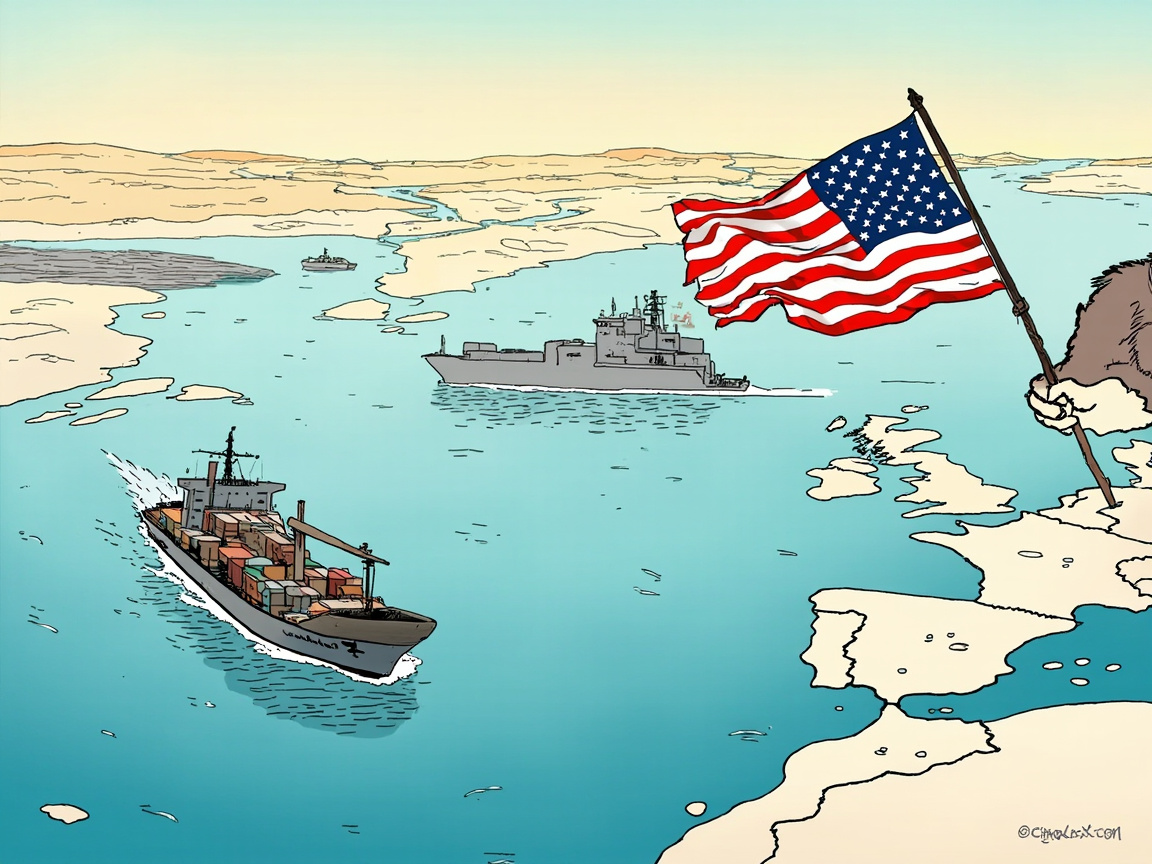
## The Market's Verdict: Less Than 10% Chance of April Resolution
Official statements claim shipping markets will normalize by April 30, but futures contracts reveal traders' skepticism:
- **April 30 contracts** plunged to 69.5%, dropping nearly 10 percentage points in a day
- **May 31 contracts** held steady at 90%, maintaining a **32-point premium** over April contracts
That spread doesn't lie. The 32-point gap represents the market's vote of no confidence in an April solution. Prediction markets are even more explicit: they price the probability of British warships passing through the strait by April 30 at just **9.5%**.
## Liquidity Gaps Reveal Where Smart Money Is Really Betting
The spread tells only half the story. Look at liquidity:
- April contracts show **extremely weak liquidity**—just $354 in trading volume can move prices 5%
- May contracts require **$3,730** for the same price movement, with liquidity **10 times higher**
Translation: **Big money isn't touching April contracts**. Thin liquidity makes April prices jump on every headline, while May's deep liquidity shows institutions have established serious positions there. They're betting on a longer game.
## Europe's Card: Catalyst, Not Game-Changer
The real question isn't whether European warships will sail, but whether they can accelerate diplomacy. Prediction markets offer a benchmark: if British warships do pass through by April 30, bettors would earn **16.7x returns**.
Yet the market assigns just 9.5% probability.
This doesn't mean Europe's move is meaningless—it means markets believe **adding warships won't magically resolve U.S.-Iran negotiations**. Europe's role looks more like a catalyst than a decisive factor.
## What to Watch Next: Three Key Signals
1. **UK Ministry of Defense movements**
Announcements are cheap. Watch for actual ship deployments, timelines, and force levels—these operational details will test Europe's resolve.
2. **London briefing signals**
Upcoming briefings could move markets instantly if they reveal concrete timelines, especially for those fragile April contracts.
3. **U.S.-Iran negotiation breakthroughs**
This remains the prerequisite for everything. Without progress at the negotiating table, Europe's naval plan remains theoretical.
## Trading Reality: Skip April Hype, Watch Structural Shifts
For traders navigating this uncertainty:
- **Ignore April timelines**—the market's 9.5% probability says they're likely empty promises
- **Focus on May+ contracts**—that's where real money is positioned with sufficient liquidity
- **Europe's biggest impact may be preventing escalation, not enabling resolution**
Geopolitical standoffs don't follow linear paths. Europe's entry changes the participant mix but not the fundamental logic. Markets aren't predicting "if" this resolves—they're pricing "when." And current spreads scream one message: **April is too optimistic; May is more realistic.**
Remember: In the Strait of Hormuz, sailing warships is easy. Getting commercial vessels to sail confidently requires negotiation breakthroughs, not naval escorts. The market is betting on the former, not the latter.
| DISCLAIMER: The information on this website is provided as general market commentary and does not constitute investment advice. We encourage you to do your own research before investing. |
Recommended reading





Markets
2026-03-24
Markets
2026-02-26
Markets
2026-03-23
Latest News