• Thai-listed company DV8 has announced plans to build a corporate treasury of 10,000 Bitcoin.
• DoorDash, Chainlink & Oblong Market Shifts Guide (2026)
• Blockchain AI Convergence: Fact-Check & Market Guide (2026)
• Polygon's mainnet will undergo the Giugliano upgrade on April 8.
• PsiQuantum has started building its million-qubit quantum facility. Scientists say a machine this po
• Anthropic Discontinues Subscription Support for Third-Party Tools
• XRP ETF Forecasts & Bitmine’s $20B ETH Bet: 2026 Analysis
• Crypto & Tech Market Trends 2026: Pi, XRP, Robotaxi Safety
• DoorDash, Chainlink & Oblong Market Shifts Guide (2026)
• SEC v. Ripple Case Ends: XRP Outlook & Monero 51% Attack (2026)
**Europe steps into the Hormuz Strait—and markets immediately price in the complications.**
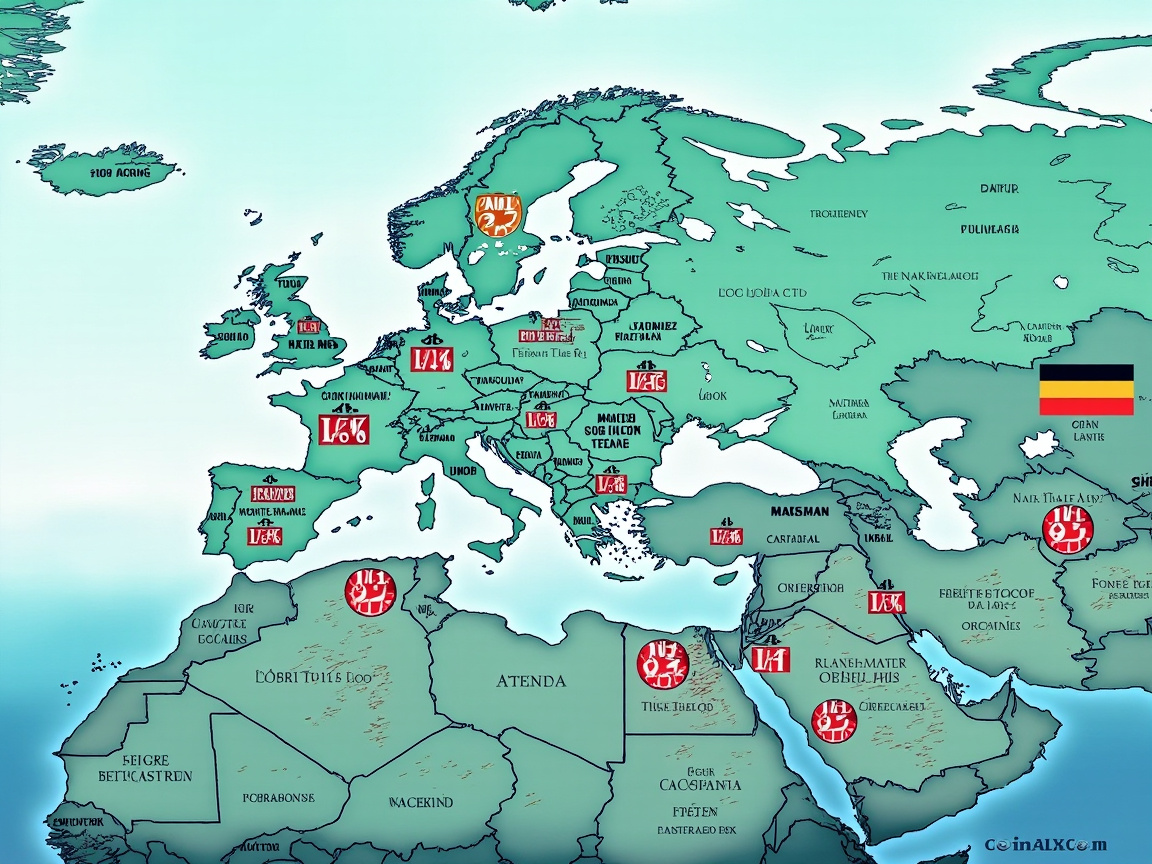
French Defense Minister Catherine Vautrin announced this week that France, Belgium, and the Netherlands are ready to provide mine-clearing and escort support for shipping through the critical Hormuz Strait. On the surface, it’s a stabilizing move amid rising Middle East tensions. But the real story is written in prediction markets, where traders use real money to bet on outcomes. Within 24 hours of the announcement, the probability of normal shipping resuming by April 30 plummeted from 60% to 56%. The market isn’t buying the hype.
### The Market’s First Take: Europe Arrives—But Too Slowly
Traders voted with their wallets. Support for the “April 30 resolution” dropped nearly 10 percentage points in a day. In prediction markets, a 5-point price move requires $354 in real capital to shift—so this wasn’t noise. The largest single drop came at 6:46 p.m. after the news broke, wiping 4 points off the odds in one go.
The message? Europe’s involvement highlights that the problem isn’t getting fixed quickly. Right now, paying 56 cents to bet “yes” on a return to normal by April 30 returns $1 if you win—a 1.98x payout. That bet assumes Europe-led de-escalation works within two weeks. The market is hesitating.
### The Longer Game: 82% Still Bet on a May Finish
More telling is the separate market for a **May 31 resolution**. Here, “yes” shares are still priced at 82%—meaning most traders believe a real fix will take at least another month.
Put the two markets together, and the logic emerges:
- **Short-term (by April 30)**: Europe’s move may ease tensions but won’t quickly reopen the strait.
- **Long-term (by May 31)**: The issue will likely resolve, but the timeline is stretching.
Money is pricing time in layers.
### The UK’s Silent Absence
Another clue: the probability of British warships entering the strait before April 30 remains stuck at 5.5%. Even with three European allies pledging support, the market doubts the UK will jump in immediately. That suggests limited coordination in Europe’s “joint action”—or that Britain has other plans.
Geopolitics isn’t about announcements; it’s about who actually moves.
### France’s “Non-Aggressive” Stance: Solution or Placebo?
Vautrin emphasized “humanitarian assistance” and a “non-offensive” approach. That may cool tensions temporarily, but it’s far from a full military commitment. The market reaction confirms it: odds dropped but didn’t crash, hovering around 56%—essentially a coin flip.
Traders are watching: Is Europe here to put out the fire, or just to draw a line?
### What to Watch Next: Actions, Not Words
For investors, the focus should shift from statements to tangible moves.
**Two key signals:**
1. **European naval movements**—Are ships actually heading toward the strait? Is transit data public?
2. **Iran’s diplomatic response**—Does Tehran offer de-escalation or double down?
Allied fleet movements or any substantive agreement will be the real catalyst to break the stalemate.
Prediction markets saw $32,000 in volume over the past 24 hours—not huge, but sensitive. The takeaway: Europe’s involvement has dampened short-term optimism without altering the long-term expectation of a resolution.
### The Bottom Line for Crypto
Geopolitical shocks don’t hit crypto via “war breaks out → Bitcoin drops.” They transmit through energy prices, shipping costs, and dollar liquidity. If the Hormuz Strait stays tense, oil transport snags could reignite inflation fears, forcing the Fed to rethink rate cuts—the real channel crypto traders should watch.
Europe’s move hasn’t changed the problem; it’s stretched the timeline. The market’s verdict: don’t get too hopeful short-term, but don’t panic long-term. Now, watch for the events that move probabilities with real money—like the first European warship sailing toward the strait.
| DISCLAIMER: The information on this website is provided as general market commentary and does not constitute investment advice. We encourage you to do your own research before investing. |
Recommended reading





Markets
2026-03-24
Markets
2026-02-26
Markets
2026-03-23
Latest News