• Thai-listed company DV8 has announced plans to build a corporate treasury of 10,000 Bitcoin.
• DoorDash, Chainlink & Oblong Market Shifts Guide (2026)
• Blockchain AI Convergence: Fact-Check & Market Guide (2026)
• Polygon's mainnet will undergo the Giugliano upgrade on April 8.
• PsiQuantum has started building its million-qubit quantum facility. Scientists say a machine this po
• Anthropic Discontinues Subscription Support for Third-Party Tools
• XRP ETF Forecasts & Bitmine’s $20B ETH Bet: 2026 Analysis
• Crypto & Tech Market Trends 2026: Pi, XRP, Robotaxi Safety
• DoorDash, Chainlink & Oblong Market Shifts Guide (2026)
• SEC v. Ripple Case Ends: XRP Outlook & Monero 51% Attack (2026)
Ceasefire Markets Bet 94% on Peace—Why Netanyahu Still Says No to Withdrawal
2026-04-17 12:08:07
Israeli Prime Minister Benjamin Netanyahu has publicly rejected Hezbollah's demand for a complete Israeli military withdrawal from southern Lebanon. On the surface, this looks like another escalation in Middle East tensions. But here's what actually matters: **prediction markets are now pricing a 94% probability of ceasefire—creating a stark inversion between political rhetoric and market reality.** While politicians keep talking tough, traders are betting real money that the fighting won't continue.
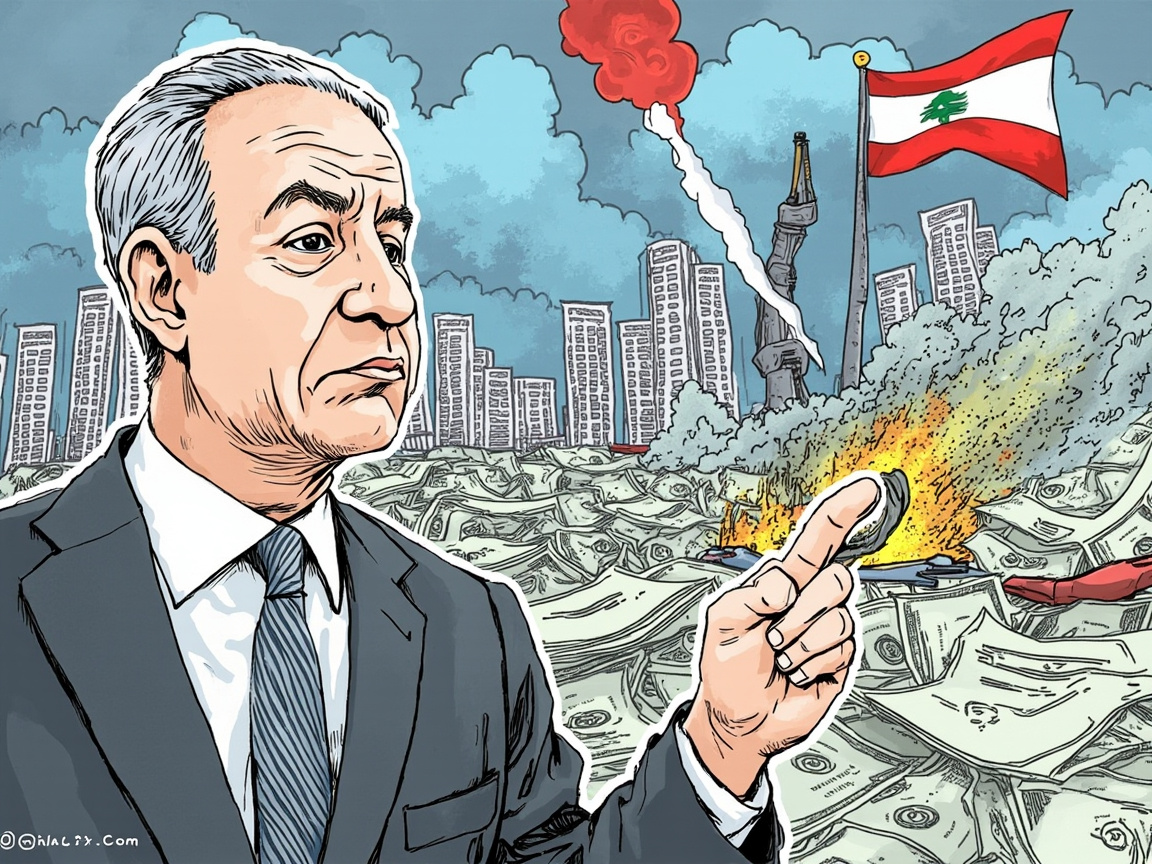
## Markets Have Already Priced the Ceasefire
Ceasefire probability markets hit 94% on April 30—up from just 45% a week earlier. This means most traders now see peace as nearly certain.
More telling are the market mechanics:
- Over $1.2 million in USDC traded in the past 24 hours
- The biggest single-day move came April 30 with a 13-point surge, likely driven by large institutional orders
- Order book depth shows moving the price 5 points requires $61,000 in volume—this isn't retail speculation
The market is saying one thing clearly: **regardless of what's said publicly, the real players are preparing to wrap things up.**
## Why the Disconnect Between Politics and Markets?
Netanyahu's refusal looks tough against the backdrop of 94% ceasefire probability, but that's exactly what makes it revealing.
Prediction markets excel at **aggregating dispersed information**—when significant money moves in one direction, it often means insiders see something the public doesn't.
Current signals show three layers moving differently:
1. **Military**—96% probability Israel pauses offensive operations in Lebanon
2. **Diplomatic**—94% ceasefire probability suggests backchannel progress
3. **Political**—Leaders maintain public hardline positions
**Three layers, three directions.** The question isn't "who's lying" but "which signal will ultimately determine the outcome."
## Where This Cuts Through the Noise
The disconnect reveals the gap between **political theater and actual negotiations.**
Netanyahu needs to show strength domestically; Hezbollah needs to maintain its resistance image—both require public posturing. But neither side can afford full-scale war: Israel faces multiple fronts, while Hezbollah's backers don't want uncontrolled escalation.
Result: **public shouting matches while chairs get quietly rearranged behind closed doors.**
The 94% market probability essentially bets that **political rationality will override political performance.** Traders see this as low-risk, moderate-return arbitrage: 6% upside if peace holds, limited downside if fighting resumes.
## What to Watch Next
Ignore headlines. Watch these signals instead:
**1. Hezbollah's military movements**
- Any actual withdrawal actions?
- Does cross-border fire continue decreasing?
**2. Israel's buffer zone positioning**
- Are "security arrangements" replacing "complete withdrawal" in discussions?
- Any third-party mediation leaks?
**3. Market probability shifts**
- 94% to 96% is noise; below 90% signals real change
- Where are large orders appearing?
**The most dangerous phase isn't when fighting happens—it's when everyone pretends fighting might still happen.** This is when accidental escalation or sudden diplomatic breakthroughs occur.
## The Crypto Investor Takeaway
For crypto traders, the lesson isn't about the Middle East—it's about **identifying signal-to-noise ratios.**
Crypto markets face similar dynamics: political statements, institutional moves, and retail sentiment often conflict. The difference is that traditional geopolitics has prediction markets as a thermometer, while crypto often relies on guesswork.
But the principles transfer:
- When official statements and market moves diverge sharply, markets usually know more
- When big money positions in one direction, retail shouldn't fight it
- When everyone claims "this time is different," it usually isn't
Against 94% ceasefire probability, Netanyahu's refusal looks less like policy and more like **carefully staged curtain calls**—telling the audience the show continues while actors already head backstage.
**Smart investors don't listen to the lines—they watch who leaves the theater first.**
---
*Markets bet on rationality; politicians perform toughness. This play's ending was written in the probabilities long before the actors agreed to exit stage left.*
| DISCLAIMER: The information on this website is provided as general market commentary and does not constitute investment advice. We encourage you to do your own research before investing. |
Recommended reading






Markets
2026-03-24
Markets
2026-02-26
Markets
2026-03-23
Latest News