• Thai-listed company DV8 has announced plans to build a corporate treasury of 10,000 Bitcoin.
• DoorDash, Chainlink & Oblong Market Shifts Guide (2026)
• Blockchain AI Convergence: Fact-Check & Market Guide (2026)
• Polygon's mainnet will undergo the Giugliano upgrade on April 8.
• PsiQuantum has started building its million-qubit quantum facility. Scientists say a machine this po
• Anthropic Discontinues Subscription Support for Third-Party Tools
• XRP ETF Forecasts & Bitmine’s $20B ETH Bet: 2026 Analysis
• Crypto & Tech Market Trends 2026: Pi, XRP, Robotaxi Safety
• DoorDash, Chainlink & Oblong Market Shifts Guide (2026)
• SEC v. Ripple Case Ends: XRP Outlook & Monero 51% Attack (2026)
China and Russia Reshape Middle East Chessboard, Iran Nuclear Deal Hangs in Balance
2026-04-16 20:20:43
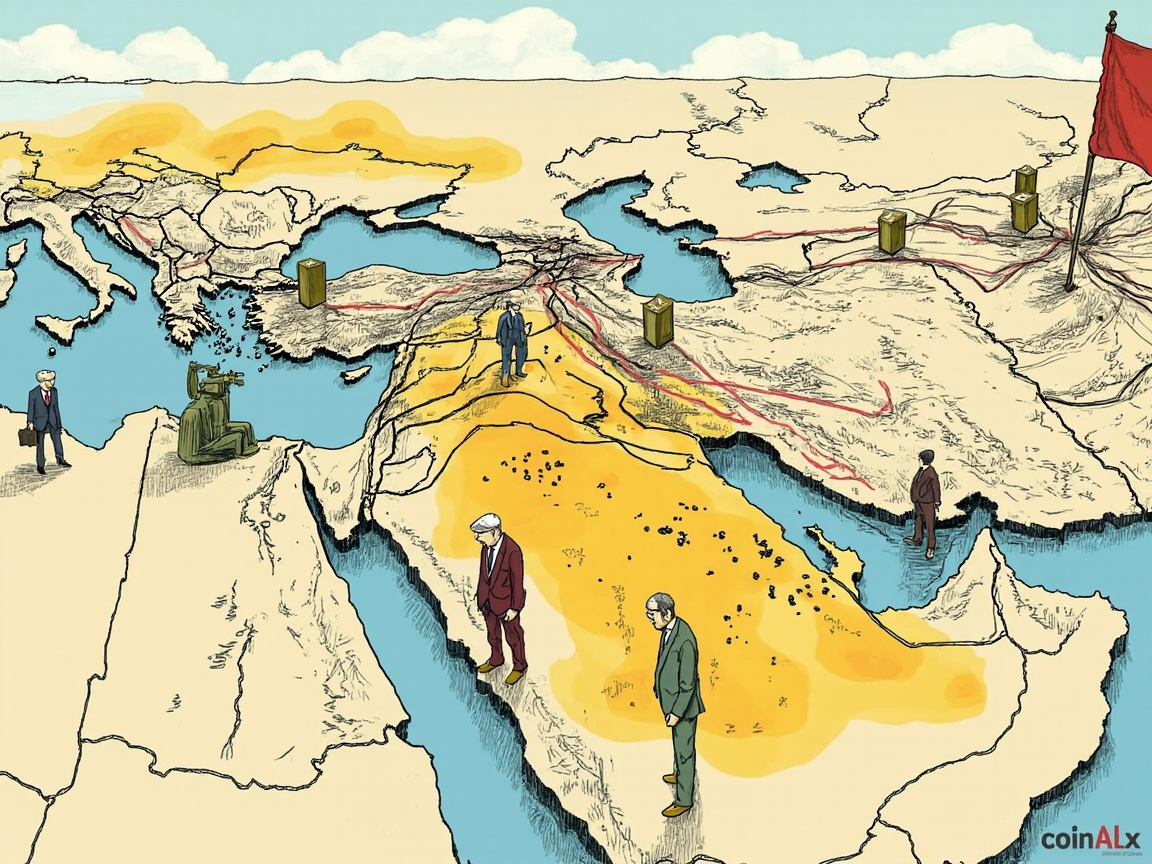
The April 30 deadline for Iran to surrender its uranium stockpile is the public ultimatum. But the real story isn't the date—it's the crumbling geopolitical foundation beneath the talks. What began as a technical non-proliferation negotiation has morphed into a direct contest for influence in the Middle East between the U.S., China, and Russia.
### Markets Are Betting Against a Deal
Data doesn't lie. On prediction markets, traders' probability of Iran complying by April 30 has collapsed from 36% a week ago to just **7.5%**. This isn't a minor dip; it's a confidence crash.
More telling is the term structure: the probability of a resolution by June 30 sits at 49.5% (down from 54%), while the December 31 contract holds steady at 61.5%. The market is saying: **no deal soon, but the long game remains open**. This spread is pure uncertainty premium.
### China and Russia Change the Game
The Middle East is no longer a unipolar arena. Recent diplomatic activity by China and Russia in the region isn't routine—it's strategic positioning. Their involvement gives Tehran crucial leverage to resist U.S. pressure.
Prediction markets reflect this shift. Contracts tied to "Iran military action announcements" and "control of Kharg Island" show declining volatility and probability. Traders are pricing in **reduced near-term risk of regime instability or loss of control** because Iran now has external backing. A more secure regime feels less urgency to compromise.
### Follow the (Lack of) Money
Ignore the noise. The largest single move in the April 30 uranium delivery market moved the price 5 points with just **$2,017**. The Iran action announcement market saw a 5-point move worth **$1,967**. This is retail-level churn, not institutional capital.
The smart money is waiting. It hasn't deployed because the core players—diplomats from China, Russia, Iran, and the U.S.—haven't shown their cards. The 29-cent bet on "Iran agrees to denuclearize" offers a potential 3.4x return, but it's a gamble on headlines, not a trend.
### What to Watch Next: Tone Over Timelines
For investors, the pivot point isn't the April 30 deadline—it's the **shift in diplomatic rhetoric**.
1. **Monitor Iran's Foreign Minister**: Any softening or hardening of language is a direct signal.
2. **Decode China's Moves**: Beijing's next concrete steps in the Middle East will define Iran's strategic runway.
3. **Watch Market Depth**: A sudden spike in trading volume on prediction markets, especially large bids, could indicate insider information starting to leak.
### The Bottom Line: A Longer, More Complex Game
A near-term nuclear deal is now highly unlikely. China and Russia's entry has stretched the timeline from a U.S.-Iran pressure test into a **multilateral war of attrition**.
The market impact has shifted: from binary bets on a deal to pricing the **ebbs and flows of regional tension** during a prolonged standoff. The source of risk moves from "breakthrough or breakdown" to sustained friction—more frequent volatility, but potentially lower single-event intensity.
**Final thought**: In geopolitics, when new players sit at the table, the old timetable is scrapped. The bet now isn't on a calendar date; it's on patience.
| DISCLAIMER: The information on this website is provided as general market commentary and does not constitute investment advice. We encourage you to do your own research before investing. |
Recommended reading

Markets
2026-03-24
Markets
2026-02-26
Markets
2026-03-23
Latest News