
• Thai-listed company DV8 has announced plans to build a corporate treasury of 10,000 Bitcoin.
• Blockchain AI Convergence: Fact-Check & Market Guide (2026)
• DoorDash, Chainlink & Oblong Market Shifts Guide (2026)
• Polygon's mainnet will undergo the Giugliano upgrade on April 8.
• PsiQuantum has started building its million-qubit quantum facility. Scientists say a machine this po
• Anthropic Discontinues Subscription Support for Third-Party Tools
• XRP ETF Forecasts & Bitmine’s $20B ETH Bet: 2026 Analysis
• Crypto & Tech Market Trends 2026: Pi, XRP, Robotaxi Safety
• DoorDash, Chainlink & Oblong Market Shifts Guide (2026)
• SEC v. Ripple Case Ends: XRP Outlook & Monero 51% Attack (2026)
S&P Warns: Banking System's Trillion-Dollar Ties to Trading Giants Create 'Built-In Fragil
2026-04-15 23:19:03
**The U.S. financial system faces a structural risk most investors overlook: deep, trillion-dollar ties between major banks and trading giants like hedge funds and high-frequency firms.** S&P Global Ratings just pulled back the curtain—while this looks like Wall Street's profit engine humming, the real concern is that short-term financing arrangements have made the entire ecosystem "inherently fragile."
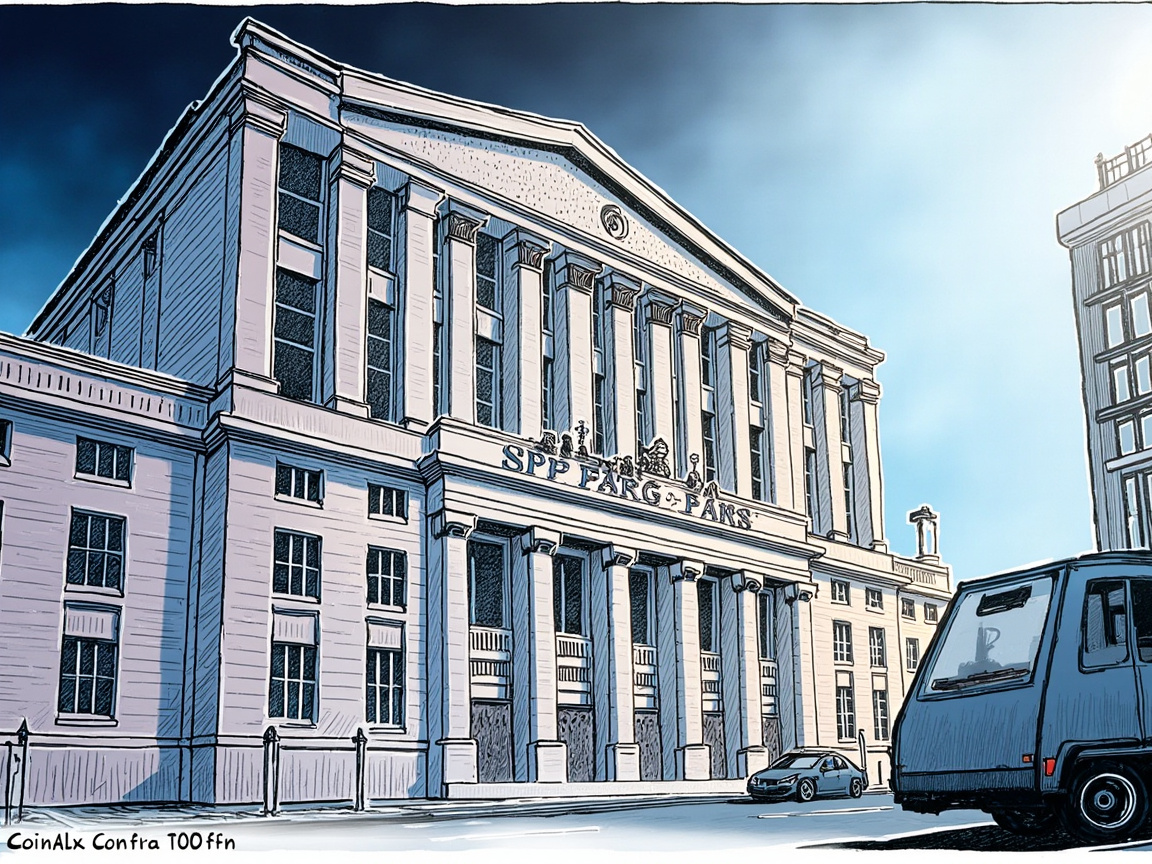
## This Isn't a Routine Warning—It's a Structural Alert
S&P's data is stark: prime brokerage lending exceeded $2.5 trillion in 2024, doubling from four years ago. Four banks—Goldman Sachs, Morgan Stanley, Barclays, and BNP Paribas—will rake in about $25 billion from market financing this year alone, up 25% year-over-year.
But the risk hides within those impressive growth curves.
Banks provide short-term funding to trading powerhouses like Jane Street and Citadel Securities—a lucrative business in calm markets. Yet S&P warns these short-term commitments are morphing into long-term capital binds, eroding bank capital and pressuring credit ratings.
Crucially, risk is highly concentrated among a handful of large banks. Any major market swing or counterparty default could transmit shockwaves rapidly through this channel.
## Record Leverage Makes Basis Trading a Ticking Bomb
What keeps regulators up at night is the massive adoption of **basis trading** by hedge funds.
The strategy sounds technical—exploiting tiny price gaps between Treasury bonds and futures. But because spreads are razor-thin, funds must employ enormous leverage to profit. Fed data shows hedge fund leverage hit record highs early last year.
S&P puts it bluntly: this strategy's surge amplifies second-order risk across the industry.
Translation: when markets inevitably wobble, these leveraged positions will unwind rapidly, hitting banks' prime brokerage and securities financing desks first. It's not a question of *if* but *how severe*.
## History Already Gave Us a Lesson
Remember Archegos' 2021 collapse? It cost prime brokers over $10 billion, with Credit Suisse taking the hardest hit.
That event revealed a harsh truth: risk transmission between banks and trading giants is faster and more brutal than most assume.
The situation today is more complex. Jane Street's Q2 2023 trading revenue topped $10 billion—outpacing JPMorgan and Goldman Sachs during the same period. These trading behemoths keep growing, and their ties to the banking system deepen.
S&P labels this a **"higher-tail risk"**—low probability, but high impact if triggered.
## What Comes Next? Watch These Three Signals
For crypto investors, this isn't some distant concern.
**First, monitor bank funding costs.** If banks tighten financing due to risk exposure, highly leveraged strategies will feel pressure first. That could trigger sudden liquidity crunches and volatility spikes.
**Second, watch regulators.** S&P's report isn't an isolated warning. The Fed and SEC have long scrutinized basis trading and leverage. Any regulatory crackdown will directly disrupt existing trading structures.
**Third, stay alert for chain reactions.** Deep bank-trader linkages create short risk transmission paths. One failure could ripple across the chain—as March 2020's liquidity crisis demonstrated. Next time will be more complex.
## This Isn't Distant Thunder
Some dismiss this as a traditional finance issue irrelevant to crypto. That's dangerous thinking.
Reality: liquidity tightening and risk aversion in traditional markets spill into crypto fast. The chain reaction after LUNA's 2022 collapse proved that.
More critically, crypto is evolving similarly—interdependence between centralized exchanges, market makers, and lending platforms grows. S&P's "inherent fragility" exists here too, just in different forms.
**Bottom line:** When S&P uses terms like "inherently fragile," the problem runs deep. Banks' trillion-dollar ties to trading giants won't unwind quickly. That means future market volatility won't diminish—it will grow more complex.
For investors, the task isn't predicting the next crisis. It's acknowledging this structural fragility exists and leaving ample room for uncertainty in position sizing and risk management.
Because when everyone's tied to the same vessel, the greatest danger isn't the storm—it's everyone rushing to one side at once.
| DISCLAIMER: The information on this website is provided as general market commentary and does not constitute investment advice. We encourage you to do your own research before investing. |
Recommended reading




Latest News