• Thai-listed company DV8 has announced plans to build a corporate treasury of 10,000 Bitcoin.
• Blockchain AI Convergence: Fact-Check & Market Guide (2026)
• Polygon's mainnet will undergo the Giugliano upgrade on April 8.
• DoorDash, Chainlink & Oblong Market Shifts Guide (2026)
• PsiQuantum has started building its million-qubit quantum facility. Scientists say a machine this po
• Anthropic Discontinues Subscription Support for Third-Party Tools
• XRP ETF Forecasts & Bitmine’s $20B ETH Bet: 2026 Analysis
• Crypto & Tech Market Trends 2026: Pi, XRP, Robotaxi Safety
• DoorDash, Chainlink & Oblong Market Shifts Guide (2026)
• SEC v. Ripple Case Ends: XRP Outlook & Monero 51% Attack (2026)
United's Merger Proposal Exposes Airlines' Real Survival Test in High-Fuel Era
2026-04-15 11:26:45
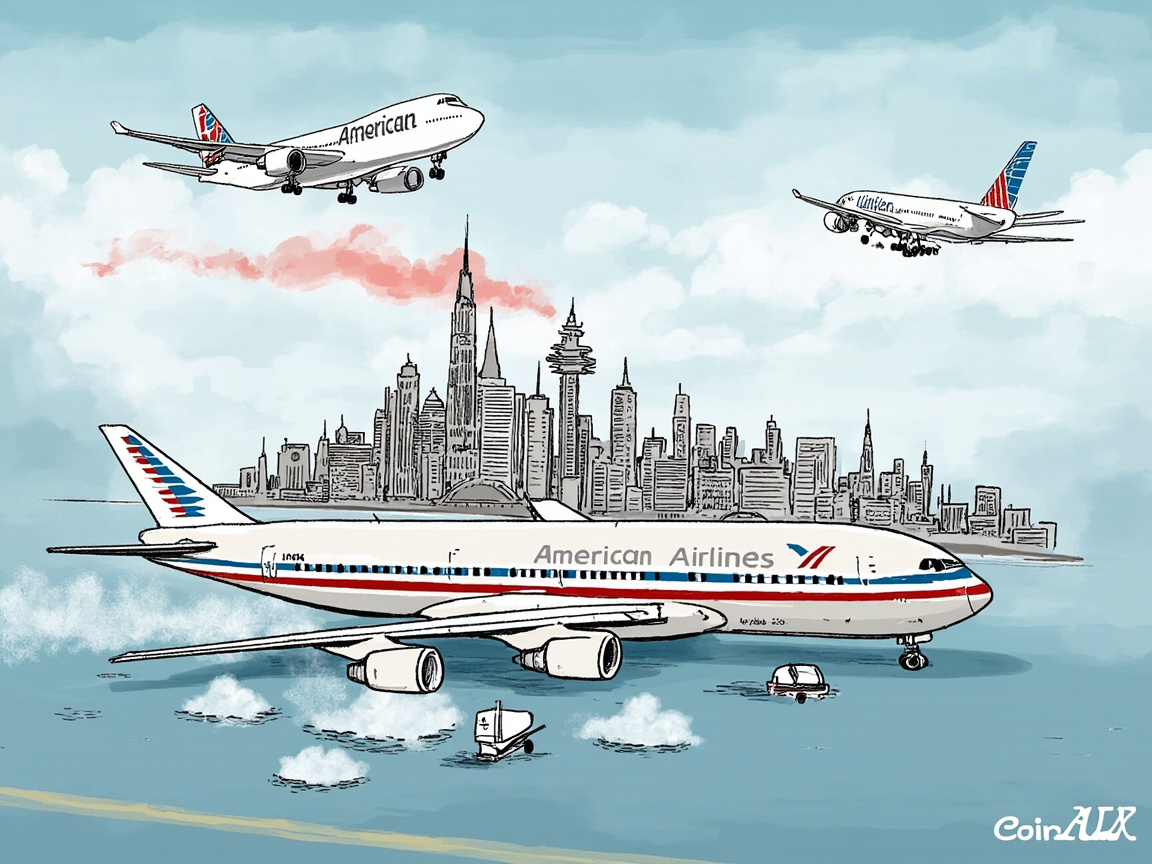
Earlier this year, United Airlines CEO Scott Kirby quietly floated a bombshell idea to the Trump administration: merging with rival American Airlines. If executed, it would create the world's largest airline. American's stock jumped 8% on the news, but don't get excited—this isn't really about a mega-deal. It's about survival in an era where jet fuel costs are crushing margins. **The real story here is which airlines can withstand the pressure, and which will get swallowed up.**
## Why This Deal Was Dead on Arrival
Analysts immediately poured cold water on the merger hype. Seaport Research's Daniel McKenzie called the stock move "more short-covering than genuine belief" and said the deal was "dead on arrival." The reason? Antitrust regulators would never allow it.
The four largest U.S. carriers already control 80% of domestic capacity. A United-American merger would push their combined share to around 40%. Cornell law professor George Hay put it bluntly: "This would be the largest transaction ever. I see almost no chance a court would approve it." ICF's Samuel Engel was even sharper: "If the DOJ doesn't oppose this, what would they oppose?"
Regulators aren't playing. The Biden administration already blocked two airline partnerships: the American-JetBlue Northeast alliance in 2023 and JetBlue's acquisition of Spirit Airlines in 2024. Even a Trump administration friendly to big deals would struggle to approve this level of market concentration.
So forget the merger fantasy. This proposal was never about closing a deal—it was about testing regulatory limits, market reactions, and competitive weaknesses.
## High Fuel Prices Are the Real Catalyst
Why float this idea now? Because airlines are getting squeezed by soaring jet fuel costs, their second-largest expense after labor. With oil prices elevated, profits are evaporating.
Delta CEO Ed Bastian nailed it last week: "In my career, high fuel prices have always been the most powerful catalyst for change. They separate winners from losers and force the weak to adjust, consolidate, or exit."
That's the entire story in one sentence.
Facing high fuel costs, airlines have two options: control expenses internally or merge to achieve scale economies. United and American are eyeing option two, but regulators won't allow it. So what's left?
History provides clues. Delta's 2008 merger with Northwest and American's 2013 merger with US Airways created today's profit leaders. Now, fuel prices are forcing another reckoning.
## American's Weak Position: Falling Behind or Takeover Target?
The numbers tell the story. American posted $111 million in net income last year on $54.6 billion in revenue, while United earned $3.35 billion on $59 billion. That's an order-of-magnitude profit gap.
American has lagged United and Delta in attracting high-spending travelers—the core revenue driver for major carriers. Simply put, American is falling behind.
Kirby, who was fired by American in 2016, now runs their competitor. His merger proposal might look like expansionism, but it's really an assessment: does this former employer still have value as a takeover target, or will fuel costs sink it first?
## What Comes Next? Three Things Investors Should Watch
This deal will likely undergo "polite review until public opposition grows too loud," then fade away. But it sends a clear signal: **high fuel prices have ignited another airline industry shakeout.**
Investors should focus on three things instead of merger speculation:
1. **Cost control capabilities:** With fuel prices staying high, carriers with high fuel-cost exposure face the most pressure. Delta claims it's "well-positioned"—what about the others?
2. **Capacity cuts and fare increases:** Airlines are already trimming capacity plans to control costs. If supply shrinks and fares rise, carriers with better profit structures will benefit most.
3. **Regulatory boundaries for cooperation:** United and JetBlue have a limited partnership (mutual ticketing), but Kirby is cautious about deeper coordination. Where regulators draw the line determines whether airlines can use "soft alliances" to weather the storm.
## The Bottom Line: Weak Get Weeded Out, Strong Get Stronger
This merger trial balloon acts like a mirror, reflecting the airline industry's harsh reality: under fuel-price pressure, there's no middle ground. Carriers either control costs like Delta (through past consolidation) or become takeover targets like American—or fail outright.
Kirby admitted the obvious: "Mergers are large, difficult, and complex." He knows this deal won't happen, but he proposed it anyway. Why? Because floating the idea achieved his goal: reminding the market that the industry is reshuffling.
Stop fixating on the transaction. Understand this dynamic, and you'll know where to place your bets—on carriers that can thrive even if fuel prices climb higher, and that might feast on weaker competitors. The shakeout has begun. Weak players will be cleared out; it's only a matter of time.
| DISCLAIMER: The information on this website is provided as general market commentary and does not constitute investment advice. We encourage you to do your own research before investing. |
Recommended reading






Latest News