
• Thai-listed company DV8 has announced plans to build a corporate treasury of 10,000 Bitcoin.
• Blockchain AI Convergence: Fact-Check & Market Guide (2026)
• Polygon's mainnet will undergo the Giugliano upgrade on April 8.
• DoorDash, Chainlink & Oblong Market Shifts Guide (2026)
• PsiQuantum has started building its million-qubit quantum facility. Scientists say a machine this po
• Anthropic Discontinues Subscription Support for Third-Party Tools
• XRP ETF Forecasts & Bitmine’s $20B ETH Bet: 2026 Analysis
• Crypto & Tech Market Trends 2026: Pi, XRP, Robotaxi Safety
• DoorDash, Chainlink & Oblong Market Shifts Guide (2026)
• SEC v. Ripple Case Ends: XRP Outlook & Monero 51% Attack (2026)
Goldman's 'Magnificent Seven' Call: What Crypto Investors Should Really Watch
2026-04-14 23:55:26
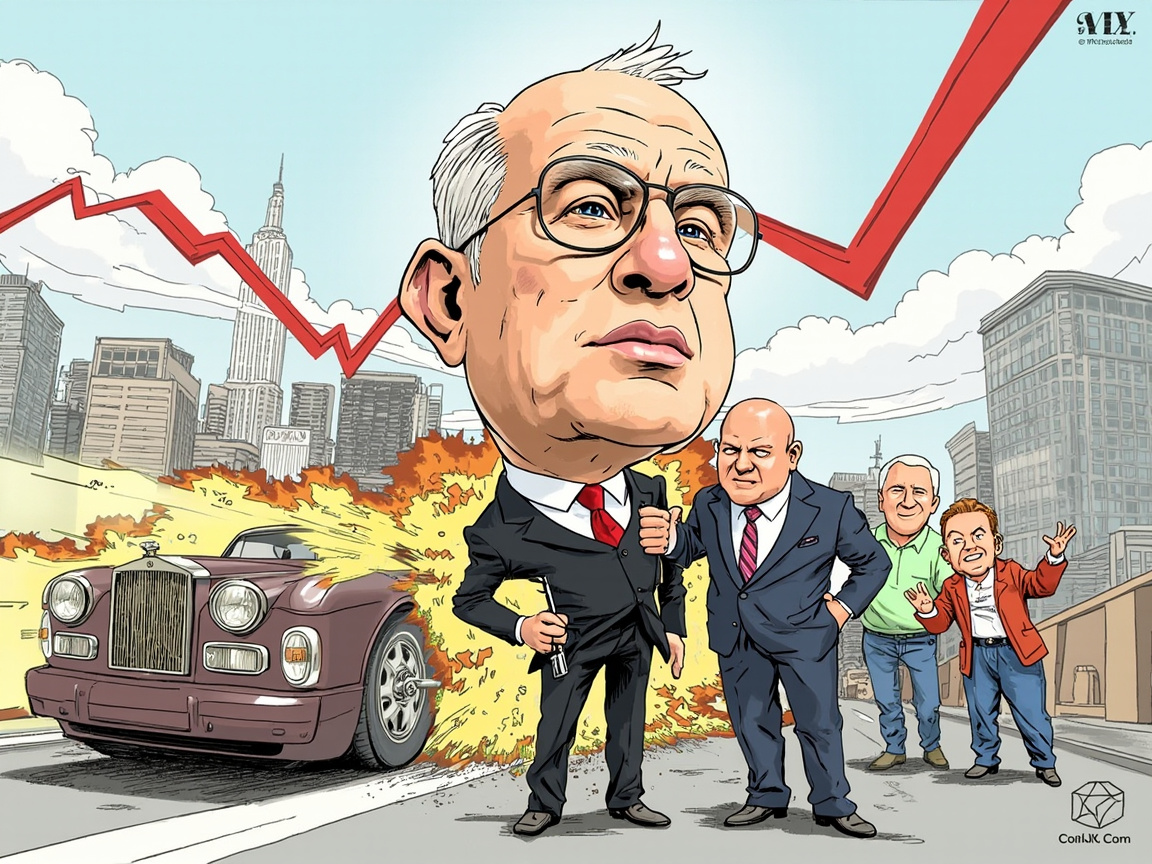
Goldman Sachs managing director Lee Cooperman just drew a direct parallel between today's market environment and March 2020—the COVID crash that preceded historic rallies in both tech stocks and Bitcoin. While his immediate call focuses on a potential rebound for the "Magnificent Seven" mega-caps, crypto investors should look deeper. The real story isn't about buying Apple or Microsoft; it's about decoding the capital allocation signals now flashing from traditional finance.
## What Goldman Is Actually Signaling
Cooperman's comparison to March 2020 is deliberate. That period marked the beginning of unprecedented liquidity injections and launched Bitcoin's bull run from $3,800. By invoking that moment now, Goldman isn't just comforting equity clients—it's hinting that a similar macro script could be unfolding. The key takeaway: when giants like Goldman start framing markets through this lens, pay attention to where money moves next.
## The Barbell Strategy Exposed
More revealing is Cooperman's description of how investors are approaching AI: through a "barbell strategy." This means concentrating capital at two extremes—AI infrastructure plays on one end, and AI output/transport companies on the other—while avoiding the middle. It's a ruthless allocation framework that prioritizes certainty over diversification.
For crypto, this implies capital will cluster around the hardest AI-related narratives: decentralized compute, AI agent infrastructure, and data ownership protocols. Projects that merely sprinkle "AI" into their marketing without tangible utility will likely get starved out. The barbell doesn't reward vague concepts; it rewards foundational value capture.
## The Real Cut
Goldman's message, stripped down, is this: stop drifting. Focus on the core narrative.
The post-2020 bull run was fueled by liquidity and digital acceleration. Today's engine is AI-driven productivity shifts and capital rotation. When Cooperman emphasizes that "investors haven't lost faith in the AI theme," he's speaking to crypto participants too. The narrative competition in digital assets has entered its second half—from "everything is AI" to "who actually captures AI value." If your holdings sit in the middle of the barbell, you're in the danger zone.
## What to Watch Next
Don't just listen to what Goldman says. Watch what it doesn't say.
Cooperman compares today to March 2020 but omits a crucial detail: that crash triggered the Fed's money printer to go brrr. Today, rate cuts remain uncertain, and the liquidity taps aren't fully open. So any "Magnificent Seven" rebound may look more like a technical correction than a sustained reversal.
For crypto, this suggests two dynamics:
1. **Reduced capital suction from traditional markets.** If equities only bounce weakly, less money gets pulled from crypto—and some may even flow back as a hedge.
2. **Sharpening AI narrative divergence.** The barbell strategy will accelerate a split between infrastructure/protocol layers (likely winners) and middle-tier applications (likely strugglers).
## The Bottom Line
Goldman isn't telling you to buy tech stocks. It's telling you to audit your portfolio through a barbell lens.
If you hold AI-related crypto assets, ask: are they at the barbell's ends—think compute, data protocols, decentralized AI agents—or stuck in the mushy middle? If it's the latter, use any market rebound to reallocate.
If you're waiting for Bitcoin's next leg up, view Goldman's equity call as a contrarian indicator. When traditional giants regain favor, crypto often consolidates. This is the time to build positions in infrastructure projects that can absorb AI's spillover effects—not chase short-term pumps.
Remember: after March 2020, the biggest winners weren't the first to bounce; they were the ones best positioned for the new narrative. Same rules apply now.
| DISCLAIMER: The information on this website is provided as general market commentary and does not constitute investment advice. We encourage you to do your own research before investing. |
Recommended reading






Markets
2026-02-26
Markets
2026-03-23
Latest News