• Thai-listed company DV8 has announced plans to build a corporate treasury of 10,000 Bitcoin.
• Blockchain AI Convergence: Fact-Check & Market Guide (2026)
• DoorDash, Chainlink & Oblong Market Shifts Guide (2026)
• PsiQuantum has started building its million-qubit quantum facility. Scientists say a machine this po
• Anthropic Discontinues Subscription Support for Third-Party Tools
• XRP ETF Forecasts & Bitmine’s $20B ETH Bet: 2026 Analysis
• Polygon's mainnet will undergo the Giugliano upgrade on April 8.
• DoorDash, Chainlink & Oblong Market Shifts Guide (2026)
• SEC v. Ripple Case Ends: XRP Outlook & Monero 51% Attack (2026)
• Crypto Market News: Regulatory Shifts & Corporate Volatility (March 2026)
Hormuz Blockade Week 7: Why Goldman Sachs Is Betting on Two More Rate Cuts This Year
2026-04-14 21:33:33
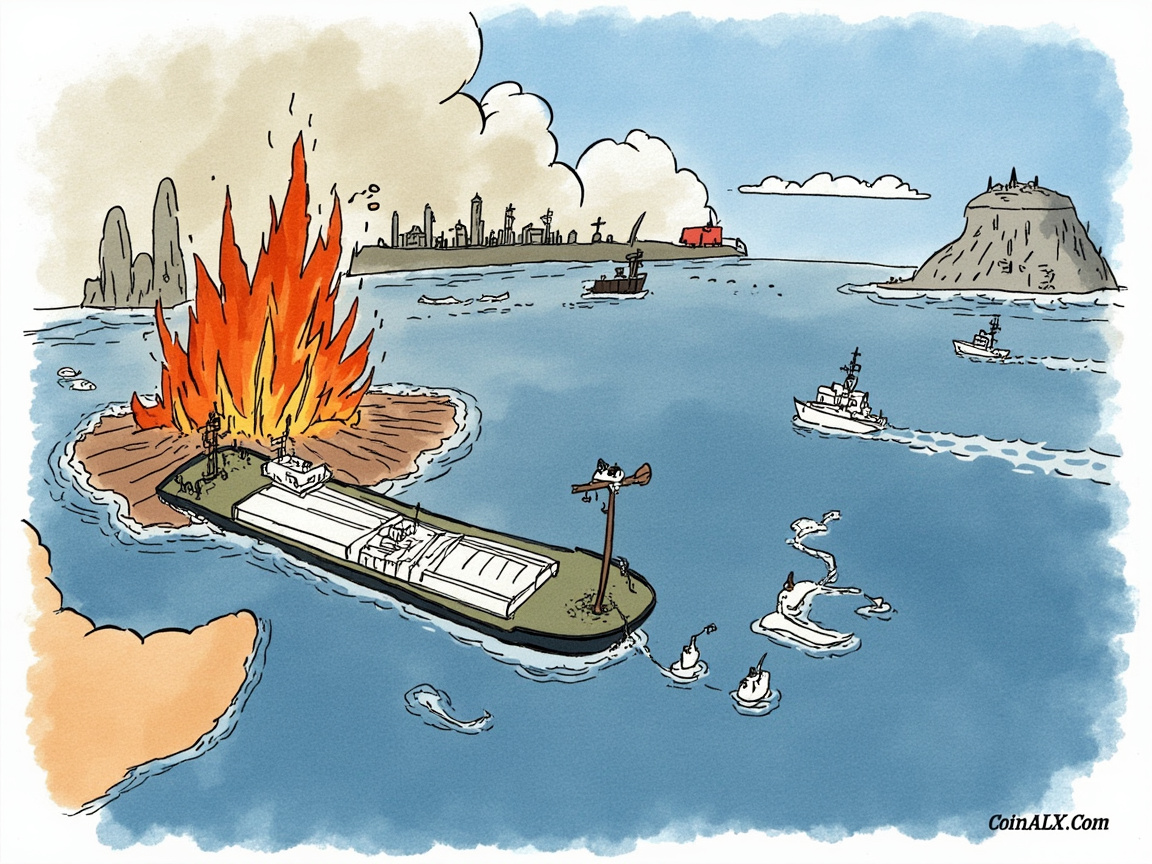
The Strait of Hormuz has been blocked for seven weeks. With 15 warships now deployed, oil prices are climbing, and memories of 2022’s inflation spike are flashing back. But Goldman Sachs analyst Jessica Rindels just sent clients a clear message: **This time is different—the Fed can still cut rates twice this year.**
On the surface, this is a macro report. But look closer: Goldman is betting markets will embrace a new story of **“mild stagflation.”** Get it right, and rate-cut expectations keep risk assets afloat. Get it wrong, and the second half of 2024 gets repriced.
### Why This Isn’t 2022 All Over Again
Rindels draws a sharp line between today and the Russia-Ukraine war. In 2022, energy, food, and supply chains broke down at once. Seven weeks into the Hormuz blockade, global supply chains haven’t snapped. The shock, Goldman argues, is an order of magnitude smaller.
More importantly: **U.S. shale producers won’t ramp up.**
Oil companies are too cautious to splurge on new capacity just because prices are high short-term. That means the economic hit lands squarely on consumers—with no industrial buffer. Sounds worse? For the Fed, it actually lowers runaway inflation risk. No capex boom means no second-round inflation spiral.
### The Two Pillars Holding Up Rate Cuts
Goldman is sticking to its call for 25-bp cuts in September and December. Two pillars support it:
**1. Unemployment.** Goldman has nudged up its jobless rate forecast. As spending weakens, the labor market will soften—giving the Fed a clear reason to cut.
**2. Core inflation.** Rindels calculates that fading tariff effects will outweigh energy-price passthrough. Core inflation should keep cooling gently.
Are these pillars solid? Not guaranteed. Rindels admits she wouldn’t be surprised if FOMC members balk at cutting while inflation stays elevated. Leadership could change; Powell might depart. Variables remain.
Yet Goldman is placing its bet. Why?
### The Real Battle: Does the Market Believe the Story?
This report is essentially Goldman setting the tone. “Mild stagflation” is a delicate pitch—enough inflation pressure and growth slowing to matter, but not enough to spiral. If markets buy it:
- Rate-cut expectations hold
- Risk assets find support
- Capital doesn’t flee in panic
If not? Rising oil prices, hotter inflation expectations, or hawkish Fed chatter could blow the narrative apart. As Goldman’s Shreeti Kapa noted separately, the stock market’s “final battle” is nearing. That wording isn’t casual.
### What to Watch Next: Three Signals
For crypto, macro narratives drive flows. Watch these three signals to see if Goldman’s call holds:
**1. Can oil prices stabilize?** Each extra week of blockade adds pressure. If Brent crude breaks and holds above $90, inflation fears will reignite.
**2. Will U.S. shale producers prove Goldman wrong?** The bet is they won’t expand. If earnings season brings capex hikes, the inflation story rewrites itself.
**3. What Fed officials say.** Any hawkish comments before the September FOMC could shake rate-cut expectations—especially if inflation data wobbles.
### The Bottom Line
Goldman is betting the shock will stay contained. But a bet is just that—markets must agree.
For investors: **Prepare for Goldman’s script, but keep an eraser handy.** Rate-cut hopes can keep risk assets buoyant, but that buoyancy may not last as long as some think.
The warships are still there. Oil is still rising. Inflation pressure is building. Goldman’s report is less a forecast than a sedative for markets. Whether it lasts until September—or wears off sooner—depends on those three signals playing along.
| DISCLAIMER: The information on this website is provided as general market commentary and does not constitute investment advice. We encourage you to do your own research before investing. |
Recommended reading





Markets
2026-02-26
Markets
2026-03-23
Latest News