• Thai-listed company DV8 has announced plans to build a corporate treasury of 10,000 Bitcoin.
• Blockchain AI Convergence: Fact-Check & Market Guide (2026)
• DoorDash, Chainlink & Oblong Market Shifts Guide (2026)
• PsiQuantum has started building its million-qubit quantum facility. Scientists say a machine this po
• Anthropic Discontinues Subscription Support for Third-Party Tools
• XRP ETF Forecasts & Bitmine’s $20B ETH Bet: 2026 Analysis
• Polygon's mainnet will undergo the Giugliano upgrade on April 8.
• DoorDash, Chainlink & Oblong Market Shifts Guide (2026)
• SEC v. Ripple Case Ends: XRP Outlook & Monero 51% Attack (2026)
• Crypto Market News: Regulatory Shifts & Corporate Volatility (March 2026)
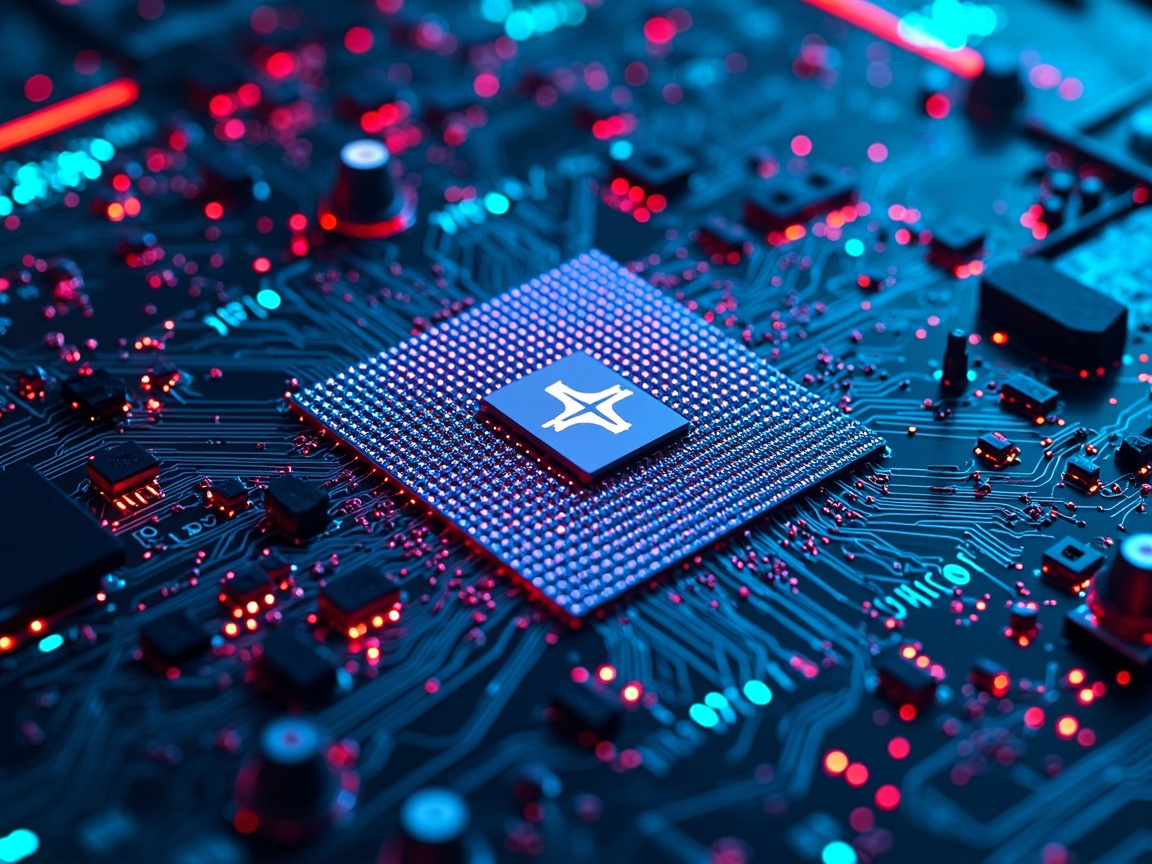
While semiconductor labs buzz about synthetic diamond as a next-gen chip material, Bitcoin miners should focus on one thing: this technology could directly attack the twin bottlenecks of heat dissipation and power efficiency that define mining profitability today.

## The Heat Problem: Mining's Silent Cost Killer
Bitcoin mining is a race where electricity costs and cooling capacity set the limits. Current ASIC chips—built on silicon, silicon carbide (SiC), or gallium nitride (GaN)—hit thermal walls quickly. Drop a chip's temperature by 10°C, and you can double its lifespan while shaving percentage points off energy use.
Diamond conducts heat 13x better than silicon and 5x better than SiC. That means diamond-based chips could require far simpler, cheaper cooling systems. For mining farms, cooling costs—currently 15–25% of operational expenses—might fall to single digits.
This isn't just theory. Lab tests show diamond devices operating stably above 400°C, while today's mining chips max out around 150°C. Higher heat tolerance means rigs could run in harsher environments, expanding site options.
## Efficiency Gains: The Next Step-Change
Mining evolution has been a story of efficiency leaps: CPU to GPU to ASIC. But ASIC gains are plateauing—each nanometer shrink now delivers diminishing returns.
Diamond could break the stalemate. Its breakdown field strength is 30x higher than silicon's, allowing thinner chips with lower resistance. Theoretical efficiency for diamond power devices nears 99.99%, a full percentage point above today's best SiC parts.
Don't underestimate that point. For a 100-megawatt farm, it translates to nearly 10 million kWh saved annually—a margin that could decide survival post-halving.
## The Roadblocks: Cost, Manufacturing, Timeline
Brilliant specs must face brutal economics. Synthetic diamond wafers currently cost hundreds of times more than silicon, and tens of times more than SiC. Even with CVD technology advancing, bringing costs down to mining-acceptable levels requires 3–5 years of industrial scaling.
Manufacturing poses bigger hurdles. Diamond's extreme hardness makes doping, etching, and packaging far harder than with conventional semiconductors. Labs have only produced simple diodes and transistors so far—complex ASICs remain distant. Yield issues and high defect densities further question mass-production viability.
Timeline matters. SiC took ~20 years from lab to market; GaN took 15+. Diamond starts from a higher baseline but faces steeper industrialization challenges. Optimistically, commercial diamond power devices might arrive around 2028, with mining-specific chips unlikely before the 2030s.
## What to Watch: Three Signals for Miners & Investors
No need to bet on diamond today, but build your watchlist. Key signals over the coming years:
**1. The cost curve slope.** Track earnings and capacity plans from diamond semiconductor leaders like Element Six and II-VI. If synthetic wafer prices drop >30% annually, adoption accelerates.
**2. Manufacturing breakthroughs.** Especially n-type doping—a global challenge. Stable n-type doping would enable complex integrated circuits.
**3. Top mining rig makers' moves.** Are Bitmain, Canaan setting up materials labs? Partnering with semiconductor firms? Filing patents mentioning "diamond" or "synthetic diamond"? These actions speak louder than research papers.
## The Likely Path: Integration, Not Replacement
Diamond won't suddenly replace silicon, SiC, or GaN. Expect gradual integration—first in critical cooling modules or high-voltage converters, then possibly in compute units.
- **Short-term (3–5 years):** Diamond as a heat-spreading substrate to boost existing chip cooling.
- **Mid-term (5–8 years):** Diamond power devices replacing some SiC parts in power supply units.
- **Long-term (8+ years):** Potential for all-diamond chip mining rigs.
This timeline intriguingly aligns with Bitcoin's halving cycles. The next halving around 2028 coincides with diamond's commercialization window. If progress holds, 2030s-era rigs could see another order-of-magnitude efficiency jump.
## Bottom Line
Diamond semiconductors are neither sci-fi nor an imminent revolution. They represent the ultimate frontier in power electronics efficiency—and Bitcoin mining is that frontier's most brutal testing ground.
For miners: Don't wait for diamond rigs. Optimize your farm's cooling and power management today—that's what determines whether you survive until new tech matures.
For investors: Monitor progress but don't overcommit. Semiconductor material shifts are long games filled with "breakthroughs" and bubbles. The real inflection point comes when costs fall within 1.5x of existing tech and yields exceed 90%.
That day isn't here, but the roadmap is clear. Bitcoin mining's endgame might indeed be written on diamond chips.
| DISCLAIMER: The information on this website is provided as general market commentary and does not constitute investment advice. We encourage you to do your own research before investing. |
Recommended reading








Markets
2026-02-26
Markets
2026-03-23
Latest News