• Thai-listed company DV8 has announced plans to build a corporate treasury of 10,000 Bitcoin.
• Blockchain AI Convergence: Fact-Check & Market Guide (2026)
• DoorDash, Chainlink & Oblong Market Shifts Guide (2026)
• PsiQuantum has started building its million-qubit quantum facility. Scientists say a machine this po
• Anthropic Discontinues Subscription Support for Third-Party Tools
• XRP ETF Forecasts & Bitmine’s $20B ETH Bet: 2026 Analysis
• Polygon's mainnet will undergo the Giugliano upgrade on April 8.
• DoorDash, Chainlink & Oblong Market Shifts Guide (2026)
• SEC v. Ripple Case Ends: XRP Outlook & Monero 51% Attack (2026)
• Crypto Market News: Regulatory Shifts & Corporate Volatility (March 2026)
STX Triangle Squeeze: Accumulation or Trap? Watch These Two Price Levels
2026-04-14 19:32:08
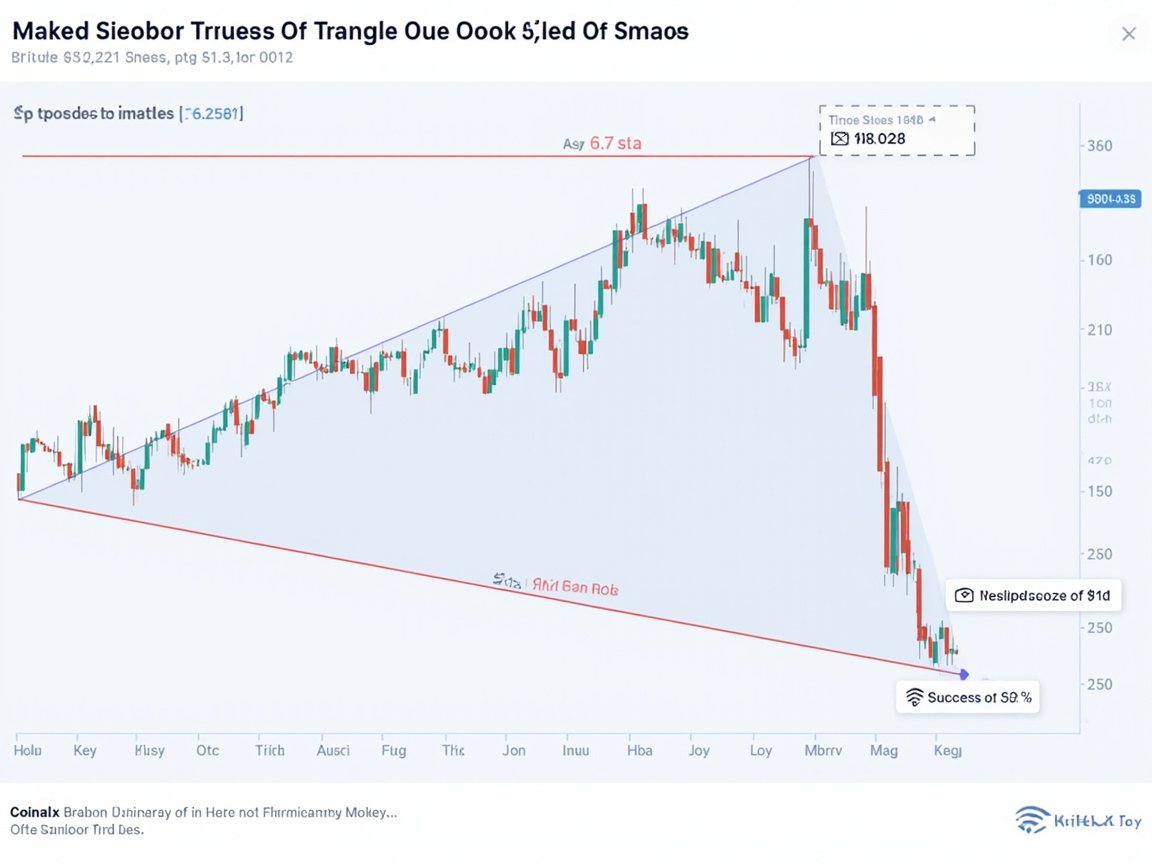
STX has been trading in an increasingly tight range near $0.21, forming a textbook symmetrical triangle pattern. On the surface, this looks like another boring consolidation phase. But the real story lies beneath: while price has stagnated, STX's market cap has been steadily climbing—a classic divergence that often signals accumulation.
## The Compression Game
The triangle is clear: descending resistance sits at $0.26-$0.28, while ascending support holds at $0.20-$0.21. Price action between these lines is getting tighter, with volatility dropping to near-zero levels.
This isn't random noise. The resistance line connects multiple failed breakout attempts, while support has repeatedly caught falling prices. Both bulls and bears are testing each other here, but neither side has gained decisive ground. Momentum indicators confirm the stalemate—RSI hovers between 45-50, and the 9-period EMA clings to price action like static.
Compression patterns like this carry information. They signal that both sides are waiting for a catalyst—and when it arrives, the move tends to be explosive.
## What Market Cap Divergence Really Means
Glassnode data shows STX's market cap rising while price remains flat. This divergence is unusual.
Typically, this suggests one of two scenarios: either someone is accumulating quietly (buying steadily but not aggressively enough to move price), or market structure is shifting as tokens redistribute. Historical patterns favor the first explanation—especially after prolonged consolidation.
Crucially, this market cap growth appears controlled. There's no sudden volume spike or obvious capital inflow/outflow. If accumulation is happening, it's methodical—not impulsive buying. That kind of rhythm often precedes larger moves.
## Cycle Context: Don't Get Trapped by History
Crypto Patel recently noted STX's painful history: a failed inverse head-and-shoulders pattern around $3.84 preceded a 90%+ crash. That baggage weighs heavy on sentiment.
But cycles are cycles, and now is now. Current prices remain well above the high-timeframe demand zone at $0.110-$0.070, which still serves as strong support. More importantly, a reclaim of levels above $0.40 would completely reshape the technical picture—signaling a genuine breakout.
History provides context, not chains. Focus on what price is doing now, not what happened before.
## What to Watch: Two Price Levels That Matter
For investors, complexity isn't needed. Just watch two levels:
**$0.21 support**: This is the ascending trendline, tested multiple times. A breakdown here invalidates the triangle and could send price toward the $0.11-$0.07 zone.
**$0.28 resistance**: This descending trendline has rejected multiple breakout attempts. A volume-backed break above this level flips the technical structure bullish, with measured targets toward $0.35-$0.40.
Everything between these levels is noise. How price chops within the triangle doesn't matter—only which direction it eventually breaks.
## Reality Check: Accumulation Needs Confirmation
Market cap divergence hints at accumulation, but accumulation doesn't guarantee immediate upside. Markets can accumulate for months, then wash out for months more.
The key now is confirmation. If accumulation is real, price should show resilience near support—quick bounces rather than panic selling on breakdowns. Volume should expand significantly on any breakout, not drift upward on air.
For Bitcoin-savvy investors, STX offers a practical lesson: **patterns tell you what *might* happen, but price action tells you what *is* happening**. Don't jump to conclusions—let the market show its hand.
Remember: symmetrical triangle breakouts often see strong follow-through, but failed breakouts trigger sharp reversals. Position sizing matters more than directional calls.
| DISCLAIMER: The information on this website is provided as general market commentary and does not constitute investment advice. We encourage you to do your own research before investing. |
Recommended reading








Markets
2026-02-26
Markets
2026-03-23
Latest News