Arbitrum DAO’s Frozen ETH Vote Is a Governance Test, Not a Simple Recovery
2026-05-08 16:41:03
## The release is narrower than the headline

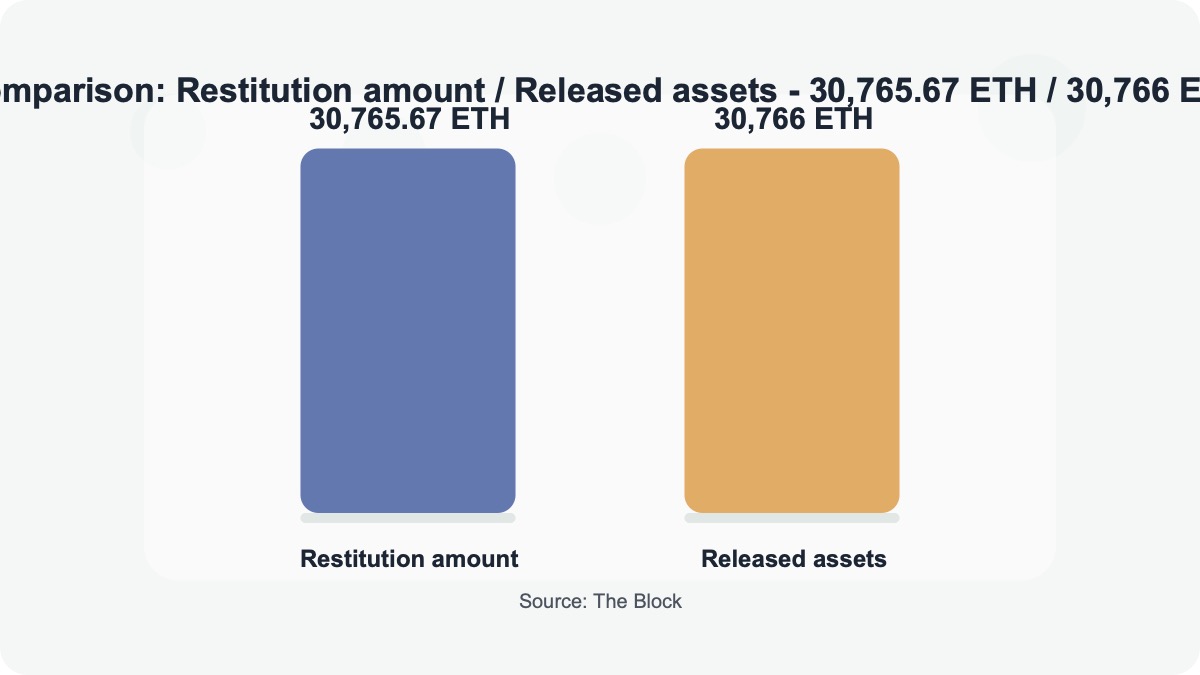
According to [The Block](https://www.theblock.co/post/400527/arbitrum-dao-approves-eth-release), Arbitrum DAO is voting on whether to release 30,766 ETH that the Security Council froze after the Kelp DAO exploit and moved to a DAO-controlled address. The report said wallets holding about 16.9 million ARB backed the proposal in the first hour and no one had voted against it yet. That early tally is useful, but the deeper question is whether a DAO can move already immobilized assets into a recovery track without turning governance into a standing rescue tool.
### What is actually on the table
The forum proposal is more specific than the headline suggests. It asks Arbitrum Governance to release 30,765.67 ETH to a 2-of-3 Gnosis Safe with signers from Aave Labs, KelpDAO and Certora. The authors are listed as Aave Labs, KelpDAO, LayerZero, EtherFi and Compound, and the proposal says no new treasury allocation is being requested because the funds are already frozen on Arbitrum One. In other words, the DAO is not minting new compensation. It is deciding whether an already secured asset pool should be handed to a separate remediation process.
## The legal boundary is doing most of the work
What makes this vote more complicated than a routine treasury release is the indemnification attached to it. Aave Labs says it will indemnify the Foundation, the Security Council and related parties against claims tied to the freeze, delivery and downstream actions. That shifts the DAO's role toward procedure: confirm the destination, confirm the guardrails and decide whether the community is comfortable releasing funds that are already under council control. It does not settle who carries moral blame for the Kelp incident, and it does not erase the fact that the exploit started outside Arbitrum.
## The recovery is partial, not a reset
The proposal is best read as damage control for rsETH backing rather than a full repair. The forum post says the exploit created an approximate 76,127 rsETH shortfall, after 116,500 rsETH was released on Ethereum without a matching source-side burn and only 40,373 rsETH remained as confirmed backing. Against that backdrop, 30,765.67 ETH is meaningful, but it is still only part of the gap. It can narrow the impairment and reduce pressure on Aave's Arbitrum market, but it cannot by itself prove the system is back to normal.
### Why the 49-day timeline matters
The less visible variable is timing. The forum proposal lays out a path that can take about 49 days from discussion through onchain execution and the waiting periods that follow. That matters because a recovery that arrives too late can stop being a remedy and turn into a procedural statement. Several delegates have already asked whether the process can be accelerated, which is a sign that the governance question is not just fairness. It is whether the system can act quickly enough to keep the recovery economically useful.
## What would actually verify the decision
Three checks matter more than the voting headline. First, the release route has to stay narrow and auditable. Second, the 2-of-3 Safe and the indemnification need to do real work, not just signal caution. Third, the transferred ETH has to close a visible part of the rsETH hole rather than simply moving the problem to a different address. If those conditions hold, this looks like a constrained governance response to an external exploit. If they do not, the DAO will have moved frozen collateral without making the recovery path materially clearer.
---
Author: [Alex Chen](https://x.com/AlexC0in)
Source: [theblock.co](https://www.theblock.co/post/400527/arbitrum-dao-approves-eth-release)
DISCLAIMER:
1. All content on this website (including but not limited to articles, data, charts, and analyses) is for general informational purposes only and does not constitute any form of investment advice, trading recommendation, or financial guidance.
2. Cryptocurrencies and digital assets are subject to extreme price volatility and high investment risk; you may lose part or all of your principal. Past performance does not predict future results.
3. The information on this website is based on sources we believe to be reliable, but we do not guarantee its accuracy, completeness, or timeliness. Any investment decisions made based on this website’s information are at your own risk.
4. We strongly recommend that you conduct your own thorough research and consult an independent, licensed financial advisor before making any investment decisions.