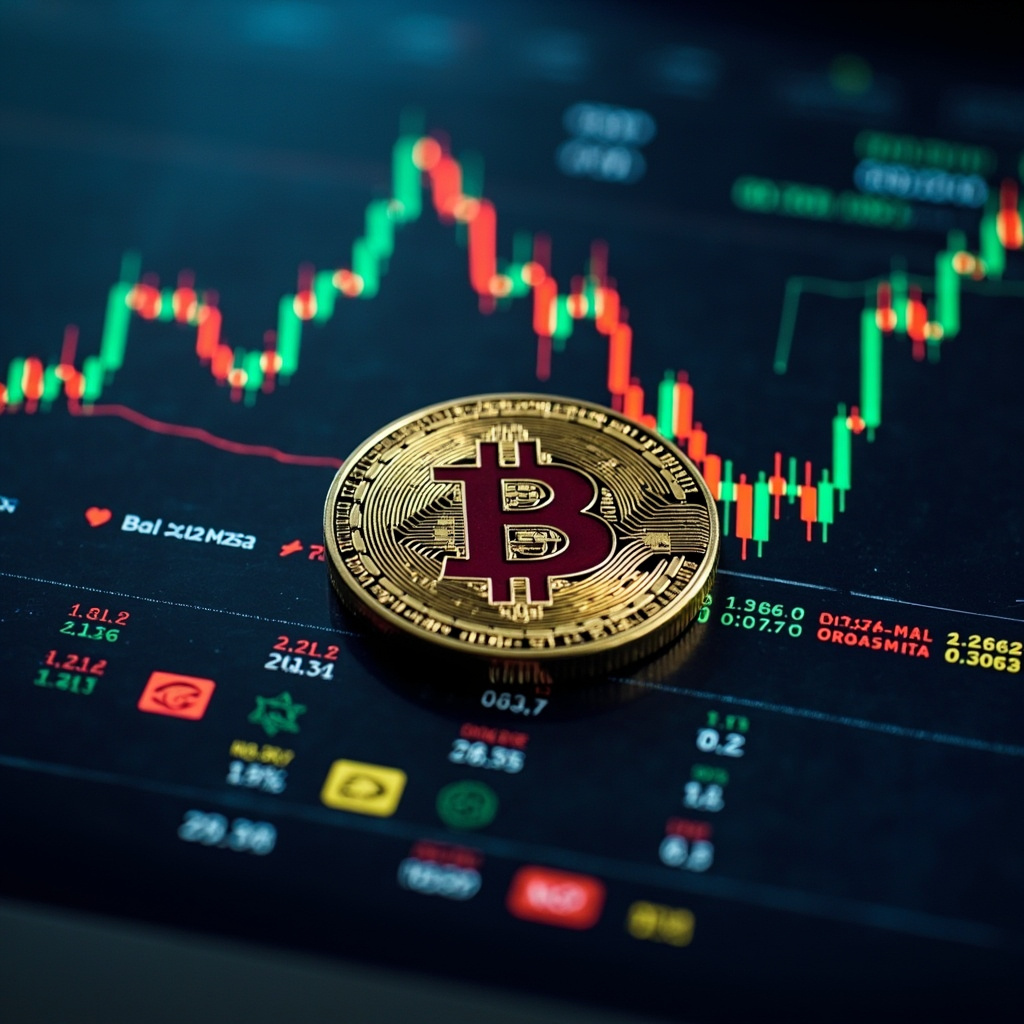
When Iran suddenly closed the Strait of Hormuz—the world’s critical oil chokepoint—Bitcoin didn’t hesitate. Within 36 hours, the price tumbled from its $78,000 perch. On the surface, it’s a classic “risk-off” move: geopolitical tension sparks a flight to safety. But look closer. This wasn’t just a knee-jerk sell-off. It was a stark, real-time stress test of Bitcoin’s “digital gold” narrative, hitting exactly when the market was most vulnerable.

### This Wasn’t an Accident—It Was Pricing
Markets don’t crash without reason. This flash crash had one clear message: traders are pricing geopolitical risk with real money. Check the data: USDC briefly traded below its $1.00 peg, a subtle but critical signal that capital was seeking exits. That tiny discount in the stablecoin world is a flashing red light—it means fear is creeping in, even briefly.
The timing matters. Bitcoin had been climbing steadily since April, shifting sentiment from “post-halving slump” to “new highs ahead.” Then, a black swan landed. It didn’t just interrupt the rally; it cracked the consensus. When the “up-only” narrative frays, any shock becomes a sell signal. So don’t just stare at the red candle. Watch the money flow: they weren’t trading Iran; they were trading **uncertainty**.
### What to Watch Now: One Line in the Sand
Will the Strait reopen? Will the U.S. and Iran talk? Follow the headlines, but for investors, focus on one thing: **how tightly Bitcoin remains coupled to global liquidity sentiment**.
This event was a wake-up call. Bitcoin’s “safe haven” tag is conditional. When risk comes from outside the traditional financial system—like war or supply shocks—it often acts like a risk asset. Panic sells everything first.
The key question: is this shock a **pulse** or a **trend**?
- **If it’s a pulse**: Fear fades fast, Bitcoin bounces back, maybe even stronger on a “crisis-proves-utility” narrative. The dip becomes a shakeout, shifting coins from weak to strong hands.
- **If it’s a trend**: Escalation drives oil prices up, rekindles inflation fears, and pushes the Fed toward hawkishness again. Then Bitcoin faces a double blow—not just geopolitics, but tighter liquidity. That’s the real knife.
So don’t get distracted by daily volatility. Look deeper: did this drop change Bitcoin’s fundamentals? Miners are still mining, ETFs are still seeing net inflows, on-chain activity hasn’t seized. If that’s unchanged, then price moves are just noise.
### Your Move: Dodge the Knife or Catch It?
What should you do? Cut the fluff—here are two takes:
**For short-term traders**: This event signals extreme market sensitivity. Any geopolitical news can spark short-term plays. But remember: this is dancing on the blade’s edge. You’re profiting from others’ panic—or losing to your own. Set hard stops. Don’t turn a trade into a creed.
**For long-term holders**: This dip is worth studying. See who bought near $78,000 and who sold on the drop. On-chain data will show you. If selling is mostly short-term profit-taking, and long-term holders are holding steady, it’s a healthy correction. If whales are fleeing, reassess whether the narrative has truly shifted.
Let’s be real: geopolitical shocks won’t stop here. As long as Bitcoin swims in the global asset pool, it will face waves. The trick is knowing whether to duck or surf.
### Bottom Line
Iran closed a strait; Bitcoin fell. The event itself is small, but it’s a mirror. It reflects the gap between Bitcoin’s grand “digital gold” story and its fragile short-term sentiment. That gap is where both profit and risk live.
Watch oil prices. Watch the Fed. But most importantly, watch your own position. Markets never run short of surprises—they run short of players who survive them. This knife has swung. Whether you grab the handle or get cut depends on what you do next.
See you in the markets.
DISCLAIMER:
1. All content on this website (including but not limited to articles, data, charts, and analyses) is for general informational purposes only and does not constitute any form of investment advice, trading recommendation, or financial guidance.
2. Cryptocurrencies and digital assets are subject to extreme price volatility and high investment risk; you may lose part or all of your principal. Past performance does not predict future results.
3. The information on this website is based on sources we believe to be reliable, but we do not guarantee its accuracy, completeness, or timeliness. Any investment decisions made based on this website’s information are at your own risk.
4. We strongly recommend that you conduct your own thorough research and consult an independent, licensed financial advisor before making any investment decisions.