• Thai-listed company DV8 has announced plans to build a corporate treasury of 10,000 Bitcoin.
• DoorDash, Chainlink & Oblong Market Shifts Guide (2026)
• Blockchain AI Convergence: Fact-Check & Market Guide (2026)
• Polygon's mainnet will undergo the Giugliano upgrade on April 8.
• PsiQuantum has started building its million-qubit quantum facility. Scientists say a machine this po
• Anthropic Discontinues Subscription Support for Third-Party Tools
• XRP ETF Forecasts & Bitmine’s $20B ETH Bet: 2026 Analysis
• Crypto & Tech Market Trends 2026: Pi, XRP, Robotaxi Safety
• DoorDash, Chainlink & Oblong Market Shifts Guide (2026)
• SEC v. Ripple Case Ends: XRP Outlook & Monero 51% Attack (2026)
**The Daily Grind in Crypto: What's Really Going On?**
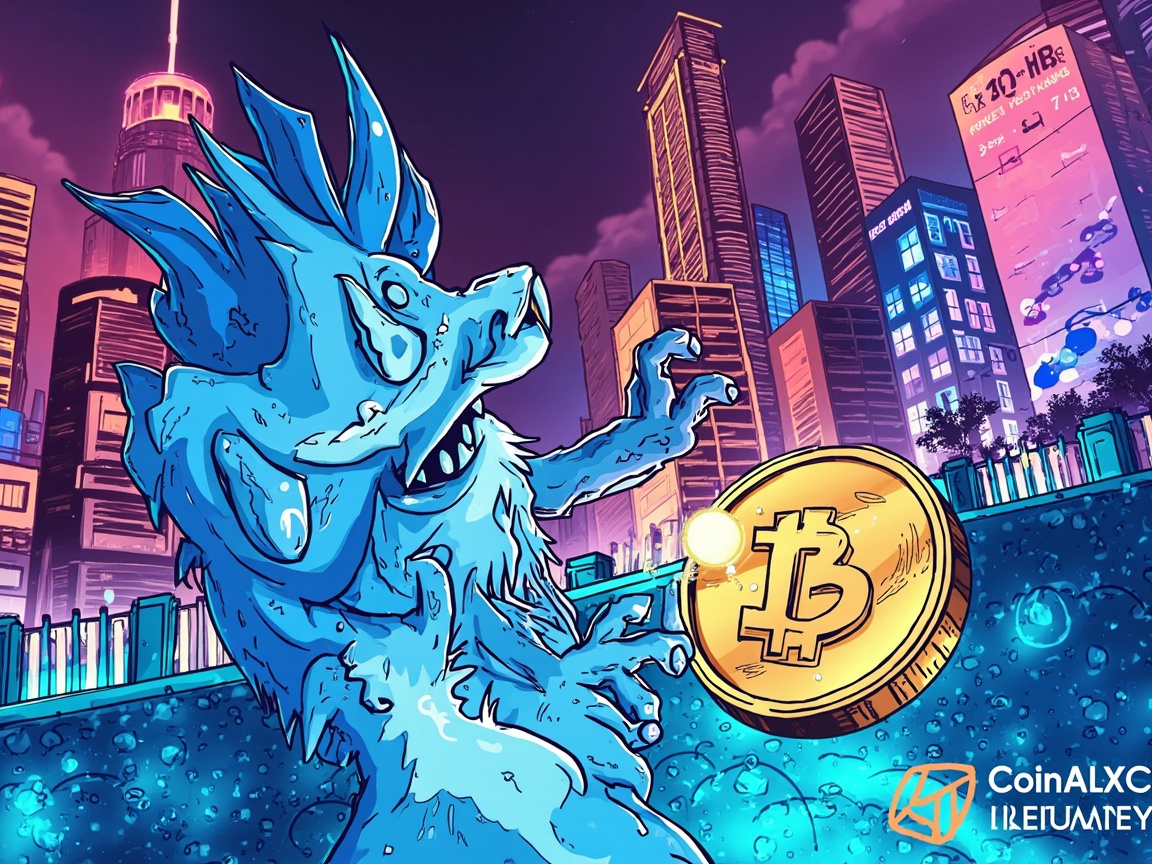
New crypto projects launch 'daily tasks' constantly, with Spur Protocol's quiz being just one example. On the surface, it's users answering questions for small rewards. But the real story is how Web3 projects use this low-cost method for user education and retention.
---
**Why Everyone's Searching for Answers**
It's by design.
Spur Protocol's quiz updates daily, answers may change, and there's a limited time window—this combination naturally creates search demand. Users don't want to miss rewards, so they repeatedly check. This isn't accidental; it's standard product design.
Many projects do this. Questions typically cover blockchain basics like 'What is decentralization?' or 'What does scalability mean?' Correct answers earn in-app points or badges.
**The key isn't the answers themselves, but the time users spend seeking them.** Spending minutes daily opening the app, reading questions, finding answers—repeat this for 21 days, and user familiarity grows.
---
**What Rewards Really Are: Don't Get It Twisted**
Spur Protocol states clearly: rewards are in-app points, not cash.
Listen to this.
Newcomers often mistakenly believe daily points will convert to real money. Reality: most such points only have in-platform value—unlocking features, exchanging for virtual items, or displaying achievement badges.
**This system has three core goals:**
1. **Lower entry barriers**—Simple questions introduce blockchain terms without pressure
2. **Build usage habits**—Daily tasks force app opens, boosting daily active users
3. **Filter target users**—Those who persist daily likely genuinely care about the project
If you're here for 'making money,' you'll probably be disappointed. But if you want to understand a new project, this quiz offers a useful observation window.
---
**Where This Is Heading: Watch These Signals**
Daily quizzes like Spur Protocol's will diverge in two directions:
**First, pure education tools.** Questions become more specialized, rewards stay virtual, aiming to filter truly interested learners. These projects typically won't issue tokens soon, if ever.
**Second, points as stepping stones.** Quiz points might later exchange for project tokens, participate in airdrops, or grant whitelist access. But note—this requires clear official announcements, not speculation.
**What investors should watch:**
1. **Do points have an exit path?**—If points only circulate in-app, it's purely a user engagement tool
2. **Is question difficulty increasing?**—Moving from 'What is blockchain?' to 'How does ZK-Rollup work?' signals targeting more sophisticated users
3. **Is the team being vague?**—Saying 'points aren't currency' while hinting at 'future surprises' warrants caution
---
**Practical Advice: Should You Bother?**
With endless 'daily tasks,' don't follow blindly. Evaluate in this order:
**First, assess the project:**
- Is the team credible?
- What problem does it solve?
- Are there real users, or just reward-driven metrics?
**Second, examine task design:**
- Is this for education or just time-wasting?
- Are reward mechanisms transparent?
- Any hidden costs (like wallet authorization requirements)?
**Third, consider your goals:**
- Do you want knowledge or potential airdrops?
- How much time can you commit daily?
- What's your risk tolerance?
For learning, Spur Protocol's quiz works fine. For investment positioning, be clear: are you betting on future token issuance or point convertibility? These probabilities differ massively.
---
**The Big Picture: Crypto's 'Small Tasks' Are Evolving**
Early crypto tasks were straightforward: sign-up bonuses, referral rewards, trading incentives. Now they're complex: quizzes, games, ads, social interactions.
**Complexity means cost control.** Projects found direct token giveaways attracted mostly opportunists, while task-filtered users show better quality and retention.
Spur Protocol's daily quiz is a classic example. It promises no financial returns, yet people persist daily—showing market divergence: some users want quick money, others want learning.
**As an investor, know which group you're in.** If you want fast returns, these tasks are inefficient. If you want learning, they're a valid entry point. Don't confuse the two—approaching learning with profit motives often leads to disappointment.
Next time you see 'daily quiz answers updated,' don't click immediately. First ask: What game is this project playing? Who does it want to attract? What am I really here for?
Clear answers prevent misguided moves.
| DISCLAIMER: The information on this website is provided as general market commentary and does not constitute investment advice. We encourage you to do your own research before investing. |
Recommended reading

Latest News