• Thai-listed company DV8 has announced plans to build a corporate treasury of 10,000 Bitcoin.
• DoorDash, Chainlink & Oblong Market Shifts Guide (2026)
• Blockchain AI Convergence: Fact-Check & Market Guide (2026)
• Polygon's mainnet will undergo the Giugliano upgrade on April 8.
• PsiQuantum has started building its million-qubit quantum facility. Scientists say a machine this po
• Anthropic Discontinues Subscription Support for Third-Party Tools
• XRP ETF Forecasts & Bitmine’s $20B ETH Bet: 2026 Analysis
• Crypto & Tech Market Trends 2026: Pi, XRP, Robotaxi Safety
• DoorDash, Chainlink & Oblong Market Shifts Guide (2026)
• SEC v. Ripple Case Ends: XRP Outlook & Monero 51% Attack (2026)
Schwab Enters Bitcoin Spot Trading: How Traditional Money Is Fortifying the $68K Price Floor
2026-04-17 08:43:40
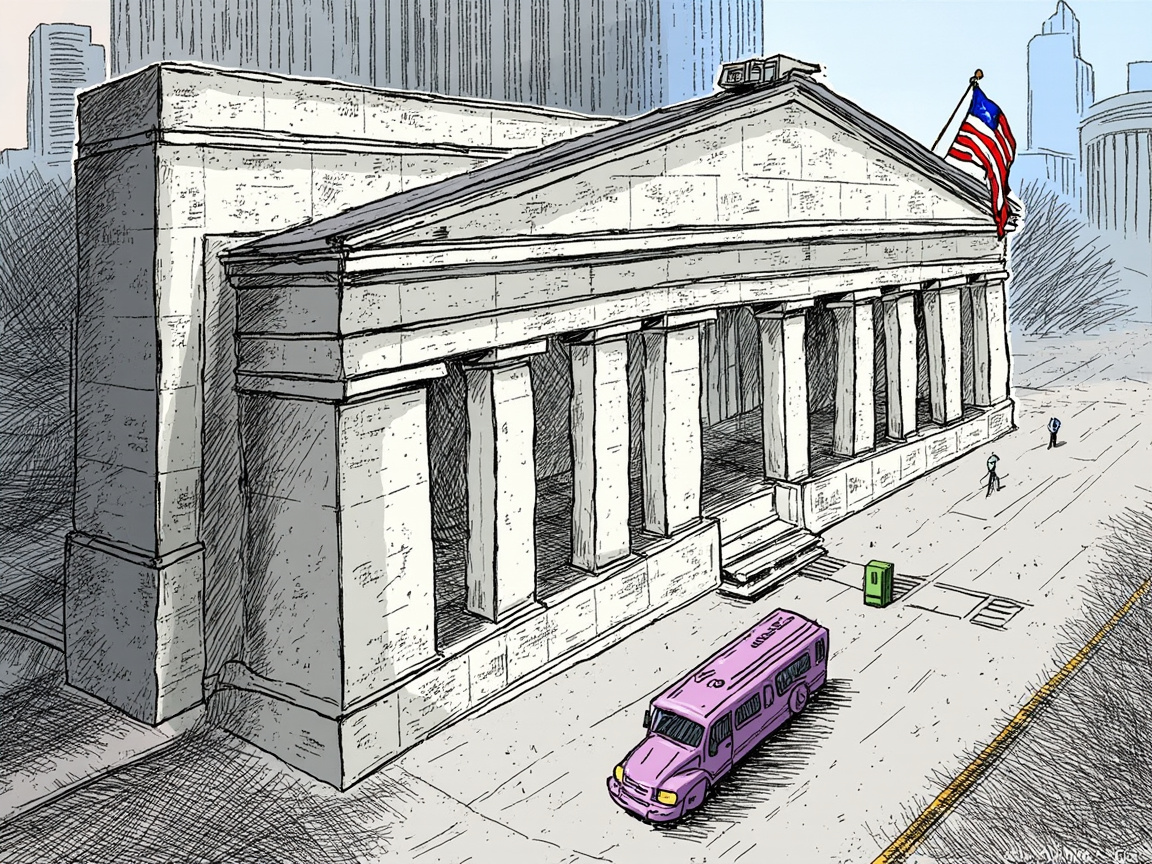
Charles Schwab has quietly launched spot trading for Bitcoin and Ethereum through its Schwab Crypto service. On the surface, it's another traditional finance giant dipping its toes into crypto. But the real story here is what it means for capital flows: Schwab's massive base of traditional brokerage clients is now pouring fresh concrete under Bitcoin's $68,000 price floor.
### Where This Cuts Deep
Schwab isn't the first traditional firm in crypto, but its approach is telling. By offering direct spot trading and treating Bitcoin as a digital commodity, it sidesteps the "is it a security?" regulatory debate that has entangled others. This isn't a technological breakthrough—it's regulatory arbitrage, using the clearest existing framework to bring crypto to mainstream investors.
The real impact is on the entry point for new money. Schwab's clients, many of whom have never touched a crypto exchange, can now buy Bitcoin and Ethereum within the familiar interface of their brokerage account. Lower barriers mean more capital flowing in.
### The Price Floor Gets Reinforced
When the news broke, Bitcoin prediction markets showed a 99.9% probability that prices would hold above $68,000 through April 16. That's no coincidence.
Traders are voting with their wallets. Prediction markets saw $390,000 in USDC volume within 24 hours, with order book depth indicating it would take $300,000 to move prices by just 5%. Liquidity is solid—large sell orders won't easily crash the market.
Schwab's move adds a new support logic: demand from traditional brokerage clients is becoming a structural source of buying pressure. This isn't short-term speculation; it's a fundamental shift in how traditional capital accesses crypto.
### What to Watch Next
Don't just watch Schwab's feature rollout. Focus on two things:
**1. Spot Bitcoin ETF inflows.**
Schwab's client base overlaps with ETF investors. If ETFs continue seeing net inflows, it signals growing traditional allocation to crypto. Schwab's spot trading becomes another outlet for that capital—creating a resonance effect that amplifies new money entering the market.
**2. Regulatory signals.**
Any comments from Fed Chair Powell or SEC Chair Gensler could shift institutional sentiment overnight. Schwab used the commodity framework to enter, but if regulatory winds change, the entire traditional adoption timeline could be disrupted. Crypto regulation remains fluid—one statement can rewrite the rules.
### The Bottom Line
For investors, this isn't about "Schwab does crypto too." It's about another pipeline opening between traditional capital and spot markets.
Bitcoin's $68,000 level now has stronger support logic, but that doesn't mean prices only go up. Traditional capital moves slowly—it provides long-term demand support, not short-term pump fuel. Market sentiment, macro conditions, and regulatory shifts can still drive volatility.
The key is distinguishing structural changes from noise. Schwab's entry is structural: it lowers investment barriers and adds durable demand to spot markets. That won't disappear with daily price swings.
### Reality Check
Traditional institutional adoption will accelerate in coming months. Schwab isn't the first, and it won't be the last.
Each new entrant adds another layer of concrete to Bitcoin's price floor. This doesn't mean prices can't fall below $68,000—it means more capital will likely step in around those levels if they do. Traditional money looks at long-term allocation, not short-term volatility. Their entry will likely come through dollar-cost averaging or buying dips, not chasing pumps.
The result? Potentially lower market volatility and more solid price foundations.
What matters most isn't Schwab's trading volume, but the broader flow of traditional capital—ETF inflow data, institutional holdings reports, and regulatory developments. These factors will ultimately determine how hard the price floor really is.
Schwab is just one brick in the wall. But more bricks mean a stronger foundation.
| DISCLAIMER: The information on this website is provided as general market commentary and does not constitute investment advice. We encourage you to do your own research before investing. |
Recommended reading






Ethereum
2026-03-25
Ethereum
2026-04-01
Latest News