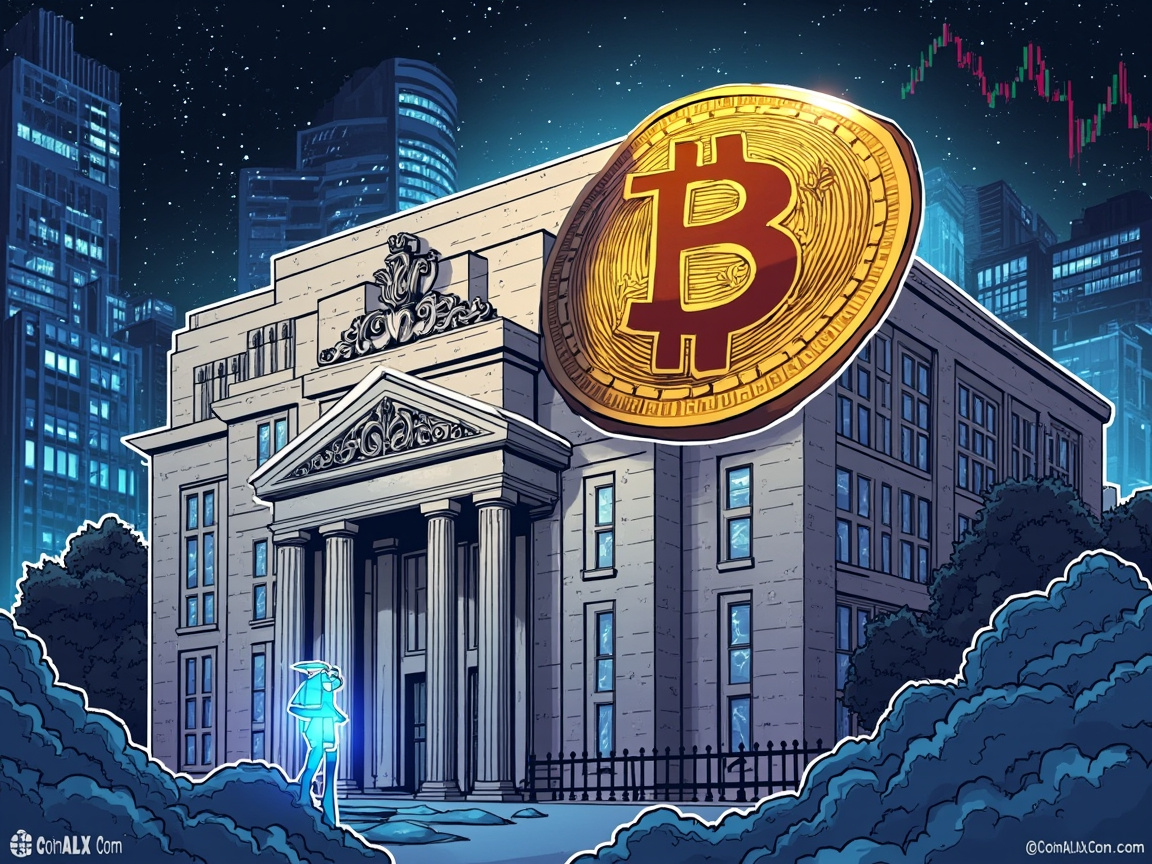
• Thai-listed company DV8 has announced plans to build a corporate treasury of 10,000 Bitcoin.
• DoorDash, Chainlink & Oblong Market Shifts Guide (2026)
• Blockchain AI Convergence: Fact-Check & Market Guide (2026)
• Polygon's mainnet will undergo the Giugliano upgrade on April 8.
• PsiQuantum has started building its million-qubit quantum facility. Scientists say a machine this po
• Anthropic Discontinues Subscription Support for Third-Party Tools
• XRP ETF Forecasts & Bitmine’s $20B ETH Bet: 2026 Analysis
• Crypto & Tech Market Trends 2026: Pi, XRP, Robotaxi Safety
• DoorDash, Chainlink & Oblong Market Shifts Guide (2026)
• SEC v. Ripple Case Ends: XRP Outlook & Monero 51% Attack (2026)
Quantum Countdown: How Algorand, HBAR, and Ripple Are Rewriting Blockchain's Survival Rules
2026-04-17 04:28:19
A recent analysis by Crypto Growth highlighted several projects quietly advancing "post-quantum" upgrades—Algorand, XDC Network, Hedera (HBAR), and Ripple (XRP). While this appears as a technical race, the real story is **who's turning quantum security from a "future problem" into an engineering deadline that must be coded today.**

## The Stakes: Cutting at "Long-Term Validity"
XDC Network co-founder Ritesh Kakkar pinpointed the urgency: today's on-chain trade finance documents—bills of lading, letters of credit, tokenized receivables—have legal validity of 20 to 30 years.
These documents rely on ECDSA signatures, the underlying standard for most blockchains. Once quantum computers mature, breaking this encryption becomes inevitable.
**What this means:** Not "possible future attacks," but "contracts signed today will almost certainly be exposed during their lifetime."
XDC calls its post-quantum upgrade a "plan," targeting March 2026 to align with EU and NIST standards. Prototypes already exist in their code repository, with a four-phase migration. This isn't technical showmanship—it's engineering driven by legal and commercial reality.
Algorand moved earlier. Between 2020-2022, they implemented Falcon-based quantum-resistant state proofs to protect chain history. They plan to execute the first quantum-resistant transaction on mainnet in 2025, securing real assets.
Internal discussions reveal the team's trade-off: a fully quantum-secure consensus could be achieved in about a year if they sacrificed everything else—consumer hardware compatibility, high throughput, sub-3-second block times.
**They didn't choose "sacrifice everything," but they wrote quantum security into their development roadmap.** That matters more than empty promises.
## Tokenization: Real-World Assets Seek the Hardest Chains
Quantum security forms the foundation; tokenization represents the application layer. These two trends are converging.
Hedera's (HBAR) picture is clear: phased collaboration with the Swiss Armed Forces signals institutional trust; enterprise connections with Google and IBM; tokenized collateral pilots with abrdn, Archax, and Lloyds.
DOVU uses Hedera for tokenized carbon credits, tapping into the $95 billion carbon market.
Institutions don't want "fastest" or "most decentralized"—they want **secure, compliant, auditable infrastructure**. Once quantum threats become a regulatory issue, unprepared projects could be eliminated overnight.
Ripple's moves in Korea are more concrete: piloting tokenized government bond settlement with Kyobo Life Insurance, aiming to reduce settlement cycles from T+2 to near real-time.
Ripple executives call their Korea strategy "long-term and strategic." This isn't just market expansion—it's **embedding blockchain as a settlement layer within mainstream financial infrastructure.**
## What Investors Should Watch: Not Technology, but "Time Windows"
Quantum computing won't arrive tomorrow, but its countdown has started.
**First, watch engineering schedules.** Who has quantum security on a clear mainnet upgrade timeline? Algorand's 2025 and XDC's 2026 are verifiable milestones. Vague "under research" claims likely won't keep pace.
**Second, watch asset types.** Trade finance, government bonds, carbon credits, tokenized securities—these assets have long lifecycles and high compliance requirements, making them most sensitive to quantum threats. Chains with real use cases here face the greatest migration pressure and will act most decisively.
**Third, watch institutional movements.** The Swiss Armed Forces, Korean insurance giants, UK asset managers—these names represent more than "partnerships." They signal **real-world assets and trust** voting with their feet, choosing infrastructure they believe will survive the next decade.
## Evolution Path: No Overnight Revolution, but Gradual Squeeze
Quantum security won't break Bitcoin tomorrow, but it will gradually reshape consensus about which chains can carry long-term assets.
Regulation will follow. EU and NIST standards are just the beginning. Once major jurisdictions require "long-term digital contracts must be quantum-secure," unprepared public chains could lose institutional markets entirely.
**This won't be a hard fork—it will be a slow squeeze.** New assets will flow to prepared chains; old assets must migrate or remain exposed.
For investors, the path is clear: **Chains at the intersection of quantum countdowns and institutional assets will likely prove more cycle-resistant than pure speculative plays.** This isn't betting on technological breakthroughs—it's betting on real-world asset flows.
Final thought: Blockchain's first half was about "faster and cheaper." The second half is about "safer and longer-lasting." Quantum computing is the starting whistle for that second half.
| DISCLAIMER: The information on this website is provided as general market commentary and does not constitute investment advice. We encourage you to do your own research before investing. |
Recommended reading

Bitcoin
2026-02-26
Bitcoin
2026-03-31
Latest News