• Thai-listed company DV8 has announced plans to build a corporate treasury of 10,000 Bitcoin.
• DoorDash, Chainlink & Oblong Market Shifts Guide (2026)
• Blockchain AI Convergence: Fact-Check & Market Guide (2026)
• Polygon's mainnet will undergo the Giugliano upgrade on April 8.
• PsiQuantum has started building its million-qubit quantum facility. Scientists say a machine this po
• Anthropic Discontinues Subscription Support for Third-Party Tools
• XRP ETF Forecasts & Bitmine’s $20B ETH Bet: 2026 Analysis
• Crypto & Tech Market Trends 2026: Pi, XRP, Robotaxi Safety
• DoorDash, Chainlink & Oblong Market Shifts Guide (2026)
• SEC v. Ripple Case Ends: XRP Outlook & Monero 51% Attack (2026)
JPMorgan's 'Clarity Act' Optimism Meets Market Skepticism: Why XRP Isn't Budging
2026-04-16 18:49:42
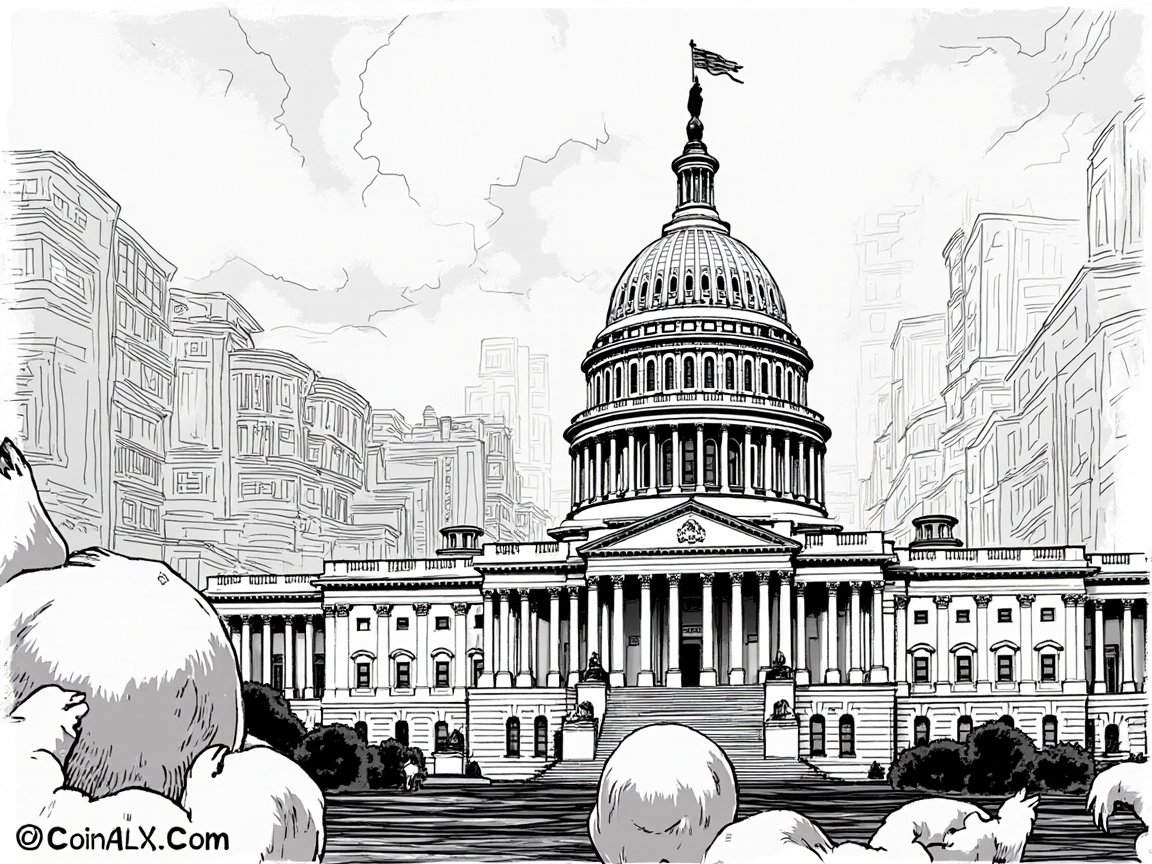
JPMorgan analysts recently signaled that negotiations around the **Clarity Act**—legislation aimed at providing clearer crypto regulation—are nearing a breakthrough. Normally, such regulatory progress would send related assets soaring. Yet XRP prediction markets remain eerily calm: contracts for April price targets show implied probabilities below 1%, with trading volume virtually nonexistent.
**This isn't about the bill itself—it's about how markets are pricing time.**
### The Data Speaks: Markets Are Sitting This One Out
Polymarket data reveals the stark reality: contracts betting on XRP reaching $2.60 by April carry just a **0.8% probability**, down from previous weeks. More telling is the volume—**$1 in total trades over 24 hours**. To move the probability by 5 percentage points would require about $245; current activity doesn't even come close.
Short-term contracts for mid-April show similar apathy: 1.0% probability, $1 in volume. **Translation: nobody's betting.**
If traders genuinely believed the Clarity Act could pass this month, someone would take the 125x theoretical payout. The silence is deliberate—markets are saying political "progress" alone isn't enough.
### Why JPMorgan's Signal Isn't Moving Needles
Wall Street optimism carries weight, but crypto veterans know the gap between "near breakthrough" and actual law can span multiple congressional sessions.
With **14 days left in April**, the legislative process—committee reviews, Senate votes, House reconciliation, presidential signature—isn't a days-long affair. Markets have already priced this timeline in.
More crucially, **XRP's regulatory status remains unresolved**. The SEC's stance is the real sword hanging over the asset. Clear legislation means little if the SEC doesn't soften its enforcement posture. Traders are waiting for **concrete regulatory action, not negotiation updates**.
### What to Watch Next: Two Critical Triggers
1. **Senate Banking Committee agendas**—Any move to formally schedule the Clarity Act for debate would be a real signal. Right now, it's still just "talks."
2. **SEC statements on XRP**—Even informal guidance could shift probabilities overnight. The regulator's voice matters more than bill text.
Current market calm isn't complacency—it's **heightened alertness**. Capital is poised like a predator: motionless, ears perked, waiting for the right moment to strike.
### Practical Takeaways: Don't Chase Headlines
If you're considering an XRP position, weigh these factors:
- **Time cost**: Even if passed, regulatory impact on prices could take quarters. Can your capital wait?
- **SEC risk**: The commission's enforcement discretion remains the biggest variable. Clear laws can still face fuzzy implementation.
- **Market sentiment**: Prediction market inactivity signals broad consensus that "it's not time yet." Going against that requires solid reasoning.
**Ignore the "125x return" fantasy**—it's a mathematical phantom requiring both April passage and immediate price spikes, probability: 0.8%. The market has already voted with its absence.
### The Bottom Line: Quiet Periods Are Setup Phases
This unusual stillness is precisely when attention matters. If the Senate committee acts or the SEC hints at shifts, probabilities will jump instantly—and chasing then will be costly.
But setup isn't the same as betting. Smart moves now:
- Add Clarity Act progress to your watchlist, but don't treat it as a trade signal.
- Focus on SEC filings and XRP lawsuit developments—that's where the real pressure points lie.
- Keep positions flexible; don't heavy-up on 0.8% probability events.
**Regulatory battles aren't linear—they're spring-loaded.** The quieter the compression, the sharper the eventual release. You don't have to jump in now, but you should know when the spring might snap.
Markets are brutally honest. When they go silent, they're often saying the most important things.
| DISCLAIMER: The information on this website is provided as general market commentary and does not constitute investment advice. We encourage you to do your own research before investing. |
Recommended reading






Latest News