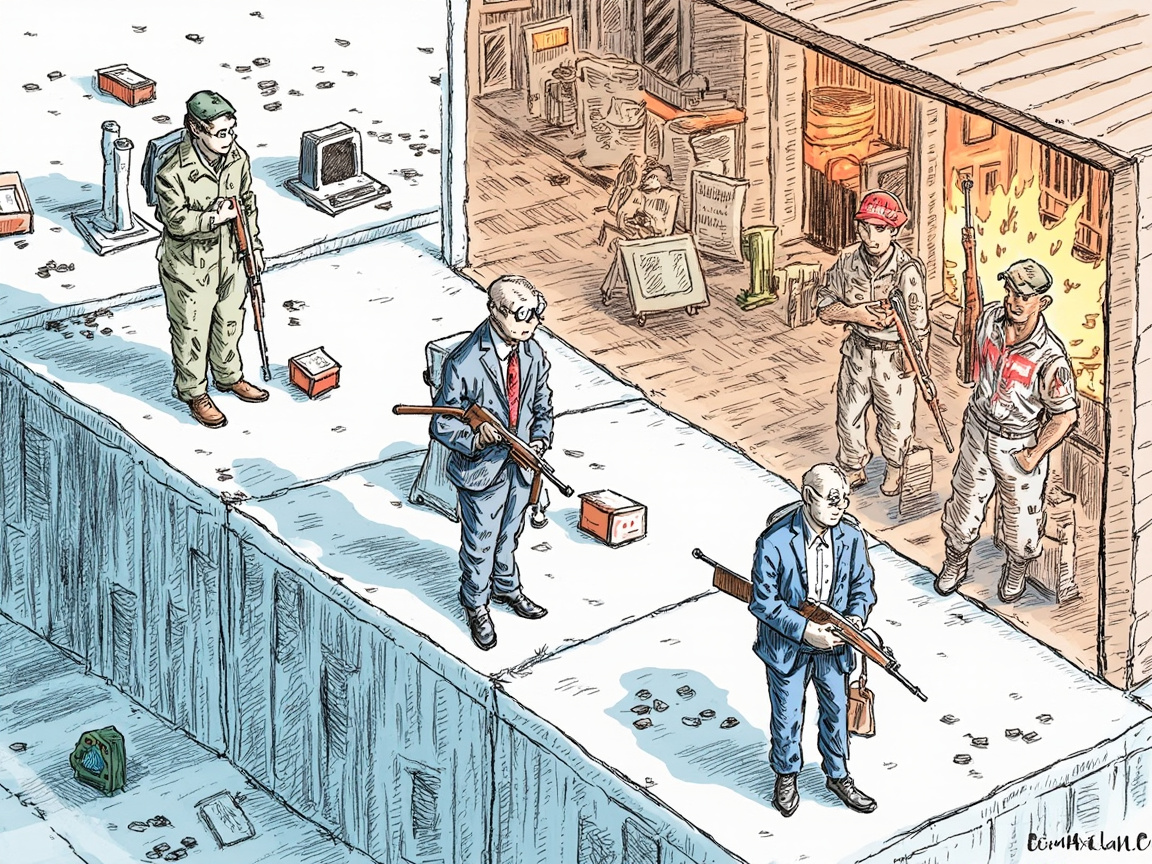
• Thai-listed company DV8 has announced plans to build a corporate treasury of 10,000 Bitcoin.
• DoorDash, Chainlink & Oblong Market Shifts Guide (2026)
• Blockchain AI Convergence: Fact-Check & Market Guide (2026)
• Polygon's mainnet will undergo the Giugliano upgrade on April 8.
• PsiQuantum has started building its million-qubit quantum facility. Scientists say a machine this po
• Anthropic Discontinues Subscription Support for Third-Party Tools
• XRP ETF Forecasts & Bitmine’s $20B ETH Bet: 2026 Analysis
• Crypto & Tech Market Trends 2026: Pi, XRP, Robotaxi Safety
• DoorDash, Chainlink & Oblong Market Shifts Guide (2026)
• SEC v. Ripple Case Ends: XRP Outlook & Monero 51% Attack (2026)
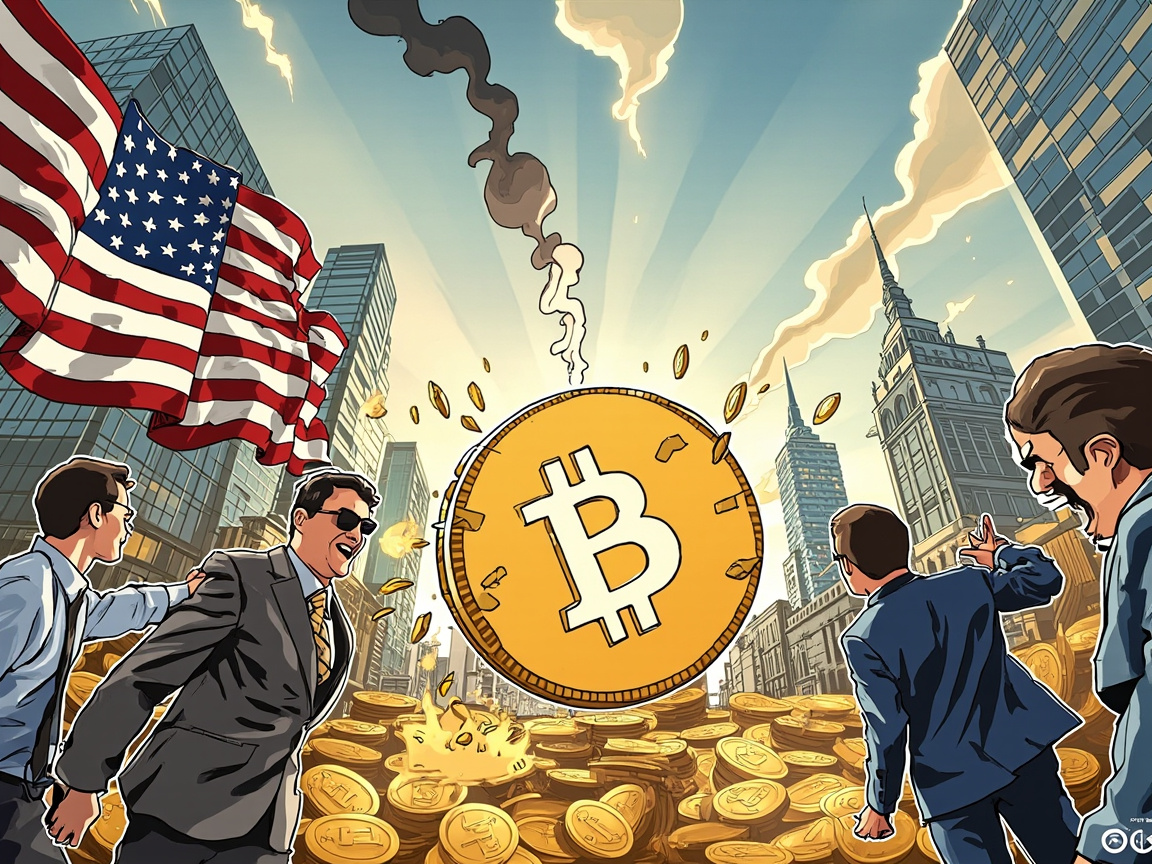
**U.S. stocks just hit record highs while missiles fly in the Middle East.** The S&P 500 and Nasdaq 100 both set new peaks this week, even as U.S.-Iran tensions simmer. On the surface, this looks like traditional finance shrugging off geopolitical risk. But the real story is deeper: **the underlying logic of risk pricing is fracturing.** When war can't sink major indices, markets are signaling a 'new normal'—where geopolitical shocks get priced in fast, digested faster, and capital is redefining what 'safe' means.
## The Rally Wasn't an Accident—It Was Priced In
By April 15, prediction markets for the S&P 500 showed traders had locked in 100% upside bets. USDC trading volume spiked to ~$95,000 in 24 hours—small in size, but a hard signal that smart money positioned early. A brief dip around 1:45 PM quickly reversed. This wasn't a fluke bounce; it was a technical correction after consensus solidified. Even YES stock nearly doubled from 54 cents to $1 at settlement. This rally happened *because* the conflict reached this stage, not *despite* it. Markets now assume no full-scale war—just 'controlled friction.' Any news short of escalation gets read as a green light.
## This Fractures the Old Risk-Pricing Playbook
Textbooks say: geopolitics → panic → sell-off. Not this time. Why? Markets have learned to **price risk at warp speed.** Shock → initial drop → reassessment → rebound → new highs, all compressed into days. Volatility itself becomes a tradable commodity, not just a threat. Bitcoin traders know this drill: sharp sell-offs, fierce rebounds, sometimes higher highs. U.S. stocks just executed it faster. Two drivers:
1. **Excess liquidity:** Too much cash chasing any hint of certainty.
2. **Mature expectation management:** Institutions now pre-position based on scenario analysis, not just react to headlines.
## What Bitcoin Traders Should Watch: The Hidden Money Flows
Don't get distracted by short-term equity euphoria. The critical thread: **as traditional markets rally through war noise, the very definition of 'risk' is being rewritten.** Bitcoin used to be a 'high-risk' sell-off candidate during turmoil. That label is now outdated—if stocks can party amid artillery, the risk threshold has been radically raised. Watch for this evolution:
**Phase 1:** Stocks keep pulling capital; Bitcoin chops with lower volatility as funds reassess risk frameworks.
**Phase 2:** If geopolitics genuinely de-escalate (e.g., diplomatic breakthrough), traditional markets could see 'sell the news' flows seeking new outlets. Bitcoin's dual narrative—hedge + growth—may get repriced here.
**Phase 3:** In a low-probability escalation scenario, stocks would crash. Bitcoin wouldn't escape unharmed, but its drawdown might be shallower as some capital treats it as a 'non-traditional haven.'
## Actionable Signals: Watch 3, Drop 5 Illusions
**Watch these:**
1. **Oil volatility, not just price.** Steady oil = steady sentiment; spiking oil = everything repriced.
2. **Statement frequency from the U.S., Israel, Iran.** More talk usually means intense bargaining, not imminent strikes—silence often precedes action.
3. **Large on-chain USDC/USDT movements.** Stablecoin flows often lead market sentiment by 1–2 days.
**Drop these illusions:**
- *Stocks down, Bitcoin up*—that correlation faded long ago.
- *War automatically bullish for Bitcoin*—depends on the conflict and phase.
- *This time is different*—markets repeat similar logic in new costumes.
- *You can pinpoint the bottom*—aim for roughly right, not perfectly timed.
- *Long-term holding always works*—only if you hold actual Bitcoin, not leveraged paper.
## Bottom Line: The Game Board Is Being Reset
Record highs amid warfare aren't a financial miracle—they're a victory in expectation management. For crypto, the lesson isn't 'we can rally too.' It's that **the coordinates of risk pricing are shifting.** Bitcoin was once a volatile fringe asset. Now, as mainstream markets party through sirens, the line between 'core' and 'peripheral' is blurring beyond recognition.
Geopolitical noise won't vanish, but market tolerance will keep rising. Don't try to predict wars. Watch how capital reallocates under this new risk framework—the money flows tell a truer story than any analyst report. Remember: **when war becomes just another priced-in variable, every asset's valuation logic needs recalibration.**
At Bitcoin's table, the old rules are breaking. The new ones aren't written yet, but one thing's clear: survivors won't be the smartest—they'll be those who adapt fastest to risk-pricing fractures. Watch the money. Drop the fantasies. Markets wait for no one.
| DISCLAIMER: The information on this website is provided as general market commentary and does not constitute investment advice. We encourage you to do your own research before investing. |
Recommended reading







Markets
2026-03-24
Markets
2026-02-26
Markets
2026-03-23
Latest News