• Thai-listed company DV8 has announced plans to build a corporate treasury of 10,000 Bitcoin.
• Blockchain AI Convergence: Fact-Check & Market Guide (2026)
• DoorDash, Chainlink & Oblong Market Shifts Guide (2026)
• Polygon's mainnet will undergo the Giugliano upgrade on April 8.
• PsiQuantum has started building its million-qubit quantum facility. Scientists say a machine this po
• Anthropic Discontinues Subscription Support for Third-Party Tools
• XRP ETF Forecasts & Bitmine’s $20B ETH Bet: 2026 Analysis
• Crypto & Tech Market Trends 2026: Pi, XRP, Robotaxi Safety
• DoorDash, Chainlink & Oblong Market Shifts Guide (2026)
• SEC v. Ripple Case Ends: XRP Outlook & Monero 51% Attack (2026)
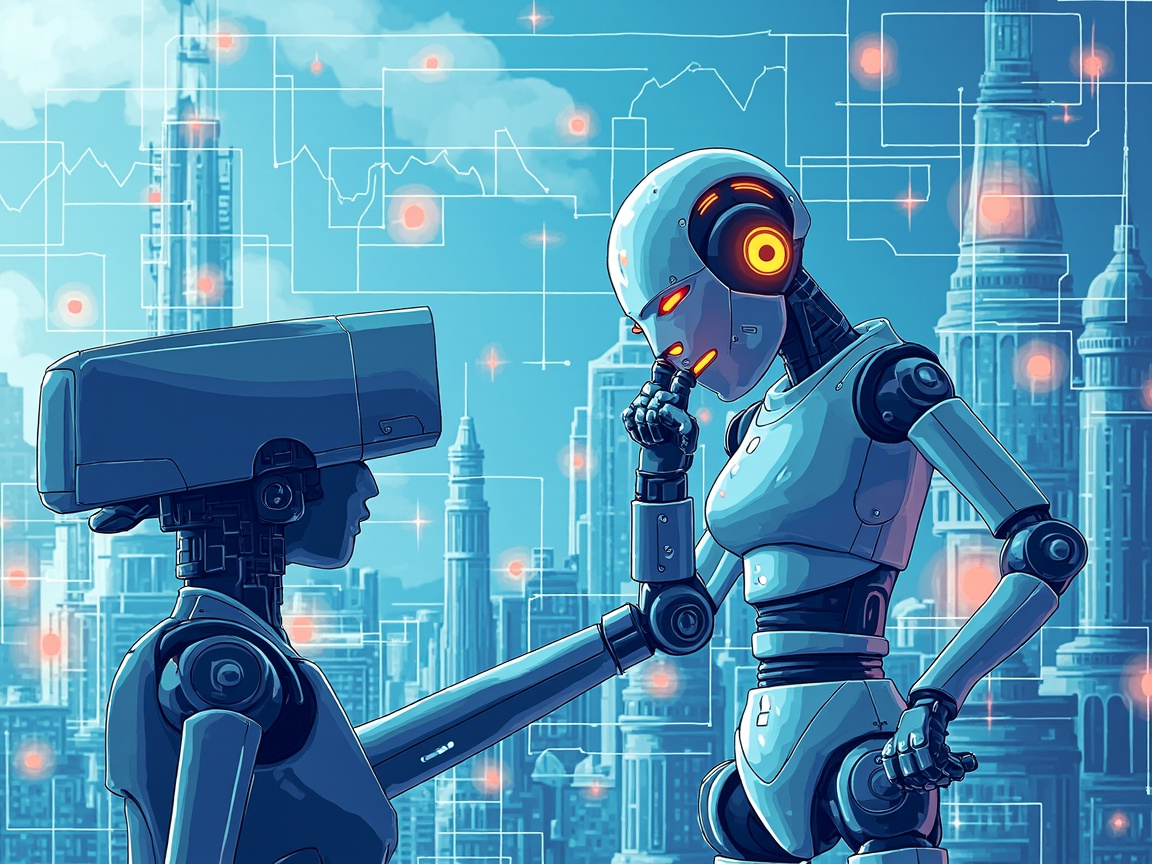
Google DeepMind just announced Gemini Robotics-ER 1.6 and a partnership with Boston Dynamics to integrate it into the Orbit AI platform. This isn't just another AI update—it's the first large-scale commercial deployment where **AI's decision-making brain meets mature robotics' physical body in industrial settings**. Forget lab demos; this is going directly to paying clients in construction, factories, and energy sectors.
## What Actually Changed?
The upgrade gives robots true "eyes" for industrial environments. Gemini ER 1.6 enhances **spatial understanding** and **instrument reading**, enabling Spot robots to recognize complex gauges, valve states, and 3D environmental relationships autonomously. Testing shows a 10% improvement in video-based hazard detection.
The real story isn't the percentage—it's **where this capability lands**. Boston Dynamics' Spot robots already have commercial traction in oil/gas, construction, and power inspection, replacing high-risk human tasks. Previously, their "intelligence" was limited to navigation and basic data collection; complex judgment required human backend support.
Now, Gemini ER 1.6 embeds human-like judgment directly into the robot's onboard brain. Example: spotting a pressure gauge in the red zone, identifying "abnormal," and triggering preset responses. This adds **specialized, context-aware vision and instant reaction capabilities** to industrial robots.
## Why Crypto Observers Should Care
While not directly crypto-related, the underlying logic parallels our space: **both automate trust and efficiency**.
Bitcoin replaces centralized intermediaries with code and consensus for value transfer; AI+robots replace human judgment in physical-world monitoring and operations with algorithms and sensors. Both decentralize (or distribute) "judgment" and "execution" authority in specific domains.
Practical implications for markets:
1. **Industrial productivity gains → corporate cash flow shifts → capital allocation changes**. If AI robots significantly cut inspection costs and reduce accident-related downtime, early adopters (energy, infrastructure, manufacturing giants) will see balance sheet improvements. These traditional market heavyweights influence capital flows and tech valuation preferences—including for institutions that may allocate to crypto.
2. **Data generation and processing shifts**. Autonomous robots become real-time, high-frequency data terminals from the physical world. Their massive structured environmental data (temperature, pressure, images) will demand new storage, transmission, verification, and processing methods—creating long-term intersections with decentralized storage, IoT+blockchain, and data ownership sectors.
3. **"Automation" narrative spillover**. Crypto markets favor full-automation narratives (DeFi, smart contracts, DAOs). As major tech players push automation deeper into physical-world judgment (beyond simple tasks), it reinforces broader market confidence in "code replacing labor," providing tangible validation for related crypto themes.
## What to Watch Next
Ignore Google's stock price or model parameters. For crypto observers, focus on two signals:
**1. Deployment Pace and Client Feedback**
Boston Dynamics begins rolling out this AI integration to Orbit platform clients starting April 8. Watch:
- **Adoption rates**: How many clients actually enable these features? Is it experimental or widespread?
- **Real-world results**: In coming months, do early clients report specific efficiency gains or accident reductions? Metrics like "refinery inspection efficiency up X%" or "hazard detection time reduced by Y hours" provide the ROI data that signals whether this technology moves from "useful" to "essential."
**2. Ecosystem Movement**
Currently, Google and Boston Dynamics operate a tight "closed loop." For scale, watch for potential interface openings or standards. Are other robotics firms or industrial software platforms adapting similar AI capabilities?
Any ecosystem shift—like an industrial IoT platform announcing support for Gemini ER-style AI models—suggests modularization and standardization, potentially sparking new middleware layers or service markets. That's often the precursor to new business models and investment opportunities.
## Reality Check: No Short-Term Catalyst, Long-Term Foundation
Frankly, this **won't directly boost any crypto sector immediately**. Unlike AI training's compute demands (which benefit decentralized networks) or game launches driving token prices, this development is **foundational**.
It represents top AI research (Google) and top robotics engineering (Boston Dynamics) collaboratively embedding "intelligence" into lucrative, large-scale industrial operations. This process is slow, practical, and problem-solving oriented. It doesn't create short-term hype fuel but reinforces a macro trend: **software and algorithms are systematically reshaping how the physical world operates**.
For long-term Bitcoin and crypto believers, this trend feels familiar. We trust code to reshape finance and value transfer; they trust code to reshape manufacturing, inspection, and maintenance. Different battlefields, similar core mission: replacing inefficient, costly, or risky human intermediaries with verifiable, automated systems.
Stay informed, but don't rush. Use this as a window into how frontier tech tackles hard problems and captures value. Understanding how AI robots actually generate savings and profits in oil fields, power grids, and construction sites will give you deeper insight into "technology adoption" and "value capture" than any whitepaper or roadmap.
Ultimately, meaningful technological transformation rewards those who understand how the bricks are laid—not those who rush in at the first sound of construction.
| DISCLAIMER: The information on this website is provided as general market commentary and does not constitute investment advice. We encourage you to do your own research before investing. |
Recommended reading







Markets
2026-03-24
Markets
2026-02-26
Markets
2026-03-23
Latest News