• Thai-listed company DV8 has announced plans to build a corporate treasury of 10,000 Bitcoin.
• Blockchain AI Convergence: Fact-Check & Market Guide (2026)
• DoorDash, Chainlink & Oblong Market Shifts Guide (2026)
• Polygon's mainnet will undergo the Giugliano upgrade on April 8.
• PsiQuantum has started building its million-qubit quantum facility. Scientists say a machine this po
• Anthropic Discontinues Subscription Support for Third-Party Tools
• XRP ETF Forecasts & Bitmine’s $20B ETH Bet: 2026 Analysis
• Crypto & Tech Market Trends 2026: Pi, XRP, Robotaxi Safety
• DoorDash, Chainlink & Oblong Market Shifts Guide (2026)
• SEC v. Ripple Case Ends: XRP Outlook & Monero 51% Attack (2026)
Hollywood's $70M AI Bitcoin Film Targets Satoshi: Entertainment's Crypto Play
2026-04-16 04:32:57
A $70 million film titled *Bitcoin: Kill Satoshi*—directed by Doug Liman (*The Bourne Identity*) and starring Casey Affleck and Gal Gadot—is being pitched to buyers at Cannes. What stands out isn't the star power, but the production: the entire movie is filmed in a 'gray box' studio, with all scenes and lighting AI-generated, and actor performances captured and reconstructed by AI. Producers claim this AI approach slashed costs from a potential $300 million for on-location shooting to just $70 million.
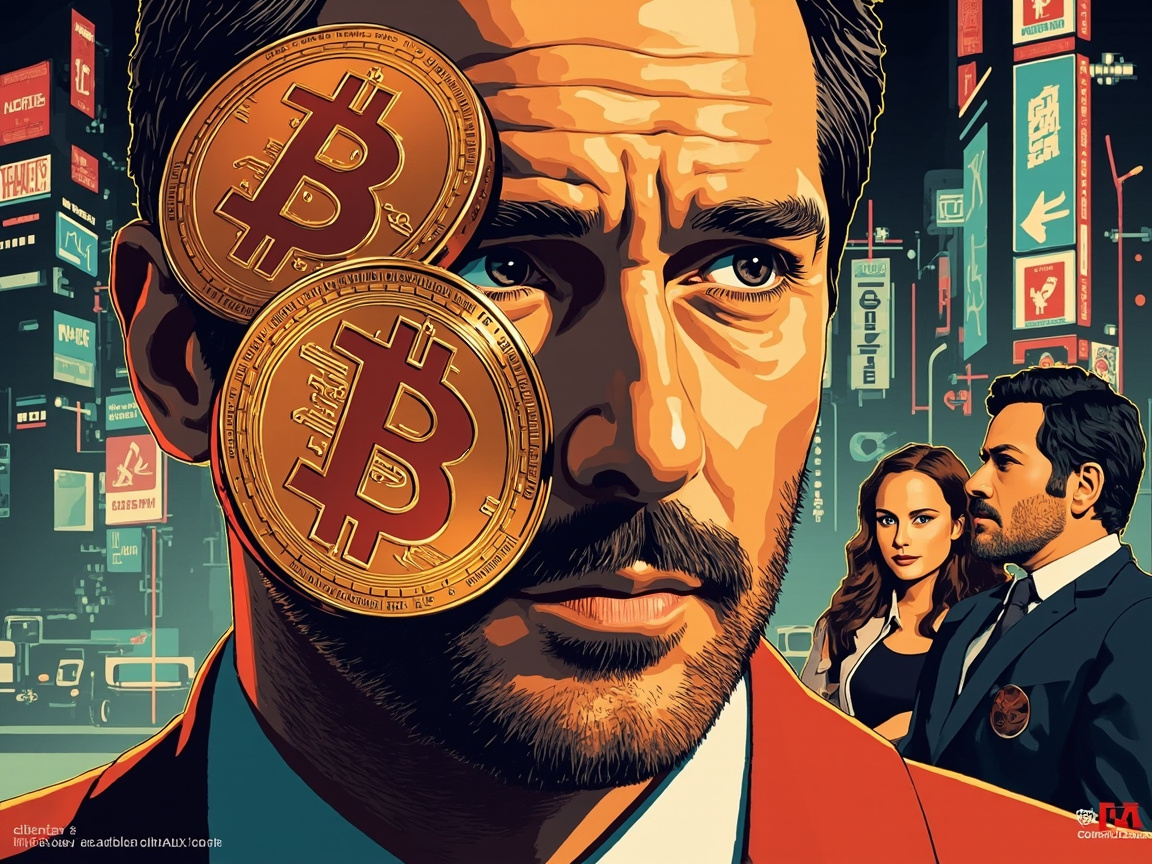
On the surface, this is a Hollywood cost-cutting tech experiment. But the real signal for crypto watchers is its timing and subject. The film centers on Bitcoin and the mystery of Satoshi Nakamoto's identity—a topic freshly heated by last week's *New York Times* article hinting Blockstream CEO Adam Back might be Satoshi (quickly denied), and HBO's recent documentary pointing to developer Peter Todd (also refuted). Another documentary, *Finding Satoshi*, is due soon. The 'Who is Satoshi?' question is being reignited by mainstream media and entertainment.
### Why Hollywood Is Making This Now
It's not because AI suddenly matured. Hollywood has sniffed out a narrative gap in Bitcoin's story. Thirteen years after Satoshi vanished (holding ~1.1M BTC, worth ~$81B today), Bitcoin has evolved from cypherpunk toy to institutional asset, hitting $70K, with ETFs approved and halving done. Yet its origin myth lacks a final piece: the creator's identity. Mainstream perception remains stuck on 'mysterious,' 'anonymous,' and 'dark web' labels. Hollywood excels at turning abstract symbols into consumable stories—packaging Bitcoin as a thriller, using AI for buzz, and leveraging stars for reach. This is entertainment's standard co-option of crypto culture.
But behind this lies a battle for narrative control. When the *Times*, HBO, and top directors jump in, they're not 'legitimizing' Bitcoin—they're reframing its public image from a technical protocol to a suspense story. For crypto, this brings exposure but also risk: if the story twists, public perception could skew.
### What AI's $300M Savings Really Cut
Producers boast AI cut costs from $300M to $70M. It saved on location travel, hotels, and crew logistics—but possibly also Bitcoin's authentic texture. Filmed entirely in a 'gray box' with AI-generated scenes, it's cool yet metaphorical: Hollywood virtually 'generates' a Bitcoin world, much like the public 'imagines' Bitcoin through media filters. Bitcoin's essence is decentralization, immutability, and on-chain verification; this film sells 'AI-reconstructed reality.' The tech contrast highlights tension between mainstream narratives and crypto purism.
Investors shouldn't fret over the film's quality, but stay alert to cognitive bias. If the public learns Bitcoin through an AI movie, its hardcore attributes—node distribution, hash rate, UTXO model—may reduce to 'mysterious founder's legacy.' The more entertaining the narrative, the easier the underlying logic gets overlooked.
### The Satoshi Identity Puzzle Reheated: Who Benefits?
The timing of media 'Satoshi candidates' ahead of the film isn't coincidental. Adam Back's mention spiked Blockstream's exposure; Peter Todd's denial reinforced his developer identity. Each 'guess-deny' cycle feeds attention to related figures or projects. Who Satoshi is matters less than the traffic 'finding Satoshi' generates.
For holders, short-term price impact is minimal—Bitcoin won't surge or crash on a film or article. But long-term, narrative shifts subtly influence capital flows. If mainstream frames Bitcoin as a 'mystery asset,' its store-of-value nature could weaken while speculation amplifies. Not necessarily bad, but beware: when stories overshadow tech, market sentiment may detach from fundamentals.
### What to Watch Next
1. **Cannes Deal Outcomes**: High-price sales or streaming platform pickups (Netflix, Apple TV+) will gauge mainstream capital's appetite for crypto themes.
2. **Media Follow-Up Angles**: Post-release, watch how financial and entertainment media interpret Bitcoin—focusing on tech revolution or mystery? This shapes new users' cognitive frameworks.
3. **Community Response**: How do Bitcoin core devs, OGs, and miners react? Can their voices counter Hollywood's single narrative? Community consensus resilience gets tested in this cultural clash.
Hollywood's AI Bitcoin film is a large-scale attention grab. It won't alter Bitcoin's code but might shift spectators' mindsets. For crypto natives, don't cheer 'mainstream approval' or resist 'entertainment'—hold the line: whatever the story, Bitcoin's value roots in the chain, not the screen. When the film ends, AI scenes vanish, leaving the gray box empty. But Bitcoin's blocks keep generating.
| DISCLAIMER: The information on this website is provided as general market commentary and does not constitute investment advice. We encourage you to do your own research before investing. |
Recommended reading







Bitcoin
2026-02-26
Bitcoin
2026-03-31
Latest News