• Thai-listed company DV8 has announced plans to build a corporate treasury of 10,000 Bitcoin.
• Blockchain AI Convergence: Fact-Check & Market Guide (2026)
• Polygon's mainnet will undergo the Giugliano upgrade on April 8.
• DoorDash, Chainlink & Oblong Market Shifts Guide (2026)
• PsiQuantum has started building its million-qubit quantum facility. Scientists say a machine this po
• Anthropic Discontinues Subscription Support for Third-Party Tools
• XRP ETF Forecasts & Bitmine’s $20B ETH Bet: 2026 Analysis
• Crypto & Tech Market Trends 2026: Pi, XRP, Robotaxi Safety
• DoorDash, Chainlink & Oblong Market Shifts Guide (2026)
• SEC v. Ripple Case Ends: XRP Outlook & Monero 51% Attack (2026)
Pakistan's Crypto Unbanning: A $25 Billion Market Gets the Regulatory Treatment
2026-04-15 22:18:20
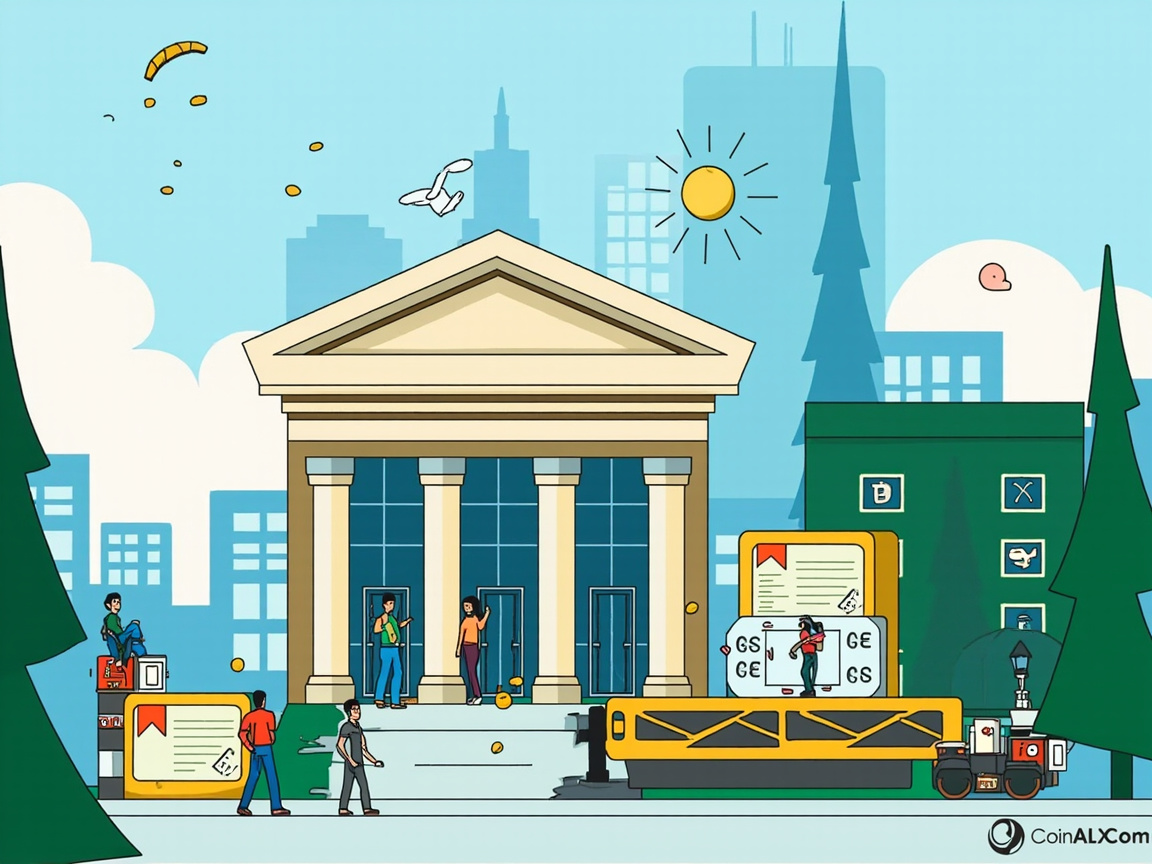
On April 14, 2026, Pakistan officially ended its eight-year cryptocurrency banking ban with a new regulatory framework. On the surface, this looks like another country opening its doors to crypto. But the real story is how Pakistan, under IMF fiscal reform pressure, is using regulation to harvest a $25 billion informal market—this isn't liberalization; it's a fiscal operation by the state.
### The First Cut: Banks Can Serve, But Not Touch Crypto
The core distinction is clear: banks can open accounts for licensed Virtual Asset Service Providers (VASPs), but these accounts must be segregated, non-interest-bearing, and denominated in Pakistani rupees. Banks are explicitly barred from investing, trading, or holding crypto assets with their own funds or customer deposits.
**This cuts at the throat of capital flow.**
The banking system becomes a data pipeline, not an asset warehouse. All transaction data must flow through this pipeline, subject to anti-money laundering rules, entering a taxable and traceable system. For a country implementing IMF reforms, this $21–25 billion informal market suddenly becomes a calculable tax base.
Capital gains tax starts at 15%, rising to 20%. This isn't about encouraging investment; it's a price tag: if you want to go legit, you pay.
### The Second Cut: A Unique Sharia Compliance Committee
All licensed VASPs must have their services assessed for compliance by a Sharia committee before launch—a feature unmatched in global crypto regulation.
**This cuts into cultural DNA.**
Pakistan didn't copy Western or Asian regulatory templates. Instead, it embedded its foundational financial logic—Islamic finance—directly into crypto oversight. Any global platform entering Pakistan must first pass religious compliance.
Binance has signed a $2 billion MoU for government asset tokenization while applying for a VASP license. Global giants are willing to operate under restrictions, showing the market's size, but rules must be Pakistan's.
### The Third Cut: Three Tracks Running Simultaneously
Pakistan is advancing on three fronts:
1. **Private Sector Integration**—Binance, HTX, and others are pursuing licenses; SC Fintech is negotiating a dollar stablecoin for remittances.
2. **Monetary Infrastructure**—The central bank is exploring a CBDC pilot alongside regulated VASPs.
3. **Reserve Strategy**—Investigating adding Bitcoin to the national balance sheet.
**Launching all three within weeks signals a systemic national strategy, not a test run.**
Notably, SC Fintech's backer, World Liberty Financial Group, has ties to the Trump administration, whose representatives recently attended U.S.-Iran talks in Islamabad. Here, crypto regulation extends into geopolitics.
### What Investors Should Watch
1. **License Issuance Speed**: PVARA uses a two-stage process, with a no-objection certificate within 60 days in phase one. If the first licenses land by Q3, the regulatory machine is smooth; delays into year-end suggest internal friction.
2. **Actual Trading Volume Migration**: The $25 billion informal market won't vanish overnight. Watch how much capital moves from peer-to-peer and unregulated exchanges into this system with 15–20% capital gains tax, Sharia committees, and 10-year record-keeping.
3. **Stablecoin Progress**: If SC Fintech's dollar stablecoin gets approval, it becomes the benchmark currency pair for Pakistan's crypto market. This matters more than Bitcoin or Ethereum price swings—it directly affects capital flow efficiency.
### Reality Check: Is the Regulatory Corridor Wide Enough?
Pakistan has built a narrow, monitored corridor. The goal is clear: capture $25 billion in capital and tax base without risking the banking system.
**The problem: it might be too narrow.**
Unlicensed operations face up to five years in prison and a 50 million rupee fine. That's a hard barrier. But crypto activity in a country that spawned a $25 billion informal market without infrastructure won't automatically comply just because regulation appears.
The likely outcome is fragmentation:
- Institutional and large transactions will use the formal channel for banking relationships and legal protection.
- Small trades and gray funds may stay underground due to high tax burdens.
- Global platforms will enter but only for compliant segments, not betting everything on Pakistan.
Over the next twelve months, the market will answer: Is this corridor broad enough to attract global platforms, or so narrow it pushes most activity back underground?
**Current trends suggest transition mechanisms may work, but only partially.**
Binance pursuing both an MoU and a license shows giants will operate under limits but won't put all eggs in one basket. For investors, Pakistan's market has shifted from "entirely incalculable" to "partially calculable"—that's progress, but don't expect an overnight boom.
Watch licenses, stablecoins, and actual migrated volume. This market won't grow freely; it will run on Pakistan's designed track. Your job isn't to predict prices but to gauge how much weight this track can bear.
| DISCLAIMER: The information on this website is provided as general market commentary and does not constitute investment advice. We encourage you to do your own research before investing. |
Recommended reading
Bitcoin
2026-02-26
Bitcoin
2026-03-31
Latest News