• Thai-listed company DV8 has announced plans to build a corporate treasury of 10,000 Bitcoin.
• Blockchain AI Convergence: Fact-Check & Market Guide (2026)
• Polygon's mainnet will undergo the Giugliano upgrade on April 8.
• DoorDash, Chainlink & Oblong Market Shifts Guide (2026)
• PsiQuantum has started building its million-qubit quantum facility. Scientists say a machine this po
• Anthropic Discontinues Subscription Support for Third-Party Tools
• XRP ETF Forecasts & Bitmine’s $20B ETH Bet: 2026 Analysis
• Crypto & Tech Market Trends 2026: Pi, XRP, Robotaxi Safety
• DoorDash, Chainlink & Oblong Market Shifts Guide (2026)
• SEC v. Ripple Case Ends: XRP Outlook & Monero 51% Attack (2026)
Fed's Goolsbee Shifts Stance: Rate Cuts Could Wait Until 2027, But the Real Signal Is in the Oi
2026-04-15 04:07:32
Chicago Fed President Austan Goolsbee dropped a bombshell at the Semafor World Economy Summit: if Middle East tensions keep oil prices elevated long-term, stifling inflation progress, the first rate cut might not come until 2027.
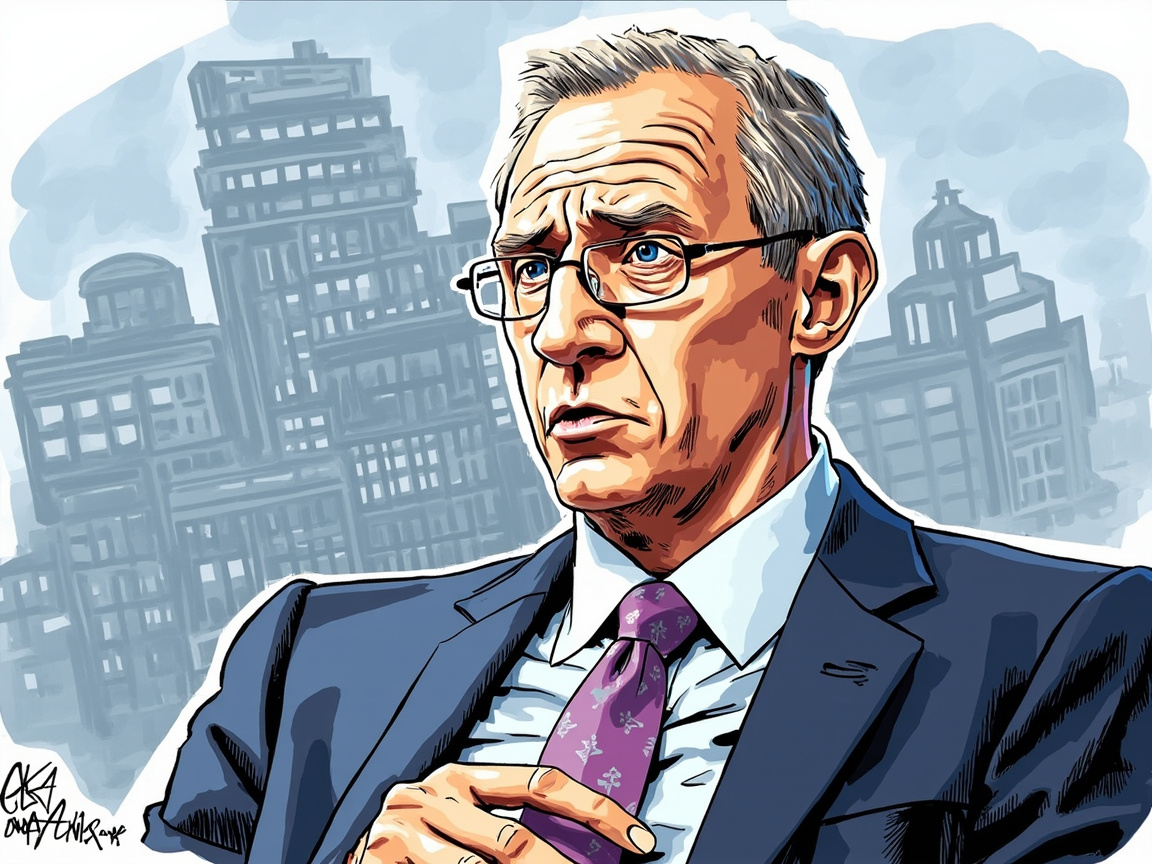
On the surface, this sounds like another hawkish Fed comment. But what matters here is *who* is saying it. Goolsbee has been the Fed's most optimistic dove on rate cuts this year, repeatedly forecasting easing could start in 2024. For him to float "2027" isn't just talk—it's a signal that the Fed's internal consensus is cracking.
### The Dove Turns Hawkish: A Framework Shifts
Goolsbee didn't mince words: "I had thought that 2026 might even have multiple cuts... but if this persists, we're just not seeing inflation come down, and inflation stays high, realistically, that would push things into 2026 and beyond."
Note "realistically." This isn't fearmongering; it's a data-driven assessment. More startling was his follow-up: "In some scenarios, rates might even need to rise."
That's a monumental pivot—from "cuts this year" to "hikes possible." It reflects a judgment framework collapsing under the weight of stubborn inflation.
### Oil Is the Wild Card
Goolsbee spelled it out: prolonged Middle East conflict means elevated oil prices, which means sticky inflation. This isn't new, but coming from him, it carries weight.
The Fed's dilemma is straightforward: core inflation isn't fully tamed, and now oil prices threaten to reignite it. If oil lingers above $80 or spikes toward $100, the 2% inflation target becomes a moving goalpost.
"Our job is to get inflation back to 2%," Goolsbee stated—a line that sounds routine but, in this context, means: without oil's cooperation, the Fed can't ease.
### The Rate-Cut Timeline Is Obsolete
While markets obsess over "how many cuts this year," Goolsbee stretched the horizon to 2027. This isn't a forecast; it's a warning.
The warning? Stop assuming rate cuts are inevitable. The Fed's script has flipped from "when to cut" to "whether to cut."
He left a door open: if the Middle East situation resolves and inflation falls back toward 2%, cuts could return to the agenda. But that hinges on "if"—and with Middle East volatility, that's a big if.
### What Crypto Investors Should Watch
Forget 2027. That number is a projection, not a prophecy. Focus on two signals instead:
**1. Oil and inflation stickiness.** If energy components in CPI reports stay elevated over the next few months, the Fed's patience will wear thin. Goolsbee's "2027" could quickly become "hikes on the table."
**2. Consensus forming among Fed officials.** Goolsbee isn't alone. If other centrist Fed voices echo this tone in coming weeks, it's no longer an outlier view—it's a shift in direction.
Crypto is rate-sensitive, but that sensitivity has fixated on "cut expectations." Now, it needs to adapt to "cut expectations vanishing." The longer rates stay high, the more pressure on risk assets like Bitcoin. What's different this time? Even the optimists are preparing for the worst.
### What Comes Next?
Two paths emerge:
**Path 1: Middle East tensions ease, oil prices fall.** Goolsbee's comments fade, and markets return to guessing "when" cuts happen. Bitcoin might bounce, but gains could be limited with core inflation still unresolved.
**Path 2: Oil prices remain elevated.** The Fed gets cornered. Hike? The economy cracks. Cut? Inflation flares. The most likely outcome: rates stay higher for longer than anyone expects.
How long? Until something breaks—the economy, markets, or debt. Goolsbee hinted at this with his "rates might even need to rise" line: the Fed would risk cooling the economy before letting inflation run wild.
### The Bottom Line
Don't fixate on 2027. That's a scenario, not a prediction. But the logic behind it is firm: oil is now inflation's biggest variable, and the Fed's tolerance for inflation is zero.
This means the "Fed will eventually ease" narrative needs a rewrite. It's not "eventually"—it's "only if oil cooperates." And oil's path is anyone's guess.
Strategy for crypto investors: dial back rate-cut hopes and brace for volatility. If oil stays high through 2024, don't expect Fed generosity. Goolsbee's message is a wake-up call: the era of assuming easy money is over. Markets might overreact, but they're right on one thing—higher-for-longer rates are shifting from "possible" to "probable." Bitcoin can handle high rates, but not indefinitely high rates. And that "indefinitely" scenario is now being drafted.
| DISCLAIMER: The information on this website is provided as general market commentary and does not constitute investment advice. We encourage you to do your own research before investing. |
Recommended reading



Markets
2026-02-26
Markets
2026-03-23
Latest News