• Thai-listed company DV8 has announced plans to build a corporate treasury of 10,000 Bitcoin.
• Blockchain AI Convergence: Fact-Check & Market Guide (2026)
• Polygon's mainnet will undergo the Giugliano upgrade on April 8.
• DoorDash, Chainlink & Oblong Market Shifts Guide (2026)
• PsiQuantum has started building its million-qubit quantum facility. Scientists say a machine this po
• Anthropic Discontinues Subscription Support for Third-Party Tools
• XRP ETF Forecasts & Bitmine’s $20B ETH Bet: 2026 Analysis
• Crypto & Tech Market Trends 2026: Pi, XRP, Robotaxi Safety
• DoorDash, Chainlink & Oblong Market Shifts Guide (2026)
• SEC v. Ripple Case Ends: XRP Outlook & Monero 51% Attack (2026)
Goldman's 'Candy' ETF: Wall Street's Bitcoin Risk-Remix and the Institutional Ti
2026-04-15 00:57:46
Wall Street is back at it—this time with Goldman Sachs filing a "Bitcoin Premium Yield" ETF into the already heated Bitcoin ETF race. On the surface, it looks like another bank offering traditional capital a "safe" Bitcoin gateway: wrapped in complex options strategies to smooth volatility and promise yield, like a piece of finely engineered candy.
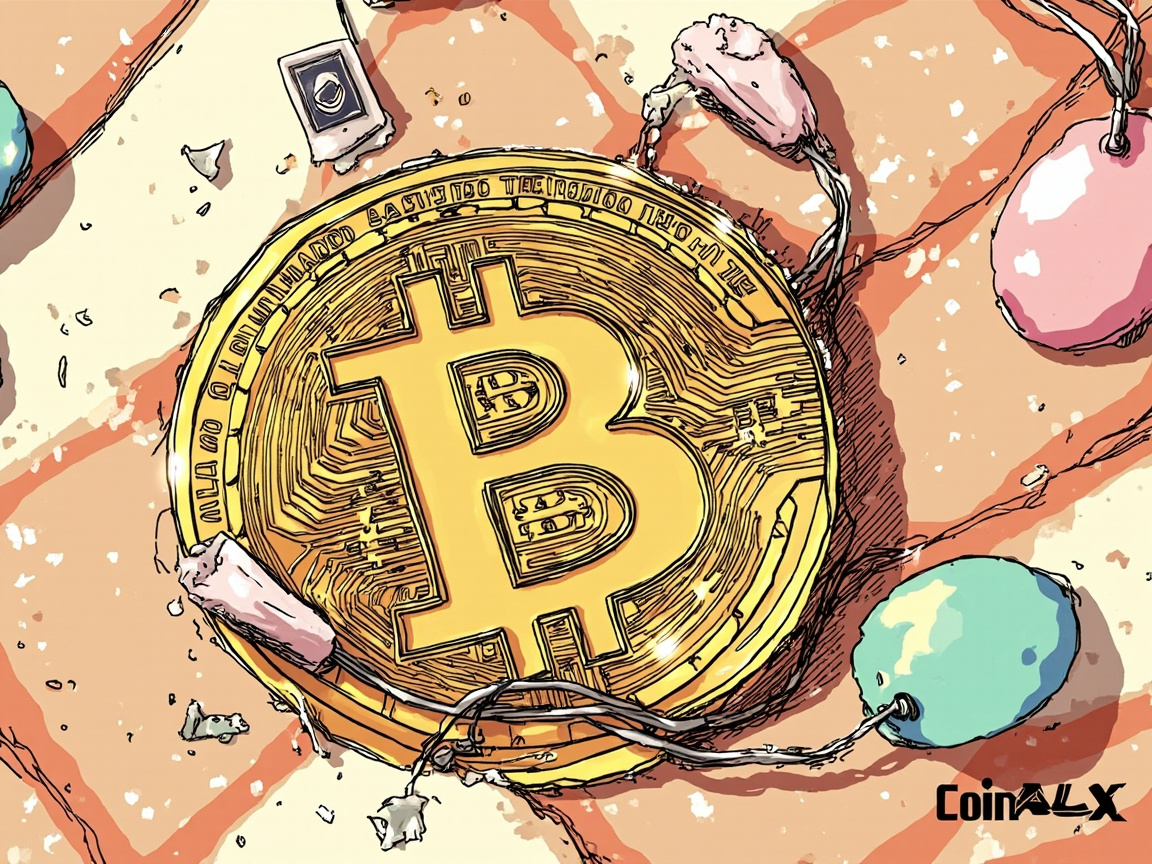
But look under the wrapper: Wall Street is using derivatives to systematically reshape Bitcoin's risk-return profile, funneling more traditional money into a version of Bitcoin they can "control." This isn't just entry—it's a stealth war over pricing power.
## This Isn't a Spot ETF—It's a "Risk Remix"
Goldman isn't launching a spot ETF. It's playing with derivatives.
According to SEC filings, the ETF won't hold Bitcoin directly. Instead, it gains exposure through existing spot Bitcoin ETPs, then layers on a dynamic "overwriting" options strategy. Simply put: it holds Bitcoin spot exposure while consistently selling call options to collect premiums, aiming to buffer downside or boost returns.
Bloomberg analyst Eric Balchunas called it "candy for the boomers." The target is clear: traditional investors curious about Bitcoin but afraid of its heat. They're willing to sacrifice some upside for a "smoother" ride.
**Here's the key:** Goldman isn't offering pure Bitcoin exposure—it's offering a *Wall Street-processed* Bitcoin risk-return product. It's dismantling Bitcoin's raw volatility, repackaging it into something that looks more "friendly," but essentially pulls Bitcoin deeper into traditional financial derivatives pricing.
## Why Now? Look at Morgan Stanley's Price War
Goldman's move isn't isolated.
Days earlier, Morgan Stanley launched its own spot Bitcoin ETF (MSBT), slashing fees to 0.14%—undercutting BlackRock (0.25%) and Grayscale Mini (0.15%) and sparking a fresh fee war. The debut? A smash hit, with rapid inflows.
That sends two signals:
1. **Competition has shifted from "if" to "who's cheapest."** Giants are now battling on fees to grab market share—a sign of maturity and the start of a squeeze.
2. **Traditional money is flooding in faster through compliant channels.** Morgan Stanley's success proves the huge demand for low-cost spot products.
Against this backdrop, Goldman chose a differentiated path: not cheap spot, but complex derivatives. It's targeting not the same users chasing spot ETFs, but more conservative capital sensitive to volatility and hungry for "yield enhancement."
**So Wall Street's playbook is:** use low-fee spot ETFs (like Morgan Stanley) to massively attract capital and expand the base, while using structured products (like Goldman) to widen the user spectrum and pull in more marginal money. Two-front warfare, full penetration.
## What It Means for the Market: Watch "Volatility" and "Money Flow"
How will this play out? What should investors watch?
**First, watch Bitcoin's volatility structure.**
ETFs like Goldman's core operation is consistently selling call options. As these products scale, they become steady option sellers in the market, potentially **suppressing Bitcoin's implied volatility**, especially short-term. The market might get "calmer," but those sudden, retail-driven explosive rallies could be partially hedged away by more derivatives positions.
This isn't necessarily bad, but it means market drivers are changing. Pumping prices purely on sentiment and narrative will get harder; fundamentals and macro factors (rates, dollar) will gain weight.
**Second, watch the structure of incoming money.**
Future Bitcoin inflows will split more clearly:
- **Money seeking pure exposure** → flows to low-fee spot ETFs (BlackRock, Fidelity, Morgan Stanley).
- **Conservative money seeking "steady yield"** → flows to structured products like Goldman's.
The latter, while sacrificing some upside, brings more stable incremental demand. These investors view Bitcoin as a "yield-bearing asset" or "alternative fixed income"—their holding behavior could be longer-term and more resilient, forming new support at the bottom.
**Third, mind the candy's cost.**
There's no free lunch. This strategy might perform well in sideways or slow-bull markets, offering "enhanced yield." But in a sharp, sustained rally, because it sells calls, the fund's gains will be capped—**you'll underperform spot Bitcoin.** In a crash, the collected premiums may not fully cover losses.
The "smoothness" it offers is bought with potential upside. That's the "entry fee" traditional investors must pay, and it's how Wall Street earns its management fees and strategy premiums.
## The Bottom Line: Institutionalization Goes Deep, Retail Strategy Must Level Up
Goldman's "candy" marks Bitcoin's institutionalization moving from simple "spot custody and buy" to complex "derivatives strategy customization."
**For ordinary holders, this means:**
1. **Market dominance is shifting further.** Pricing power increasingly tilts toward institutions with complex tools and massive capital. Retail's information and tool disadvantages will widen.
2. **The playbook needs an update.** The era of "buy and hold" easily outperforming most is getting tougher with deep institutional involvement. You'll need to better understand how derivatives impact spot and focus more on structural changes in money flows.
3. **The long-term thesis remains solid.** No matter the packaging, giants racing to enter and using every trick to attract traditional money is the hardest endorsement of Bitcoin as an asset class. Long-term, the liquidity base and awareness are irreversibly rising.
**End on reality:**
Don't be fooled by the "candy" label. Goldman and peers aren't handing out gifts—they're acquiring new clients and profiting from financial engineering. As a Bitcoin holder, welcome the incoming capital, but see clearly: the game is getting deeper and more professional. Your counterparties are shifting from other retail traders to Wall Street banks armed to the teeth.
Watch two data points next: the growth of these structured ETFs, and changes in Bitcoin options open interest and the volatility surface. That's where the institutions' real intent—and the market's next turn—will hide.
The market won't sweeten just because of some candy, but the rules of the game are being rewritten.
| DISCLAIMER: The information on this website is provided as general market commentary and does not constitute investment advice. We encourage you to do your own research before investing. |
Recommended reading



Bitcoin
2026-02-26
Bitcoin
2026-03-31
Latest News