• Thai-listed company DV8 has announced plans to build a corporate treasury of 10,000 Bitcoin.
• Blockchain AI Convergence: Fact-Check & Market Guide (2026)
• Anthropic Discontinues Subscription Support for Third-Party Tools
• DoorDash, Chainlink & Oblong Market Shifts Guide (2026)
• DoorDash, Chainlink & Oblong Market Shifts Guide (2026)
• SEC v. Ripple Case Ends: XRP Outlook & Monero 51% Attack (2026)
• XRP ETF Forecasts & Bitmine’s $20B ETH Bet: 2026 Analysis
• PsiQuantum has started building its million-qubit quantum facility. Scientists say a machine this po
• Polygon's mainnet will undergo the Giugliano upgrade on April 8.
• Crypto Market News: Regulatory Shifts & Corporate Volatility (March 2026)
## This Isn't About Lower Fees, It's a Channel War
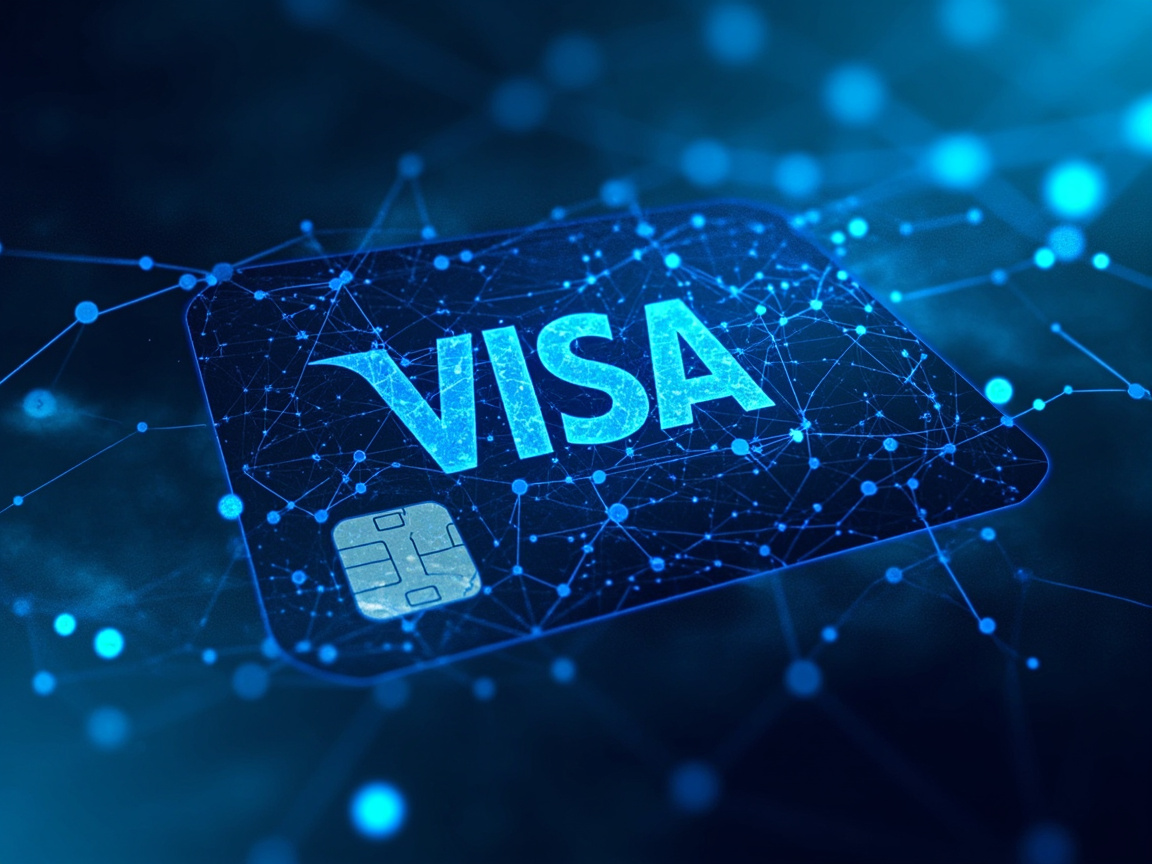
Visa's move is often misinterpreted as a traditional financial giant embracing new technology. It's not. This is Wall Street's distribution network directly harvesting a new sector. The Visa Acceptance Platform covers over 100 million merchant locations globally—a ground force no public blockchain or DeFi protocol can match in the next decade. Intelligent Commerce Connect's 'single integration' means merchants don't need to change their existing systems; AI agents can directly access Visa's payment channels. This isn't a tech competition; it's channel dominance. While blockchains educate merchants on crypto payments, Visa tells them: 'Use your current Visa terminal, and AI can sell for you.' The platform even supports non-Visa card payments, expanding the entire card network ecosystem—with Visa holding the utensils.
## The Real Game: Proximity to Money Wins
The AI payments battle isn't won by tech stacks but by capital organization capabilities. Take Nevermined's case: this AI fintech firm integrated Visa's new platform via Coinbase's x402 protocol, enabling AI agents to autonomously purchase digital goods. Users set spending rules, AI trades within them, and merchants collect payments through existing processors. The key? x402 processed $24 million in 30 days, significant in crypto but dwarfed by Visa's daily trillion-dollar volume. The gap isn't in technology but in capital channels. Intelligent Commerce Connect does three things: makes merchant catalogs discoverable on AI platforms, handles tokenization and spending controls, and manages authentication and compliance through single integration. Each solves 'how money flows in safely.' Blockchains excel at 'peer-to-peer money transfer,' while Visa masters 'moving money securely from global consumers to merchant accounts.' When AI agents shop at scale, capital organization efficiency decides survival. Visa's global clearing network, anti-fraud systems, and compliance frameworks are ready-made fortifications; blockchains rebuilding this face a closing window.
## What's Next: Channels Take Profits, Protocols Get Scraps
Before full rollout in 2026, the market is already tilting. Immediate pressure will hit small to mid-sized payment protocols. Visa's platform compatibility with mainstream AI agent protocols means the protocol layer will quickly commoditize. Even the best protocols must connect to Visa's payment channels for large-scale commercial use. Who benefits? Two groups: AI fintech firms like Nevermined that partner early, leveraging Visa's network without building their own, and large merchants with existing Visa systems, facing near-zero marginal costs to add AI sales. The market will likely stratify: bottom layer with card networks like Visa and Mastercard, middle with various AI agent protocols, top with merchant applications. Profits will concentrate at the channel and application ends, squeezing the protocol layer into price wars. Investors should watch not for protocol transaction spikes but for companies securing deep partnerships with Visa or Mastercard, as hybrid 'protocol + card network' models like Nevermined's via Coinbase x402 may become mainstream. Visa's CLI experiment allows AI agents same-day payments, and this new platform opens entire merchant catalogs to AI, signaling clearly: Wall Street competes on channels, not technology. As payment networks enter directly, time is running out for pure protocol players.
| DISCLAIMER: The information on this website is provided as general market commentary and does not constitute investment advice. We encourage you to do your own research before investing. |
Recommended reading



Ethereum
2026-02-26
Latest News