• Thai-listed company DV8 has announced plans to build a corporate treasury of 10,000 Bitcoin.
• Blockchain AI Convergence: Fact-Check & Market Guide (2026)
• Polygon's mainnet will undergo the Giugliano upgrade on April 8.
• DoorDash, Chainlink & Oblong Market Shifts Guide (2026)
• PsiQuantum has started building its million-qubit quantum facility. Scientists say a machine this po
• Anthropic Discontinues Subscription Support for Third-Party Tools
• XRP ETF Forecasts & Bitmine’s $20B ETH Bet: 2026 Analysis
• Crypto & Tech Market Trends 2026: Pi, XRP, Robotaxi Safety
• DoorDash, Chainlink & Oblong Market Shifts Guide (2026)
• SEC v. Ripple Case Ends: XRP Outlook & Monero 51% Attack (2026)
South Korea's Oil Stockpiling Exposes a New Crypto Reality: Geopolitics Is Reshaping the '
2026-04-15 16:10:10
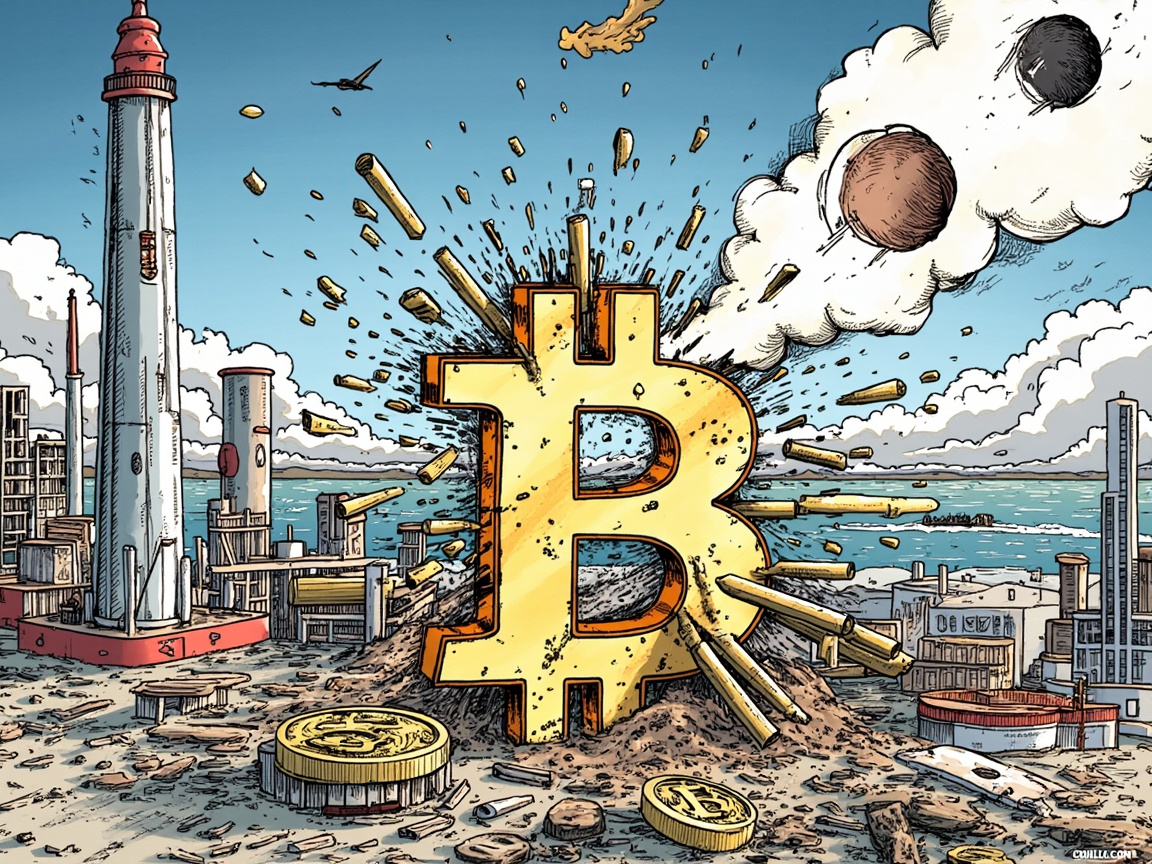
**South Korea just secured 273 million barrels of crude oil and 2.1 million tons of naphtha from four Middle Eastern suppliers, covering its needs through year-end.** On the surface, this looks like routine supply-chain management amid uncertainty around the Strait of Hormuz. Look deeper: it’s a flashing signal that geopolitical risk is shifting from 'black swan' to 'gray rhino'—and Bitcoin’s role as a safe haven is evolving from pure inflation hedge to a more complex geopolitical hedge.
### The Supply Chain Crack Is Now Visible
The backdrop is clear: the Strait of Hormuz—a global oil artery—could be severed any day. Attacks on Saudi energy facilities cut 600,000 barrels per day; pipeline flows dropped another 700,000 bpd; U.S. sanctions waivers on Iran expire April 19. These aren’t isolated blips—they’re systemic risks accelerating. Middle Eastern producers are demanding Asian refiners submit April-May loading plans; Saudi Aramco is asking clients for May port requirements. The message: supply certainty is vanishing. South Korea, the world’s fifth-largest crude importer, isn’t preparing for rain—it’s hearing thunder.
### This Hits Traditional Safe Havens Where It Hurts
Gold, the dollar, Treasuries—the classic safe-haven trio—have a brutal flaw here: they can’t solve an energy shortage. Gold hedges inflation but won’t power factories; the dollar stays strong but America is a player in the geopolitical game; bonds yield returns but can’t magically produce crude. South Korea needed physical barrels, not financial symbols. This opens a window for Bitcoin—not to replace gold, but to fill gaps traditional assets can’t cover. When nations must lock down real resources for basic security, what backs individual and institutional portfolios? More assets tied to the same fragile system?
### Watch the Narrative, Not Just the Price
The coming months will test a critical question: which assets actually hold up when geopolitical risk becomes routine, not exceptional? Bitcoin’s 'digital gold' story assumed stable supply chains and functioning financial systems. That assumption is now cracking. South Korea’s move isn’t a 'buy Bitcoin' signal—it’s a 'rethink your hedge logic' alert. If a manufacturing powerhouse needs contingency plans for energy, how much of your portfolio is truly independent of geopolitical risk?
### The Bottom Line: Geopolitical Premiums Will Reprice Everything
The path forward is clear: Hormuz tensions won’t ease soon; U.S. sanctions will tighten; Saudi capacity recovery takes time. Energy supply fragility will keep showing up, and geopolitical risk premiums will seep into every asset class. For crypto investors, the key isn’t whether Bitcoin rallies—it’s whether markets reprioritize what 'safe haven' means. Before, we hedged against recession and inflation; now add conflict, supply breaks, and energy crises. Bitcoin’s edge? Its network doesn’t rely on national pipelines, strategic straits, or sanction waivers. That 'physical decentralization' gains value when geopolitics heats up.
### So What?
South Korea’s oil stockpiling isn’t an isolated event—it’s a slice of escalating global risk. The takeaway: old hedging playbooks are outdated. Crypto traders are used to watching the Fed, inflation data, and technicals. Now add a new lens: geopolitics, specifically energy supply chains, trade routes, and sanctions. When a major economy backs up its crude supply, ask yourself: how much of your portfolio has a backup? Geopolitical risk is moving from background noise to main theme—and Bitcoin might be one of the few assets that doesn’t assume geopolitical stability. This isn’t about belief; it’s about reality. Safe havens prove their worth not in calm times, but when supply chains break. South Korea answered with 273 million barrels. What’s your answer?
| DISCLAIMER: The information on this website is provided as general market commentary and does not constitute investment advice. We encourage you to do your own research before investing. |
Recommended reading

Markets
2026-03-24
Markets
2026-02-26
Markets
2026-03-23
Latest News