• Thai-listed company DV8 has announced plans to build a corporate treasury of 10,000 Bitcoin.
• Blockchain AI Convergence: Fact-Check & Market Guide (2026)
• Polygon's mainnet will undergo the Giugliano upgrade on April 8.
• DoorDash, Chainlink & Oblong Market Shifts Guide (2026)
• PsiQuantum has started building its million-qubit quantum facility. Scientists say a machine this po
• Anthropic Discontinues Subscription Support for Third-Party Tools
• XRP ETF Forecasts & Bitmine’s $20B ETH Bet: 2026 Analysis
• Crypto & Tech Market Trends 2026: Pi, XRP, Robotaxi Safety
• DoorDash, Chainlink & Oblong Market Shifts Guide (2026)
• SEC v. Ripple Case Ends: XRP Outlook & Monero 51% Attack (2026)
Bitmine's $3.8B Quarterly Loss: The High-Stakes Ethereum Bet Testing Corporate Crypto Strategy
2026-04-15 11:56:50
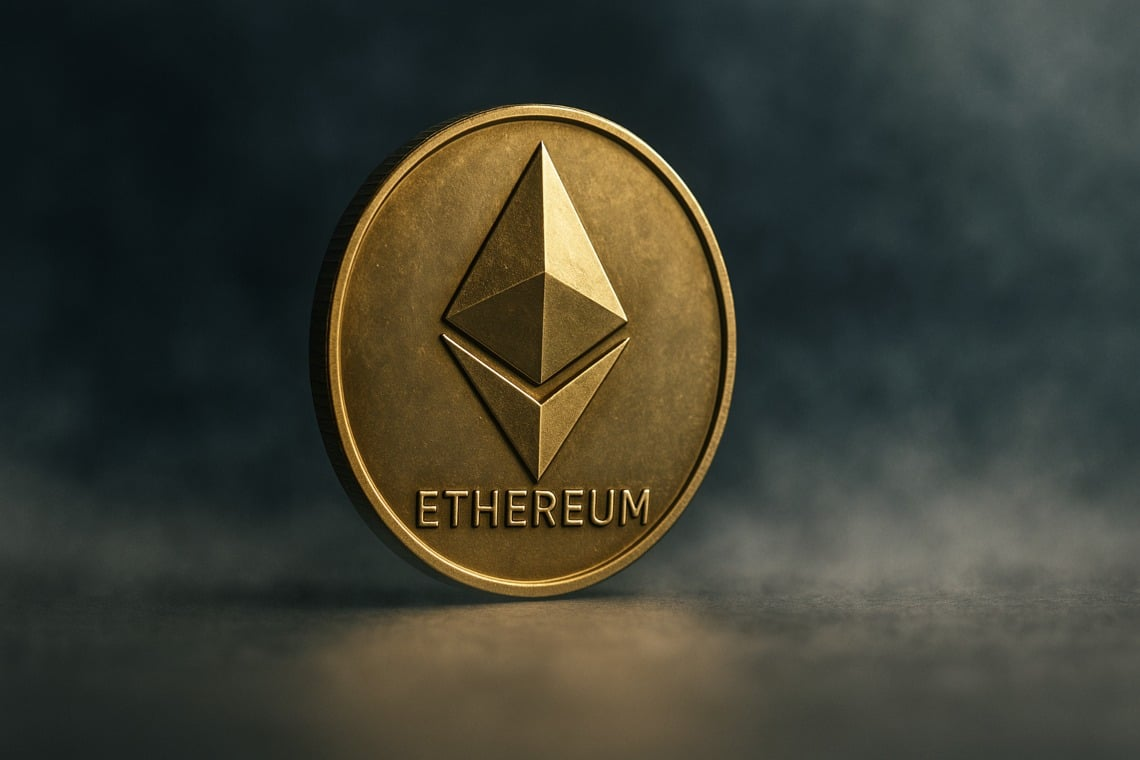
Another crypto company has posted a brutal quarterly report. Bitmine Immersion Technologies disclosed a net loss of **$3.82 billion** for the quarter ending February 28, 2026—a figure over 3,000 times larger than its $1.15 million loss a year prior. On the surface, this is a paper loss story tied to Ethereum's price decline. But the real story is how the company behind the **world's largest corporate Ethereum treasury** is stress-testing a 'buy-the-dip' strategy in a bear market, and where the limits of that gamble might lie.

### The $3.78 Billion 'Conviction Play'
Of that $3.82 billion loss, **$3.78 billion came from unrealized losses on Ethereum holdings**. Translation: Bitmine has tied nearly all its quarterly red ink to ETH price swings.
Crucially, the company hasn't backed off. Since late 2025, even as crypto markets slid, Bitmine kept buying. As of April 12, its treasury held **4.87 million ETH**, acquired at an average cost of **$2,206 per coin**. At Ethereum's current ~$2,322 price, the position remains slightly profitable overall—but the paper losses from volatility are staggering.
Chairman Tom Lee was blunt in March: "We find this pullback attractive." He argued ETH's price doesn't reflect its high utility or role as future financial infrastructure. That belief is driving the accumulation.
### The 4.04% Supply Target: How Close to Control?
Bitmine's public goal is to control **5% of Ethereum's total supply**. It currently holds **4.04%**. What does that mean?
It makes Bitmine the **second-largest corporate crypto treasury globally** (after Strategy) and the undisputed largest corporate holder of ETH. Over 4 out of every 100 circulating ETH sit in its vault.
This concentration cuts both ways: the company earns steady yield from staking (about **3.34 million ETH staked**, 68% of holdings, generating an estimated **$212 million annually**), but it's also fully exposed to Ethereum's price risk.
Lee recently noted purchases accelerated over the past four weeks, anticipating the "final stage of a mini crypto winter." If right, Bitmine could see massive paper gains. If wrong, losses will swell.
### Revenue Growth vs. Holdings Risk: Can Staking Income Cover the Gap?
Not all was bleak last quarter. Driven by Ethereum staking, revenue hit **$11.04 million**, up sharply from $1.5 million a year earlier. About **$10 million came from ETH staking rewards**; the rest from leasing, consulting, and mining.
But here's the harsh math: **$11.04 million in quarterly revenue against a $3.82 billion quarterly loss**. It would take over **346 quarters of staking income** to offset just this quarter's paper loss.
Unrealized losses aren't cash outflows—if Bitmine doesn't sell, it's just accounting. The problem: prolonged market pressure strains cash flow. The company held **$719 million in cash** plus Bitcoin and other assets as of April 12, but a $3.8B paper hole is a psychological and financial weight.
### What Investors Should Watch: Cost Basis, Staking Ratio, and Macro Drivers
For anyone tracking Bitmine, three metrics matter:
**1. Average cost basis.** At $2,206, it's near current market prices. If ETH breaks below, the entire position goes underwater. Would the accumulation strategy hold?
**2. Staking ratio.** With 68% of ETH staked, Bitmine locks in yield but sacrifices liquidity. Extreme volatility could limit maneuvering room.
**3. Market sentiment and geopolitics.** Lee pointed directly to the "Iran war entering its seventh week" as a key global market driver. Escalating geopolitical risk amplifies crypto's risk-asset attributes—and Bitmine's exposure.
### The Bottom Line: A Deliberate Stress Test, Not a Mistake
Bitmine's loss isn't an error; it's a **designed pressure test**. Management clearly believes Ethereum's long-term value is underestimated and this dip is a buying opportunity.
Time will judge that call. But a few realities are already clear:
- **Institutional players are betting big on Ethereum with real capital.** Bitmine isn't a retail trader; its moves involve systematic analysis and planning. This level of conviction influences market sentiment.
- **Staking yield is a critical bear-market revenue stream.** $212 million annual staking income rivals a mid-sized traditional firm. Ethereum's economic model generates value even when prices are down.
- **The risk limits of concentrated holdings are being tested.** Controlling 4.04% of supply makes Bitmine a force in Ethereum's ecosystem. But it also ties the company's fate to ETH's price—win big or lose big.
For everyday investors, Bitmine offers a stark case study: in crypto, conviction requires capital, and capital can swing wildly. The company is betting $3.8B in paper losses on Ethereum's future. Win, and it could be a cycle winner. Lose, and this report may preface worse numbers.
The market won't shift for one company's strategy. But when a player stakes this much on a single asset, it's worth watching—if only to know who's at the table with you.
| DISCLAIMER: The information on this website is provided as general market commentary and does not constitute investment advice. We encourage you to do your own research before investing. |
Recommended reading



Ethereum
2026-03-25
Ethereum
2026-04-01
Latest News