
• Thai-listed company DV8 has announced plans to build a corporate treasury of 10,000 Bitcoin.
• Blockchain AI Convergence: Fact-Check & Market Guide (2026)
• DoorDash, Chainlink & Oblong Market Shifts Guide (2026)
• PsiQuantum has started building its million-qubit quantum facility. Scientists say a machine this po
• Anthropic Discontinues Subscription Support for Third-Party Tools
• XRP ETF Forecasts & Bitmine’s $20B ETH Bet: 2026 Analysis
• Polygon's mainnet will undergo the Giugliano upgrade on April 8.
• DoorDash, Chainlink & Oblong Market Shifts Guide (2026)
• SEC v. Ripple Case Ends: XRP Outlook & Monero 51% Attack (2026)
• Crypto Market News: Regulatory Shifts & Corporate Volatility (March 2026)
XRP 45-Day Countdown: Not a Ranking Game, but a Signal of Wall Street Distribution Networks Entering
2026-04-14 18:38:28
## Part 1: Fee Reductions Are Just the Surface; Distribution Networks Entering Is the Real Edge
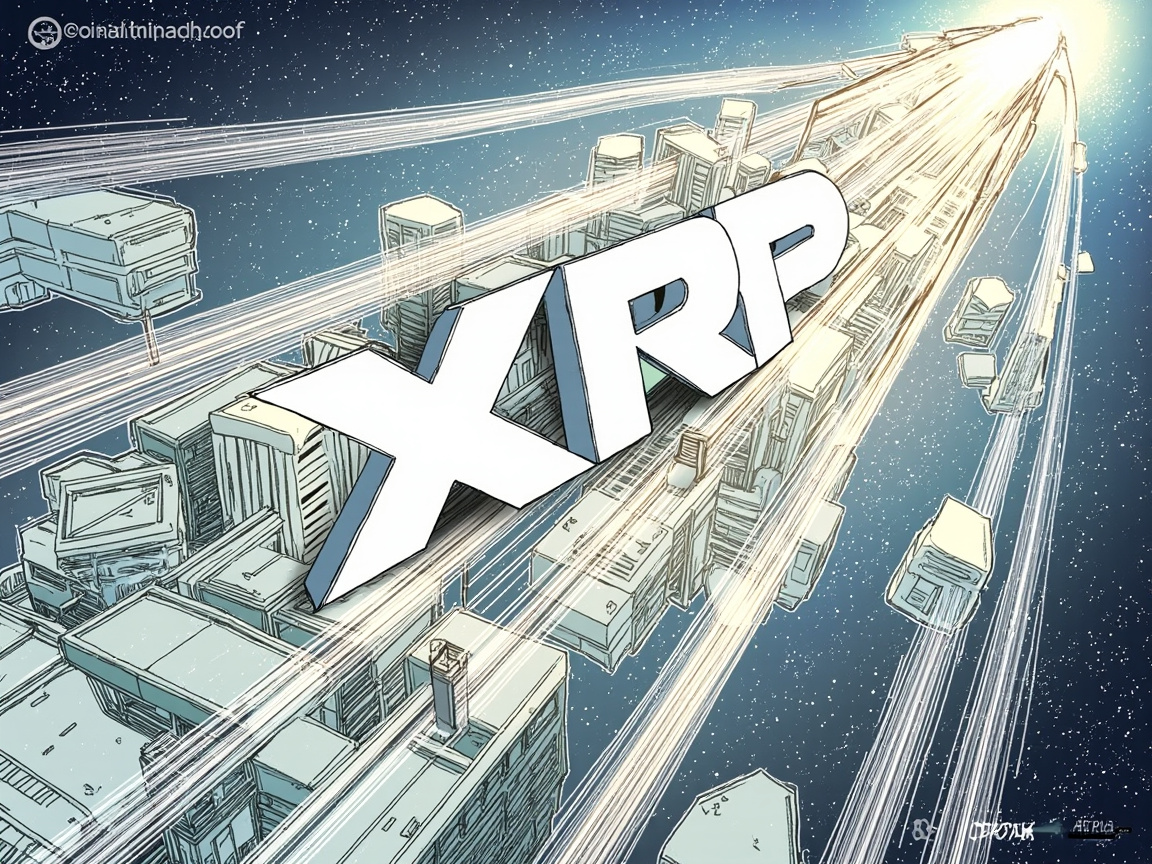
ToniTheRippler's 45-day countdown prediction isn't about technical analysis but channel expectations. The May 8 announcement he references points not to technical upgrades but potential structural entry by traditional financial channels. The 2% performance gap with Bitcoin and 50.95% gap with Ethereum reflect capital flow redistribution—once Wall Street-level distribution networks activate, liquidity organization efficiency will completely alter the game. Discussions about "XRP potentially replacing Ethereum" aren't about technical substitution but channel substitution. Ethereum's DeFi ecosystem and developer community are technical moats, but Wall Street distribution networks are capital battering rams. When traditional financial client reach intervenes, technical moats can be bypassed by capital floods. This strikes crypto's weakest link: liquidity organization, shifting from reliance on communities, tech narratives, and retail sentiment to Wall Street testing efficiency with traditional distribution networks.
## Part 2: The Real Battle Is in Client Reach, Not Product Differences
XRP vs. Ethereum competition appears as market cap ranking but is fundamentally about proximity to clients and ease of capital organization. Ethereum has an ecosystem; XRP has channel expectations. ToniTheRippler's logic implies that when traditional institutions use XRP as a crypto distribution target, client reach efficiency grows exponentially. This isn't about product quality but capital organization paths. Current crypto rankings by market cap—circulating supply times price—change slowly due to gradual capital inflow penetration. If Wall Street distribution networks operate, capital inflow speed and scale will transform this equation. XRP doesn't need to structurally replace Ethereum's ecosystem position; it just needs to dominate capital organization efficiency for market cap rankings to shift. The real battleground: traditional financial client reach networks, once systematically organizing crypto liquidity, can make technical ecosystem moats instantly irrelevant. Technology matters, but its advantages take time to materialize, while channel advantages can be realized immediately. The question isn't "Is XRP technically better than Ethereum?" but "Which one is Wall Street more willing to push?"
## Part 3: What's Next? Watch Channel Actions, Not Price Fluctuations
The 45-day countdown likely won't achieve market cap overtaking but will test channel realities. Historical experience shows lasting crypto ranking changes require long-term capital flows across multiple market cycles—45 days is too short but sufficient to test Wall Street's push willingness for XRP. What's most likely next isn't XRP surpassing Ethereum but traditional financial channel involvement becoming clearer. If there's a May 8 announcement, the focus isn't on its impact but follow-up capital speed. If channels truly operate, you'll see XRP's liquidity structure change—not through price spikes or crashes but via shifts in bid-ask depth, large trade frequency, and institutional holding ratios. Who benefits? Projects already aligned with traditional financial channels. Who's pressured? Those relying solely on communities and retail capital. Investors should watch not price charts but on-chain large transfers, exchange bulk trade data, and institutional holding reports. These indicate if channels are moving. If XRP doesn't surpass Ethereum after 45 days but institutional holdings rise significantly, channel testing succeeds—the ranking game isn't over, but the capital game has new rules. The long-term impact isn't which coin ranks where, but crypto market capital organization being reshaped by traditional financial channels. Forty-five days is too short to change rankings but enough for everyone to see—the rules are being rewritten.
| DISCLAIMER: The information on this website is provided as general market commentary and does not constitute investment advice. We encourage you to do your own research before investing. |
Recommended reading





Ethereum
2026-03-25
Ethereum
2026-04-01
Latest News