• Blockchain AI Convergence: Fact-Check & Market Guide (2026)
• SEC v. Ripple Case Ends: XRP Outlook & Monero 51% Attack (2026)
• XRP ETF Forecasts & Bitmine’s $20B ETH Bet: 2026 Analysis
• PsiQuantum has started building its million-qubit quantum facility. Scientists say a machine this po
• DoorDash, Chainlink & Oblong Market Shifts Guide (2026)
• Crypto Market News: Regulatory Shifts & Corporate Volatility (March 2026)
• DoorDash, Chainlink & Oblong Market Shifts Guide (2026)
• Crypto & Tech Market Trends 2026: Pi, XRP, Robotaxi Safety
• China's central bank says it will firmly maintain the stable operation of financial markets
• Corporate Crypto Treasuries: ETH & BTC Strategy Guide (2026)
# Cryptocurrency Evolution: A Clear Guide to Institutional Shifts and Infrastructure Growth

The digital asset landscape is currently undergoing a profound transformation, moving away from its origins as a niche interest toward a foundational component of global finance and infrastructure. This shift is characterized by three major pillars: the democratization of mining hardware, the entry of prestigious institutional endowments into the market, and the emergence of diverse corporate treasury strategies following legal resolutions. As we navigate the complexities of 2026, understanding these developments requires a balanced perspective that weighs long-term technological progress against the inherent volatility of a momentum-driven market.
Generally speaking, most experts agree that the maturation of the Bitcoin ecosystem depends on both the accessibility of its physical infrastructure and the stability of its regulatory environment. Recent moves by major players like Block and BlackRock, alongside a growing trend of corporate XRP adoption, suggest that the "utility phase" of cryptocurrency is well underway. Here are the key factors to consider as we examine the current state of the market.
## Democratizing the Network: Block’s Vision for Bitcoin Mining

One of the most significant developments in the infrastructure space is the move by Block, led by Jack Dorsey, to introduce specialized Bitcoin mining hardware through its Proto Mining division. This initiative aims to address a long-standing concern in the community: the centralization of mining power. By developing new, highly efficient mining chips, Block intends to make the process more accessible to a broader audience, thereby fostering a more decentralized and resilient network [as detailed in recent reports](https://coincentral.com/jack-dorseys-block-to-introduce-bitcoin-mining-hardware-soon/12025-08-09).
The philosophy behind this move aligns with the belief that Bitcoin should function as more than just "digital gold." During recent discussions, leadership at Block emphasized the goal of increasing the utility of the currency, positioning it as a high-speed engine for internet-native finance [as detailed in recent reports](https://coincentral.com/jack-dorseys-block-to-introduce-bitcoin-mining-hardware-soon/12025-08-09). This transition to a more active, usable currency is supported by the massive scale of Block’s existing user base; as of late, over eight million users have engaged with Bitcoin through the Cash App platform .
### Bridging the Gap Between Digital Gold and Utility
The strategy at Block extends beyond mere hardware. The company has actively integrated Bitcoin into its Square ecosystem, allowing thousands of sellers to explore Bitcoin payments . This creates a circular economy where Bitcoin is earned, spent, and mined within the same technological framework.
Furthermore, Block has demonstrated its commitment to this vision by consistently increasing its own Bitcoin reserves. The company’s holdings have grown to exceed 8,600 BTC, reflecting a conviction that Bitcoin remains the only truly decentralized form of digital money . For investors, this represents a unique case of a major public company acting as both a service provider and a primary stakeholder in the network's health.
## The Institutional Seal: Harvard’s Entry into Bitcoin ETFs
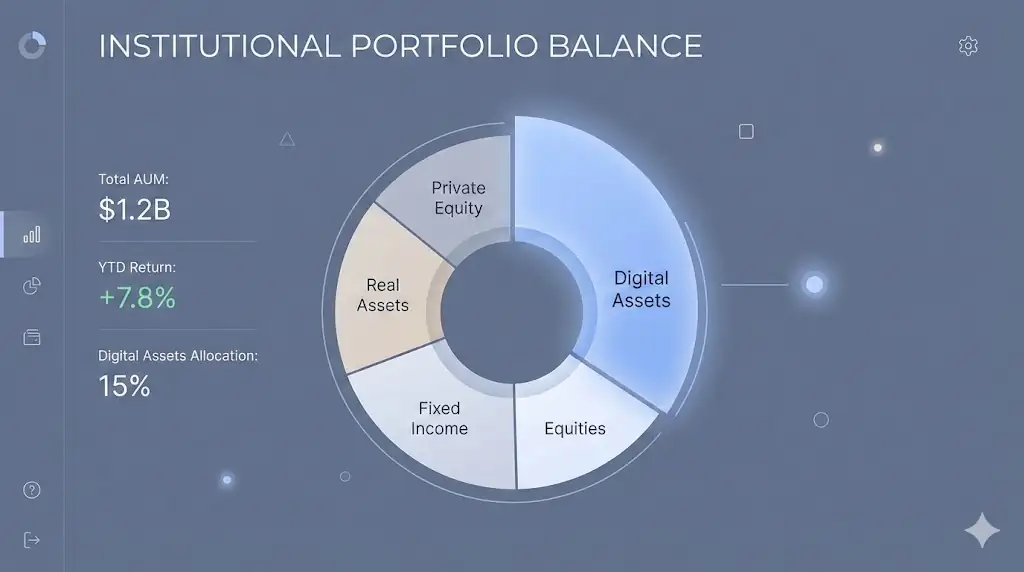
While infrastructure grows on the technical side, the financial side has seen a landmark shift with the involvement of the Harvard Management Company. Harvard’s endowment—one of the largest and most influential in the United States—disclosed an investment of approximately $116 million in BlackRock’s iShares Bitcoin Trust (IBIT) [as reported by financial news outlets](https://coincentral.com/john-deaton-criticizes-warren-as-harvard-joins-blackrocks-bitcoin-etf/12025-08-09).
This investment is noteworthy not just for its size, but for its placement. Within Harvard’s $53 billion portfolio, the Bitcoin ETF has moved into a prominent position, sitting alongside traditional tech giants like Microsoft, Amazon, and Meta [as reported by financial news outlets](https://coincentral.com/john-deaton-criticizes-warren-as-harvard-joins-blackrocks-bitcoin-etf/12025-08-09). This move signaled to the broader market that digital assets are increasingly viewed as a legitimate component of a diversified institutional portfolio.
### Regulatory Friction and the Elite Access Debate
The entry of prestigious universities into the space has sparked significant political and regulatory debate. Advocates for the industry, such as John Deaton, have pointed out the apparent contradiction between institutional adoption and the restrictive legislative efforts proposed by figures like Senator Elizabeth Warren .
Information must be cross-referenced with current guidelines, and it's important to note that while elites and institutions gain access through regulated products, the debate over 'self-custody' for everyday users remains a point of contention in Washington .
Senator Warren has previously proposed legislation that would limit the ability of individual Americans to hold their own Bitcoin keys, a move critics argue creates a two-tiered system where only "elites" at institutions like Harvard can safely benefit from the asset class . This tension highlights the importance of consulting with professional advisors as the regulatory landscape continues to shift.
## Post-Settlement Momentum: The Rise of XRP Corporate Treasuries
The resolution of the long-running legal battle between Ripple Labs and the U.S. Securities and Exchange Commission (SEC) has provided the "green light" many corporate entities were waiting for. In the wake of this settlement, we have seen a noticeable trend: companies are beginning to add XRP to their corporate balance sheets as a treasury asset, mirroring the earlier trend seen with Ethereum [following the recent legal clarity](https://coincentral.com/ripple-lawsuit-settlement-sparks-interest-in-xrp-treasury-strategy/12025-08-09).
Several firms have already disclosed their positions:
* **Quantum Biopharma**: Expanded its existing crypto portfolio (which included Bitcoin and Solana) to include XRP [following the recent legal clarity](https://coincentral.com/ripple-lawsuit-settlement-sparks-interest-in-xrp-treasury-strategy/12025-08-09).
* **Worksport Ltd**: Utilized XRP as a hedge against inflation, reporting a 15% profit on its position shortly after purchase .
* **Hyperscale Data Inc.**: Announced plans to acquire $10 million in XRP through its subsidiary, Ault Capital Group .
* **Flora Growth Corp.**: Included XRP alongside other major digital assets in its latest SEC filings .
### From Litigation to Liquidity: Why Companies are Adding XRP
For many of these businesses, the decision to hold XRP is not merely speculative. It is a strategic move to utilize the token’s liquidity and speed for cross-border financial operations. As legal clarity has been established, the "fear factor" associated with Ripple’s token has diminished, allowing it to be viewed as a foundational component of a corporate treasury strategy .
Generally speaking, most financial analysts suggest that as more corporations disclose these holdings, the momentum for digital asset treasuries will continue to grow. It provides a level of diversification that traditional fiat-only treasuries lack, particularly in environments where inflation remains a persistent concern.
## Market Analysis: Navigating Volatility and Sentiment
Despite the positive news regarding infrastructure and institutional adoption, the market in early 2026 has reminded investors of the importance of caution. Recently, Bitcoin and its associated ETFs suffered a significant decline, with the iShares Bitcoin Trust (IBIT) experiencing a one-day drop of over 13% in February 2026 [according to market analysis](https://www.morningstar.com/news/marketwatch/20260205444/bitcoin-etf-suffers-worst-decline-in-over-year-and-new-investors-are-now-sitting-on-ugly-losses).
This "nose dive" occurred as Bitcoin tumbled through the $70,000 technical support level, falling below its 50-day moving average [according to market analysis](https://www.morningstar.com/news/marketwatch/20260205444/bitcoin-etf-suffers-worst-decline-in-over-year-and-new-investors-are-now-sitting-on-ugly-losses). Experts categorize Bitcoin as a "momentum market," meaning that prices are heavily influenced by sentiment. When technology and AI-related stocks see intensified selling, Bitcoin often follows suit .
### Understanding the "Paper Gold" Comparison
To provide perspective, it is helpful to look at the history of other assets. Bloomberg analysts have compared the current skepticism surrounding Bitcoin ETFs to the "gold bugs" who once doubted the SPDR Gold Shares (GLD), calling it "paper gold" [as noted in industry coverage](https://www.theblock.co/post/316768/blackrock-ibit-spot-bitcoin-etfs-inflows). While conspiracy theories often emerge during price drops, suggesting that ETFs aren't backed by physical assets, these claims have generally been debunked by rigorous regulatory filings and audits [as noted in industry coverage](https://www.theblock.co/post/316768/blackrock-ibit-spot-bitcoin-etfs-inflows).
As of September 2024, the iShares Bitcoin Trust held over 366,000 BTC, with a fair value exceeding $23 billion [as per its official SEC filings](https://www.sec.gov/Archives/edgar/data/1980994/000143774924033812/bit20240930c_10q.htm). While recent outflows in 2026 have reached approximately $34 million, the fund remains a massive proxy for market sentiment . It's important to remember that transition to any new asset class involves periods of price discovery that can be uncomfortable for new investors.
## Conclusion: The Road Ahead for Digital Assets
The developments we are witnessing today—from Block's democratized mining hardware to Harvard's institutional backing and the corporate adoption of XRP—point toward a future where digital assets are deeply integrated into the global economy. However, a balanced approach is essential.
The "best" strategy depends on an individual's specific goals, age, and risk tolerance. While the infrastructure is becoming more robust, the market remains susceptible to rapid shifts in sentiment and liquidation events in related markets like precious metals .
### Key Takeaways for Investors:
1. **Gradual Integration**: Consider a gradual approach to any new investment.
2. **Focus on Utility**: Look past the price charts to the underlying technology, such as Block’s mining chips and Ripple’s liquidity solutions.
3. **Professional Consultation**: It is always important to consult with a qualified financial advisor before making significant changes to your portfolio.
The long-term story of Bitcoin and digital assets is increasingly about their role in portfolios as a "global monetary alternative" [as described by major asset managers](https://www.blackrock.com/us/financial-professionals/investments/products/bitcoin-investing). While the ride will undoubtedly be volatile, the foundation being built by institutions and infrastructure providers suggests a resilient path forward.
| DISCLAIMER: The information on this website is provided as general market commentary and does not constitute investment advice. We encourage you to do your own research before investing. |
Recommended reading




Markets
2026-03-07
Latest News