• Blockchain AI Convergence: Fact-Check & Market Guide (2026)
• SEC v. Ripple Case Ends: XRP Outlook & Monero 51% Attack (2026)
• XRP ETF Forecasts & Bitmine’s $20B ETH Bet: 2026 Analysis
• PsiQuantum has started building its million-qubit quantum facility. Scientists say a machine this po
• DoorDash, Chainlink & Oblong Market Shifts Guide (2026)
• Crypto Market News: Regulatory Shifts & Corporate Volatility (March 2026)
• DoorDash, Chainlink & Oblong Market Shifts Guide (2026)
• Crypto & Tech Market Trends 2026: Pi, XRP, Robotaxi Safety
• China's central bank says it will firmly maintain the stable operation of financial markets
• Corporate Crypto Treasuries: ETH & BTC Strategy Guide (2026)
# Digital Finance Evolution: A Clear Guide to Institutional Stablecoins, Federal Policy, and Asset Performance

The global financial landscape is currently navigating a period of significant structural change. From the integration of blockchain technology into traditional payment networks to the intensifying debate over domestic monetary policy, the way we perceive and interact with value is evolving. For those following the digital asset space, these developments represent more than just market fluctuations; they signal a shift toward a more interoperable and technically advanced financial future.
In this guide, we will explore three pivotal developments: Visa’s strategic expansion into the $2 trillion stablecoin market, the mounting political pressure on the Federal Reserve regarding interest rates, and Cardano's recent ascent in institutional asset rankings. By examining these topics through a logical, evidence-based lens, we can better understand the factors driving today's market dynamics.
## Visa’s Strategic Pivot: Bridging Traditional Finance and Stablecoins
As the digital economy matures, stablecoins—digital assets pegged to a stable reserve like the U.S. Dollar—have emerged as a critical tool for modern commerce. Visa, a global leader in digital payments, has signaled a significant commitment to this sector. The company is currently positioning itself to capture a share of a market that analysts believe could reach $2 trillion within the next three years, as detailed in recent market analysis [Visa Bets Big on Stablecoins as It Eyes a $2 Trillion Market](https://coincentral.com/visa-bets-big-on-stablecoins-as-it-eyes-a-2-trillion-market/12025-08-12).
### The $2 Trillion Opportunity and Global Settlement
Visa’s strategy is built on the belief that stablecoins can solve inefficiencies in traditional payment systems, particularly in emerging markets where legacy infrastructure often fails to provide adequate speed or access. While the stablecoin market currently sits at approximately $269 billion, its 62% growth over the past year highlights a clear trajectory toward broader adoption.
To facilitate this, Visa has expanded its settlement services to operate seven days a week, breaking away from the traditional five-business-day window of the banking world, a move detailed in their official announcement [Visa Launches Stablecoin Settlement in the United States, Marking a Breakthrough for Stablecoin Integration](https://investor.visa.com/news/news-details/2025/Visa-Launches-Stablecoin-Settlement-in-the-United-States-Marking-a-Breakthrough-for-Stablecoin-Integration/default.aspx). This allows financial institutions to fulfill their VisaNet obligations directly using Circle’s USDC, a fully reserved, dollar-denominated stablecoin.
### The Visa Tokenized Asset Platform (VTAP)
A cornerstone of Visa’s technological push is the Visa Tokenized Asset Platform (VTAP). Launched through the Visa Developer Platform, VTAP is a B2B solution designed to help banks mint, burn, and manage their own fiat-backed tokens on blockchain networks like Ethereum, as introduced in their official press release [Visa Introduces the Visa Tokenized Asset Platform (VTAP)](https://usa.visa.com/about-visa/newsroom/press-releases.releaseId.20881.html).
Key benefits of the VTAP system include:
- **Programmability**: Banks can use smart contracts to automate workflows, such as releasing payments only when specific conditions of a credit line are met.
- **Interoperability**: A single API allows banks to interact across multiple public and permissioned blockchains, ensuring they are not "siloed" within a single network.
- **Ease of Integration**: The platform is designed to require minimal technical overhead for existing financial institutions, a feature highlighted in BBVA's exploration of the platform [BBVA to Explore the Potential of Tokenized Money Through Visa's New Tokenized Asset Platform](https://www.bbva.com/en/innovation/bbva-to-explore-the-potential-of-visas-new-tokenized-asset-platform/).
Major global banks, such as Spain’s BBVA, have already begun testing VTAP functionalities in a sandbox environment, with plans for live pilots involving real customers expected in 2025 [^5, ^8].
### Expansion in the United States and Beyond
In the United States, Visa has officially launched USDC settlement for issuer and acquirer partners. Initial participants include tech-forward institutions like Lead Bank and Cross River Bank, which utilize the Solana blockchain for these transactions. By November 2025, Visa's monthly stablecoin settlement volume had already surpassed a $3.5 billion annualized run rate.
Furthermore, Visa’s partnership with Paxos has integrated support for PayPal USD (PYUSD) and the Global Dollar (USDG), while its multi-chain approach now includes Stellar and Avalanche in addition to Ethereum and Solana, as part of their expanded settlement support [Visa Expands Stablecoin Settlement Support](https://investor.visa.com/news/news-details/2025/Visa-Expands-Stablecoin-Settlement-Support/default.aspx). For European partners, the integration of the euro-backed EURC stablecoin provides a localized digital settlement option.
## Federal Reserve Tensions: Monetary Policy and Political Friction

While private institutions like Visa are innovating with technology, the broader economic environment remains heavily influenced by the Federal Reserve's decisions on interest rates. Recent developments have seen a sharp increase in the tension between the executive branch and the central bank’s leadership.
### The Debate Over Rate Cuts and CPI Data
The push for a Federal Reserve rate cut intensified following the release of July Consumer Price Index (CPI) data. The report showed a 2.7% year-over-year increase, which was lower than the 2.8% expected by many analysts, and a monthly fall to 0.2% from 0.3% [Fed Rate-Cut Push Intensifies as Trump Mulls Legal Action on Powell - CoinCentral](https://coincentral.com/fed-rate-cut-push-intensifies-as-trump-mulls-legal-action-on-powell/12025-08-12).
Generally speaking, lower inflation data provides the Fed with the "room" needed to lower interest rates without fear of overheating the economy. Advocates for a rate cut, including President Donald Trump, argue that the current delay in adjusting rates is causing "incalculable" economic harm. Critics of the current Fed stance point to the fact that inflation has averaged roughly 1.9% annually during specific recent periods, suggesting that the current restrictive rates may be unnecessary.
### Legal and Personal Friction: Trump vs. Powell
The relationship between the President and Fed Chair Jerome Powell has become increasingly litigious. Recent reports indicate that the President is considering a lawsuit against Powell specifically regarding the costs associated with Federal Reserve building renovations.
The controversy centers on two main points:
1. **Renovation Costs**: The project reportedly cost $3 billion, a figure the President claimed should have been a much smaller "fix-up".
2. **Allegations of Incompetence**: Beyond the renovations, Powell has faced accusations of "gross incompetence" regarding both project management and the timing of monetary policy decisions.
It’s important to note that a criminal referral to the DOJ for alleged perjury related to these renovation costs has been mentioned, adding a layer of legal complexity to an already strained relationship.
## Cardano (ADA): Institutional Recognition and Regulatory Milestones
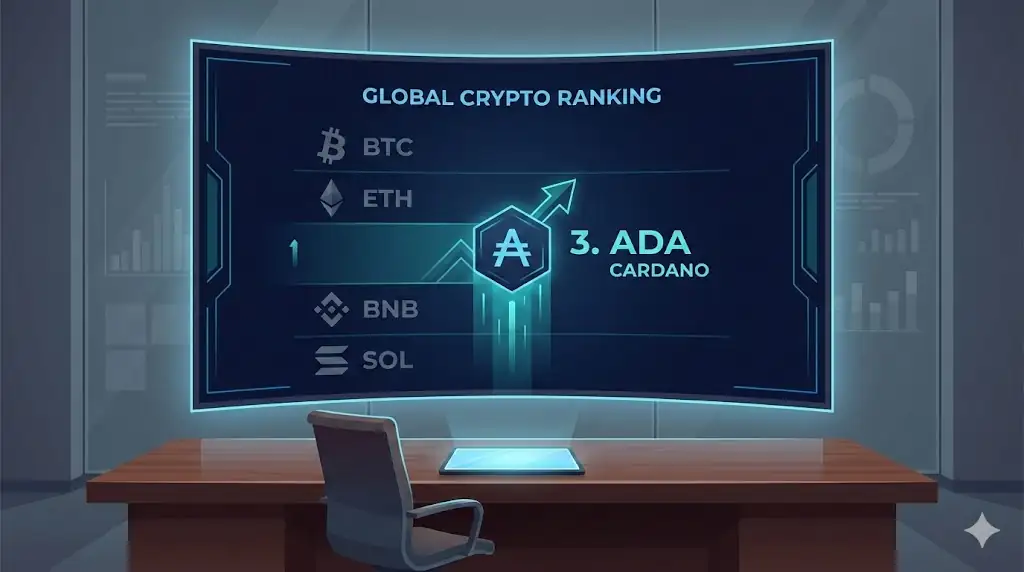
In the specific sector of digital assets, Cardano has recently demonstrated significant market resilience and institutional growth. Despite a broader market that has seen its fair share of volatility, Cardano secured a prominent position in institutional rankings.
### Grayscale’s Weekly Performance Rankings
Cardano (ADA) rose to third place in Grayscale’s "Top 10 Crypto Assets by Weekly Returns" for the period ending August 7, 2025, driven by a 6.3% gain that allowed it to jump from its previous ninth-place position [Cardano Secures 3rd Spot in Grayscale List Amid ETF Decision Speculation - CoinCentral](https://coincentral.com/cardano-secures-3rd-spot-in-grayscale-list-amid-etf-decision-speculation/12025-08-12). This performance placed it just behind XRP and Stellar, and ahead of other major assets like Dogecoin, Solana, and Bitcoin.
As of mid-August 2025, Cardano’s market capitalization stands at approximately $28.7 billion. While its year-to-date gains have slowed to roughly 6.8%, the recent momentum is attributed to technical developments and the anticipation of regulatory shifts.
### The Anticipated ADA ETF Decision
The most significant catalyst for Cardano’s current market sentiment is the U.S. SEC’s pending decision on a proposed ADA ETF. Industry analysts suggest that a verdict could arrive as early as late August, though the SEC retains the right to extend the deadline to October 23.
Currently, prediction markets like Polymarket suggest a 75% probability of an ETF approval within the month. An approval would significantly enhance Cardano’s exposure to institutional investors, similar to the impact seen with Bitcoin and Ethereum ETFs. In Grayscale's existing large-cap fund, Cardano currently holds a 0.8% allocation, a figure that would likely see adjustment following an ETF conversion.
### Network Developments and Transparency
Two other factors are contributing to the current "Cardano narrative":
- **The Midnight Protocol**: The launch of this privacy-focused protocol has added new utility to the network, appealing to users who prioritize data security.
- **The Hoskinson Audit**: Cardano founder Charles Hoskinson has confirmed that an audit report will be released later this month. This report aims to address and clarify past allegations regarding token management from 2021, providing a clean slate of transparency before major market events like the ETF decision.
## Market Impact Analysis: A Reassuring Path Forward
When we look at these three developments—Visa’s infrastructure, the Fed’s policy, and Cardano’s institutional growth—a clear picture emerges. We are seeing a "professionalization" of the digital asset space.
The fact that a global giant like Visa is processing billions in stablecoin volume suggests that these assets are moving away from speculative use cases and toward practical, everyday utility, a trend discussed in Visa's corporate vision for [Stablecoins and the Future of Onchain Finance](https://corporate.visa.com/en/solutions/crypto/stablecoins/stablecoins-and-the-future-of-onchain-finance.html). For investors, this provides a level of fundamental support that was absent in previous market cycles.
However, the path forward is rarely a straight line. The tension between the Federal Reserve and the executive branch highlights the ongoing impact of macroeconomic policy on all asset classes. Higher-for-longer interest rates can act as a "headwind" for growth-oriented assets like cryptocurrencies, while a pivot toward rate cuts—supported by cooling CPI data—could serve as a "tailwind".
## Conclusion: Staying Informed in a Changing Market
The developments we’ve discussed—Visa’s $2 trillion stablecoin ambition, the Fed’s inflation battle, and Cardano’s institutional climb—remind us that the financial world is increasingly interconnected. Technology is bridging the gap between traditional banks and blockchain, while policy and regulation continue to set the boundaries for growth.
As we look ahead to the remainder of 2026, here are some factors to consider:
1. **Monitor the Fed**: Watch for any official shifts in the Fed's stance on rate cuts, as this will influence liquidity across all markets.
2. **Observe Institutional Pilots**: Keep an eye on the BBVA and Visa pilots in 2025/2026; their success will likely dictate the speed of bank-led stablecoin adoption.
3. **Regulatory Clarity**: The decision on the ADA ETF will be a major signal for how the SEC intends to treat "third-generation" blockchains moving forward.
It is important to consult with a financial professional before making significant changes to your investment strategy. Generally speaking, a balanced approach that accounts for both technological innovation and macroeconomic reality is the most sustainable path to long-term financial health.
Always ensure you are sourcing your information from reputable, evidence-based outlets, and remember that any transition to new financial models should be handled with care and gradual implementation.
| DISCLAIMER: The information on this website is provided as general market commentary and does not constitute investment advice. We encourage you to do your own research before investing. |
Recommended reading




Markets
2026-03-07
Latest News