• Blockchain AI Convergence: Fact-Check & Market Guide (2026)
• SEC v. Ripple Case Ends: XRP Outlook & Monero 51% Attack (2026)
• XRP ETF Forecasts & Bitmine’s $20B ETH Bet: 2026 Analysis
• PsiQuantum has started building its million-qubit quantum facility. Scientists say a machine this po
• DoorDash, Chainlink & Oblong Market Shifts Guide (2026)
• Crypto Market News: Regulatory Shifts & Corporate Volatility (March 2026)
• DoorDash, Chainlink & Oblong Market Shifts Guide (2026)
• Crypto & Tech Market Trends 2026: Pi, XRP, Robotaxi Safety
• China's central bank says it will firmly maintain the stable operation of financial markets
• Corporate Crypto Treasuries: ETH & BTC Strategy Guide (2026)
# Banking Giants Navigate Turbulent Waters: HSBC's Profit Dip Meets JPMorgan's Crypto Foray

The global financial landscape is experiencing a period of significant transition, marked by traditional institutions grappling with economic headwinds while simultaneously embracing the disruptive potential of digital assets. This week, two major developments underscore this dual narrative: HSBC Holdings reported a sharp decline in quarterly profits, while JPMorgan Chase announced a landmark partnership with crypto exchange Coinbase. These events highlight the complex balancing act facing legacy banks as they manage present-day challenges and position for a future increasingly shaped by blockchain technology.
## HSBC's Q2 Performance: Restructuring Costs and Real Estate Woes Weigh on Profits

HSBC Holdings plc faced a challenging second quarter, with its stock price declining nearly 5% to $61.85 following the [earnings release](https://coincentral.com/hsbc-holdings-plc-hsbc-stock-q2-profit-falls-29-amid-impairment-loss-and-restructuring-costs/22025-07-30). The bank reported a pre-tax profit of $6.3 billion for Q2 2025, representing a significant 29% year-on-year decline and falling short of analyst expectations of $7 billion.
The primary driver of this profit drop was a substantial $2.1 billion impairment charge related to HSBC's stake in China's Bank of Communications (BoCom) . This charge followed recapitalization efforts by the Chinese government, impacting the valuation of the bank's investment. Beyond this one-time hit, HSBC's performance was further pressured by rising operating expenses, which increased by 10% year-on-year to $8.9 billion . This cost growth was attributed to severance payments tied to CEO Georges Elhedery's ongoing restructuring strategy and increased investment in technology infrastructure, only partially offset by savings from exiting businesses in Canada and Argentina .
### Rising Credit Losses and a Cautious Outlook
The bank's credit portfolio also showed signs of strain. Expected credit loss (ECL) provisions jumped to $1.1 billion in Q2, up from $0.4 billion in the same period last year . A notable portion of this increase, approximately $0.4 billion, was linked to exposure to Hong Kong's commercial real estate sector, which is facing declining rental and capital values alongside an oversupply of properties .
Despite the profit decline, HSBC's revenue held relatively steady at $16.5 billion, flat compared to Q2 2024 . The bank noted that excluding certain one-time gains from the prior year, underlying revenue actually improved. This resilience was supported by strong performances in wealth management and market trading activities. Specifically, foreign exchange and debt/equity market income benefited from market volatility, particularly in Hong Kong . The wealth and premier banking segment was a standout, with revenues climbing 19% in the first half of 2025, driven by increased trading activity among high-net-worth clients and strength in insurance .
Looking ahead, HSBC maintained its target of achieving a mid-teens return on tangible equity (RoTE) through 2027. However, management cautioned that geopolitical tensions and potential tariff scenarios under a possible future U.S. administration could pressure returns below this target . The bank now expects ECL charges to average around 40 basis points for the full year 2025 and anticipates muted lending demand for the remainder of the year . In a move to return value to shareholders, the Board approved a second interim dividend of $0.10 per share and announced a new $3 billion share buyback program to be completed before the Q3 earnings announcement .
## JPMorgan and Coinbase Forge a Path for Mainstream Crypto Access
In a stark contrast to HSBC's traditional banking challenges, JPMorgan Chase made a decisive move into the digital asset space. The bank announced a [strategic partnership with Coinbase](https://coincentral.com/coinbase-teams-up-with-jpmorgan-to-enable-direct-bank-and-card-crypto-access/12025-07-30), one of the world's largest cryptocurrency exchanges, designed to dramatically simplify crypto access for its massive customer base.
This collaboration introduces several first-of-their-kind features for Chase's over 80 million customers, representing a significant step in bridging traditional finance with the crypto ecosystem.
### Three-Pronged Integration: Cards, Rewards, and Direct Banking

The partnership will roll out in phases, beginning in the fall of 2025. The initial feature will allow Chase credit card users to fund their Coinbase accounts directly using their cards, though some transactions may be processed as cash advances depending on the cardholder's terms .
Subsequently, in 2026, two more integrated services will launch:
1. **Direct Banking Link**: JPMorgan will deploy a secure API that enables Chase customers to link their bank accounts directly to their Coinbase wallets, facilitating seamless and private fund transfers .
2. **Loyalty Point Conversion**: Chase Ultimate Rewards members will gain the ability to convert their loyalty points into cryptocurrency .
This rewards program integration is particularly noteworthy. Members will be able to redeem points for Circle's USDC stablecoin at a one-to-one points-to-dollar ratio, with the conversion occurring on Base, Coinbase's Ethereum Layer 2 blockchain . This marks the first time a major credit card loyalty program will directly fund a crypto wallet, offering users a novel way to engage with digital assets using earned value rather than direct fiat currency. This integration was highlighted in the [official partnership announcement](https://www.jpmorganchase.com/newsroom/press-releases/2025/jpmc-coinbase-partnership) and further detailed in [Coinbase's blog post](https://www.coinbase.com/blog/Coinbase-and-JPMorgan-Chase-join-forces-to-make-it-even-easier-to-access-crypto) about the collaboration.
### Strategic Implications and a Shifting Stance
Executives from both firms framed the partnership as a milestone for customer choice and financial innovation. Melissa Feldsher, Head of Payments and Lending Innovation at JPMorgan Chase, stated the collaboration empowers customers "to take control of their financial futures" and use their money "in new and exciting ways". Max Branzburg, Head of Consumer & Business Products at Coinbase, emphasized the goal of "onboarding the next generation of consumers into crypto" by lowering barriers to entry.
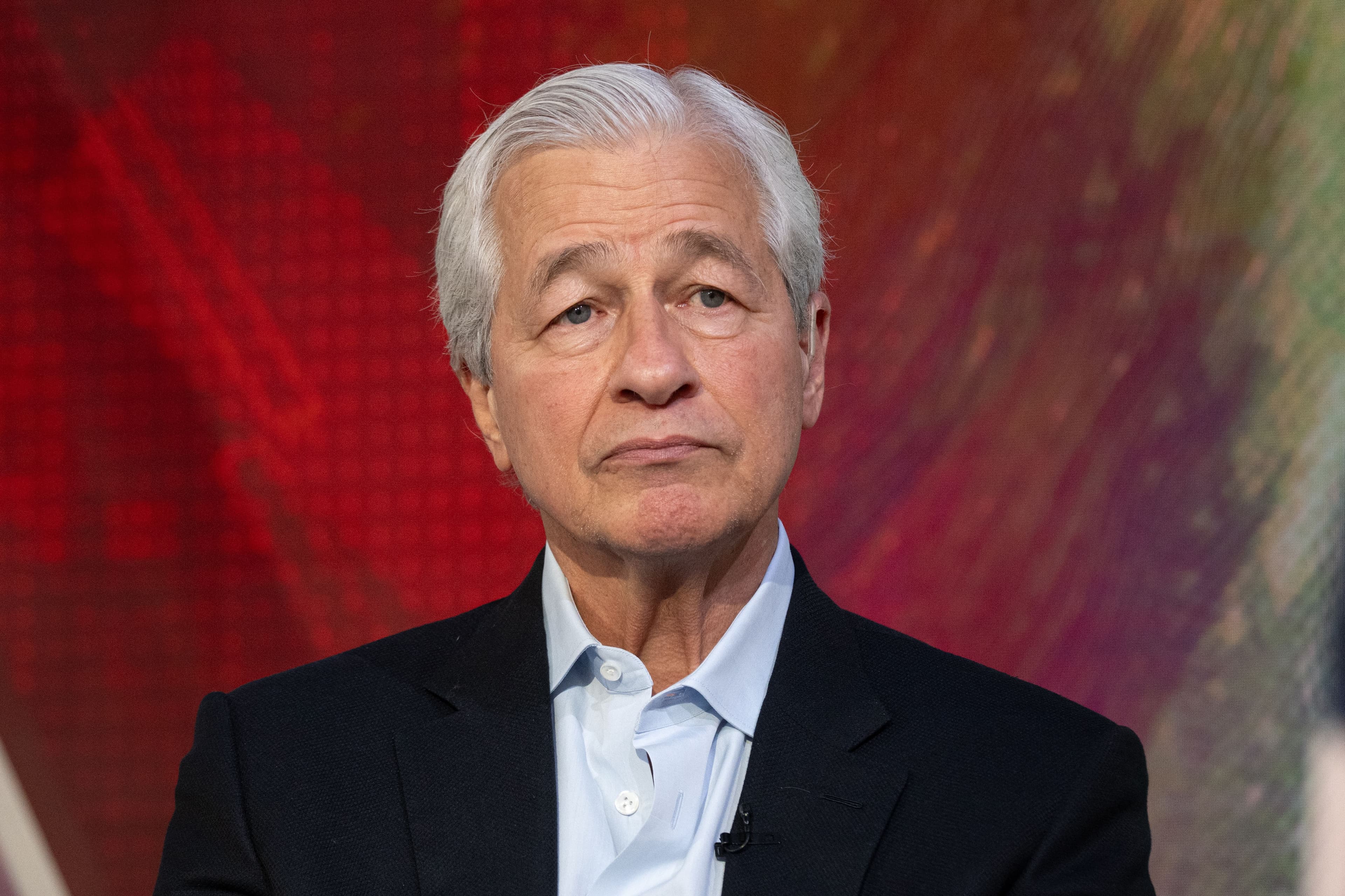
This deal signals a notable evolution in JPMorgan's approach to digital assets, despite CEO Jamie Dimon's well-documented personal skepticism about Bitcoin. The bank has been gradually expanding its crypto-related services, including exploring loans backed by Bitcoin and Ethereum and factoring digital assets into net worth evaluations for clients, as reported in a [Bitcoin Magazine article](https://bitcoinmagazine.com/news/jpmorgan-and-coinbase-announce-partnership-to-accelerate-crypto-adoption) on the partnership. The partnership with Coinbase underscores a pragmatic shift, driven by clear consumer demand and competitive pressure to not miss out on the growing digital asset ecosystem.
The announcement also comes against a favorable regulatory backdrop. The recent passage of the "Guiding and Establishing National Innovation for U.S. Stablecoins Act" (GENIUS Act) has established a federal framework for stablecoins, providing the legal clarity that makes such bank-crypto partnerships feasible, as noted in a [Quartz report](https://qz.com/chase-credit-cards-coinbase) on the deal.
## Market Ripple Effects: Crypto Sentiment and Regulatory Anticipation
The developments at these banking titans occurred alongside continued volatility and speculation in the cryptocurrency markets. XRP, for instance, demonstrated resilience, trading around $3.15 despite a minor daily dip on July 30. This followed a significant 61% surge the previous week, which saw the token peak at $3.66, according to a [price forecast analysis](https://coincentral.com/xrp-price-forecast-25m-in-longs-signal-push-toward-5-9-target/22025-07-30).
Market analysts pointed to substantial whale activity as a bullish signal. Data indicated that large investors had opened over $25 million in long positions on XRP ahead of an anticipated crypto policy update from the White House . Technical chart formations, including a bullish pennant pattern, suggested to some traders the potential for a future rally toward the $5.96 level if key resistance at $3.66 is breached .
The broader crypto market has been buoyed by shifting political winds, with Bitcoin surging more than 75% over the past twelve months . This rally has been partly fueled by expectations of a more favorable regulatory environment, making strategic moves like JPMorgan's partnership with Coinbase timely.
## Analysis: Diverging Strategies in a Converging Financial World
The simultaneous news from HSBC and JPMorgan paints a picture of a financial sector at a crossroads. HSBC's story is one of a global giant navigating the immediate pressures of a complex macroeconomic environment—contending with specific regional real estate risks, restructuring costs, and geopolitical uncertainty. Its focus remains on optimizing its traditional business lines, managing costs, and returning capital to shareholders through buybacks and dividends.
JPMorgan, while undoubtedly facing similar traditional banking challenges, is simultaneously executing a forward-looking strategy that acknowledges the growing influence of digital assets. Its partnership with Coinbase is not merely an experiment; it is a structured, multi-phase plan to integrate crypto services deeply into its existing product suite for tens of millions of customers. This move recognizes that the future of financial services is likely to be hybrid, blending legacy systems with blockchain-based innovation.
The contrast highlights a fundamental strategic question for major banks: how to allocate resources between shoring up core businesses under pressure and investing in the nascent but rapidly growing digital asset ecosystem. JPMorgan's partnership suggests a belief that the latter is now a necessity for long-term competitiveness, especially as regulatory clarity improves.
## Conclusion: A New Chapter for Finance
The week's developments underscore that the narrative for global banking is no longer monolithic. Institutions are charting distinct courses based on their geographic exposures, risk appetites, and visions for the future. HSBC's results remind us that traditional headwinds—from credit cycles to restructuring—remain potent forces. Meanwhile, JPMorgan's bold partnership with Coinbase signals that the integration of cryptocurrency into mainstream finance has moved from theoretical discussion to practical implementation.
For investors and market observers, the key takeaway is the accelerating pace of change. The walls between traditional finance (TradFi) and decentralized finance (DeFi) are becoming more porous. Partnerships like JPMorgan-Coinbase provide a blueprint for how legacy institutions can participate in the digital asset economy securely and at scale. As more banks likely follow suit, the focus will shift to execution, customer adoption, and navigating the evolving regulatory landscape. The convergence is underway, and its impact on how consumers save, spend, and invest will define the next chapter of global finance.
| DISCLAIMER: The information on this website is provided as general market commentary and does not constitute investment advice. We encourage you to do your own research before investing. |
Recommended reading




Markets
2026-03-07
Latest News