• Blockchain AI Convergence: Fact-Check & Market Guide (2026)
• SEC v. Ripple Case Ends: XRP Outlook & Monero 51% Attack (2026)
• XRP ETF Forecasts & Bitmine’s $20B ETH Bet: 2026 Analysis
• PsiQuantum has started building its million-qubit quantum facility. Scientists say a machine this po
• DoorDash, Chainlink & Oblong Market Shifts Guide (2026)
• Crypto Market News: Regulatory Shifts & Corporate Volatility (March 2026)
• DoorDash, Chainlink & Oblong Market Shifts Guide (2026)
• Crypto & Tech Market Trends 2026: Pi, XRP, Robotaxi Safety
• China's central bank says it will firmly maintain the stable operation of financial markets
• Corporate Crypto Treasuries: ETH & BTC Strategy Guide (2026)
# Navigating a Shifting Landscape: Crypto Market Pressures, Strategic Pivots, and Global Trade Tensions

**Answer Capsule**: The first week of August 2025 was marked by significant financial and economic shifts. A sharp cryptocurrency sell-off saw the total market cap drop 6.6%, driven by profit-taking and dormant wallet activity. Concurrently, Coinbase announced a major strategic pivot to become a "super app" for tokenized real-world assets, aligning with new, more permissive SEC initiatives. On the global trade front, new U.S. tariffs took effect—a 50% duty on copper imports and escalating stacked tariffs on Indian goods—introducing new cost pressures and supply chain uncertainties for global businesses.
The first week of August 2025 presented a complex tableau for global markets, marked by a significant cryptocurrency sell-off, a major strategic expansion from a leading exchange, and the implementation of new, far-reaching U.S. tariff policies. These developments, while distinct, collectively underscore a period of heightened volatility and strategic recalibration across financial and technology sectors. For investors and market observers, understanding the interplay between regulatory signals, corporate strategy, and macroeconomic policy is more critical than ever, as detailed in market analyses of the sell-off [why is crypto down today?](https://coincentral.com/why-is-crypto-down-today-heres-what-you-need-to-know-3/32025-08-01).
## A Sharp Correction Grips the Crypto Market
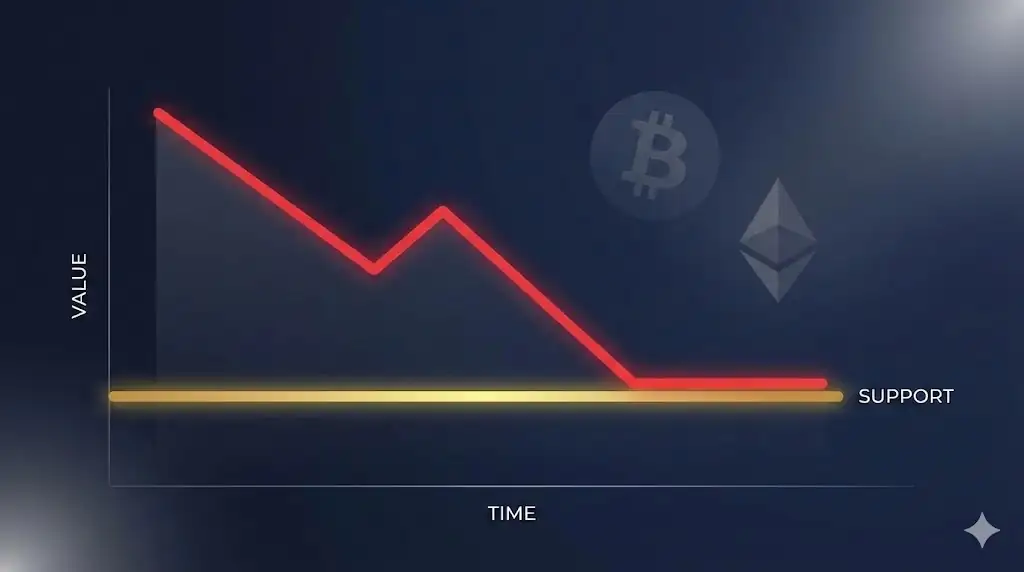
On August 1, the digital asset market experienced a pronounced downturn. The total cryptocurrency market capitalization fell by 6.6%, settling at approximately $3.8 trillion, according to market data [why is crypto down today?](https://coincentral.com/why-is-crypto-down-today-heres-what-you-need-to-know-3/32025-08-01). This broad-based sell-off triggered substantial liquidations, with over $629 million in positions being closed across exchanges—a 45% increase from the previous day .
### Key Market Movements
Major assets were not spared. The price movements for leading cryptocurrencies were as follows:
* **Bitcoin (BTC)**: Declined 2.4% to trade around $115,354.
* **Ethereum (ETH)**: Saw a 4.1% drop to $3,702.
* **Altcoins (SOL, XRP, ADA)**: Each registered losses in the range of 5-7% .
This pullback pushed the market's average relative strength index (RSI) to 35.4, a level often associated with oversold conditions, and reduced total open interest by 3% to $193 billion .
### Factors Behind the Sell-Off
Several factors converged to create this pressure:
1. **Dormant Wallet Activity**: On July 31, five wallets originating from April 2010—holding 250 BTC worth nearly $30 million—became active after 15 years of dormancy. Such movements from "Satoshi-era" wallets are rare and are frequently interpreted by the market as potential precursors to increased selling pressure .
2. **Holder Sentiment Shift**: Data indicated a shift in Bitcoin supply from long-term to short-term holders, with over 223,000 BTC moving into shorter-term wallets within a month, suggesting profit-taking or changing investor sentiment .
3. **Technical Breakdown**: Bitcoin broke below a two-week consolidation range between $117,261 and $120,000, testing a key support level near $115,000. Market observers warned that a failure to hold this level could see prices retreat toward $111,187 .
## Coinbase Announces a Transformative "Super App" Strategy
Amid the market turbulence, Coinbase, the largest U.S.-based cryptocurrency exchange, unveiled an ambitious plan to significantly broaden its offerings. In an interview, Vice President Max Branzburg outlined a vision to transform the platform into a comprehensive "exchange for everything" [Coinbase Eyes Tokenized Stocks and Derivatives in Major App Expansion](https://coincentral.com/coinbase-tokenized-stocks-derivatives-app-expansion/12025-08-01).
### The New Vision: Tokenizing Real-World Assets (RWAs)

The strategy centers on offering tokenized versions of real-world assets within a single application. The planned expansion includes:
* Tokenized stocks and derivatives.
* Tokenized commodities.
* Access to early-stage token sales.
* Integrated prediction markets and foreign exchange trading [Coinbase Eyes Tokenized Stocks and Derivatives in Major App Expansion](https://coincentral.com/coinbase-tokenized-stocks-derivatives-app-expansion/12025-08-01).
This marks a decisive shift from a crypto-native exchange to a multi-asset digital finance platform, positioning Coinbase in direct competition with fintech platforms like Robinhood and traditional exchanges venturing into digital assets.
### Regulatory Tailwinds and Business Rationale
The timing of this announcement is notable for two key reasons:
* **Regulatory Clarity**: It coincided with the U.S. Securities and Exchange Commission (SEC) unveiling "Project Crypto," an initiative designed to modernize securities regulations to better accommodate blockchain-based trading. This development is seen as creating a more permissive environment for innovations like tokenized stocks .
* **Strategic Diversification**: The move follows Coinbase's Q2 earnings report, which revealed revenue of $1.5 billion, slightly below estimates. By expanding into tokenized assets—a market some project could reach $16 trillion by 2030—Coinbase aims to build revenue streams less tied to the volatile cycles of pure cryptocurrency trading .
The rollout is set to begin for U.S. users in the coming months, with international expansion contingent on obtaining necessary regulatory approvals .
## New U.S. Tariff Policies Take Effect, Targeting Copper and India
Concurrently, new U.S. trade policies came into force, adding a layer of macroeconomic uncertainty. Two key actions were implemented.
### 1. Section 232 Tariffs on Copper
Effective August 1, a 50% tariff was imposed on imports of semi-finished copper products and copper-intensive derivatives, such as pipes, wires, cables, and electrical components, as detailed in a tax alert [US imposes tariffs on copper products](https://www.ey.com/en_gl/technical/tax-alerts/us-imposes-tariffs-on-copper-products). Key details include:
* **Basis**: A Section 232 investigation concluded that copper imports threatened to impair U.S. national security by weakening domestic production capacity, a rationale explained in legal analysis [President Trump orders 50 percent Section 232 tariff on copper imports](https://www.whitecase.com/insight-alert/president-trump-orders-50-percent-section-232-tariff-copper-imports).
* **Domestic Sales Requirement**: The proclamation directs the Department of Commerce to phase in a requirement for U.S.-produced copper input materials to be sold domestically, starting at 25% in 2027, to bolster domestic refining [US imposes tariffs on copper products](https://www.ey.com/en_gl/technical/tax-alerts/us-imposes-tariffs-on-copper-products).
* **Estimated Impact**: The U.S. Trade Office has estimated the new tariff structure could raise consumer prices by 2.1% to 3% in the short term .
### 2. Escalating Tariffs on India
Trade relations with India faced a significant escalation, implementing a "stacked duty" approach:
* **August 7**: A 25% "reciprocal" tariff takes effect.
* **August 27**: An additional 25% "penalty" tariff is levied, citing concerns over India's importation of Russian oil and military equipment, as outlined in legal advisories [President Trump Increases Tariffs on India](https://www.bhfs.com/insight/president-trump-increases-tariffs-on-india/).
* **Total Duty**: This brings the total tariff on most Indian goods to a minimum of 50% [President Trump Increases Tariffs on India](https://www.bhfs.com/insight/president-trump-increases-tariffs-on-india/).
The executive order establishes a framework for similar actions against other countries deemed to be importing Russian oil, representing a "secondary tariff" strategy to pressure U.S. trading partners, a framework detailed in trade insights [Additional Tariffs of 25% on Indian Origin Goods Effective August 27, 2025](https://www.internationaltradeinsights.com/2025/08/additional-tariffs-of-25-on-indian-origin-goods-effective-august-27-2025/).
## Market Impact and Forward-Looking Analysis
The confluence of these events creates a multifaceted environment for investors and corporations.
* **Crypto Market Sensitivity**: The immediate reaction on August 1 demonstrated the market's continued sensitivity to macroeconomic policy shifts and internal dynamics like holder behavior.
* **Corporate Strategy in Focus**: Coinbase's pivot is a forward-looking adaptation to regulatory evolution and market conditions. The success of this expansion hinges on navigating complex regulatory landscapes across multiple countries.
* **Supply Chain and Cost Pressures**: The new tariffs introduce input cost pressures for a wide range of industries. For a company like Apple, which reported strong quarterly earnings and the milestone of shipping its 3 billionth iPhone, managing such costs is paramount. Apple's strategy of diversifying production to countries like India and Vietnam may provide some insulation, though the company still reported $800 million in tariff-related costs for the quarter, as noted in its earnings report [Tim Cook Reveals Apple’s 3 Billionth iPhone Milestone Amid Strong Q3 Earnings](https://coincentral.com/apple-3-billion-iphones-q3-earnings/12025-08-01).
* **Geopolitical Trade Policy**: The heightened tariffs on India signal a more confrontational and conditional approach to U.S. trade relations, increasing uncertainty for businesses with global supply chains.
## Conclusion: A Period of Strategic Reassessment
The developments of early August 2025 highlight a market in transition. Cryptocurrency assets remain volatile, established tech giants demonstrate resilience through operational agility, and financial platforms are aggressively innovating.
For market participants, the key takeaways are the growing importance of regulatory awareness, the strategic value of diversification, and the need to account for geopolitical trade policies in risk assessments. While the short-term market reaction was negative, the longer-term trajectories for tokenization and digital asset integration appear to be gaining institutional and regulatory momentum. Navigating this landscape requires careful consideration of both emerging opportunities and the evolving framework of risks.
| DISCLAIMER: The information on this website is provided as general market commentary and does not constitute investment advice. We encourage you to do your own research before investing. |
Recommended reading






Markets
2026-03-07
Latest News