• Blockchain AI Convergence: Fact-Check & Market Guide (2026)
• SEC v. Ripple Case Ends: XRP Outlook & Monero 51% Attack (2026)
• XRP ETF Forecasts & Bitmine’s $20B ETH Bet: 2026 Analysis
• PsiQuantum has started building its million-qubit quantum facility. Scientists say a machine this po
• DoorDash, Chainlink & Oblong Market Shifts Guide (2026)
• Crypto Market News: Regulatory Shifts & Corporate Volatility (March 2026)
• DoorDash, Chainlink & Oblong Market Shifts Guide (2026)
• Crypto & Tech Market Trends 2026: Pi, XRP, Robotaxi Safety
• China's central bank says it will firmly maintain the stable operation of financial markets
• Corporate Crypto Treasuries: ETH & BTC Strategy Guide (2026)
# Digital Asset Markets and Self-Custody: A Clear Guide to Modern Onchain Participation

The landscape of digital assets is currently undergoing a significant transformation, balancing the introduction of simplified technical tools with the complexities of global macroeconomic shifts. For many participants, the transition from traditional finance to decentralized platforms has often felt like a daunting hurdle due to the technical requirements of self-custody. However, recent advancements in developer infrastructure and legislative clarity are beginning to bridge this gap. Generally speaking, most experts agree that as the "onchain" economy matures, the focus must shift toward accessibility and clarity for the everyday user.
This guide explores the latest developments in wallet technology, the institutional movements influencing major assets like Ethereum, and the broader economic factors currently weighing on market sentiment. As always, while these trends provide helpful context, it is important to consult with your financial advisor before making significant changes to your digital asset strategy.
## The Evolution of User-Friendly Self-Custody
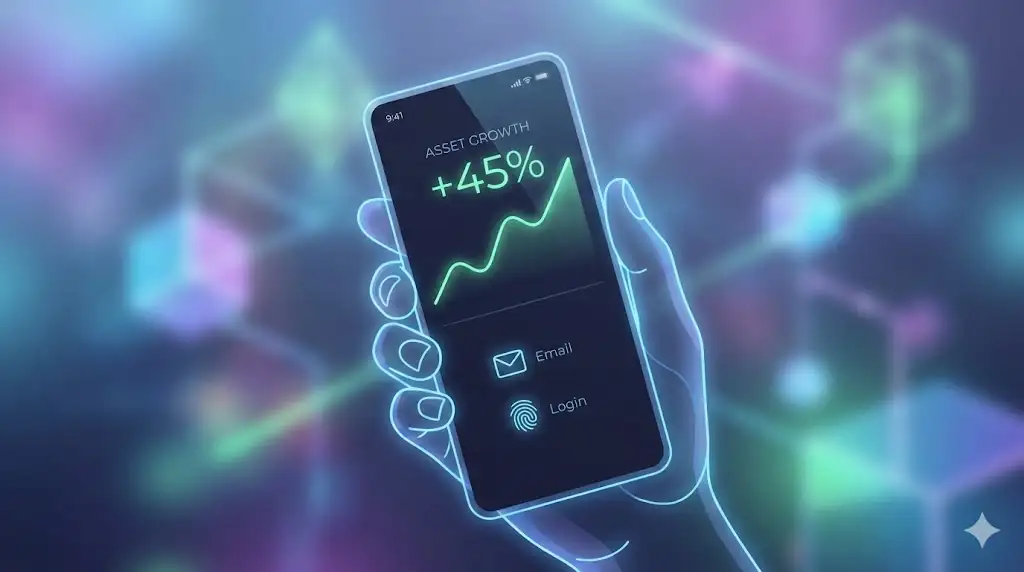
For years, the primary barrier to digital asset adoption was the "seed phrase"—a string of words that acted as the master key to a user's funds. While secure, this method placed a heavy burden on the individual, where a single lost piece of paper could mean the permanent loss of assets. To address this, new technologies are emerging that aim to make "onchain" interactions as simple as logging into a standard website.
### Simplifying Onboarding through Embedded Wallets
Coinbase has recently launched an Embedded Wallets software developer kit (SDK) through its Coinbase Developer Platform (CDP) to streamline how users interact with Web3 applications. This tool allows developers to integrate self-custodial wallets directly into their apps, allowing users to sign up using familiar methods like email, SMS, or OAuth (social logins).
Some of the key benefits of this approach include:
* **Invisible Wallet Creation**: Wallets can be generated in under 500 milliseconds without the need for browser extensions or complex setup procedures.
* **User Control**: Despite the simplified login, these remain user-custodied. Users maintain the ability to export their keys, ensuring they are not "locked in" to a single platform.
* **Built-in Utility**: The SDK includes integrated crypto onramps for fiat conversion, token swapping, and the ability to earn yield directly within the application.
From a technical perspective, this infrastructure provides enterprise-grade security by using advanced cryptographic operations where keys are stored locally on the user's device. This setup avoids the "honeypot" risk of centralized databases while offering the convenience of modern web applications.
### Legislative Tailwinds: The CLARITY and GENIUS Acts
The push for better tools is coinciding with significant legislative momentum in the United States. Two key pieces of legislation, the CLARITY Act and the GENIUS Act, are providing a much-needed regulatory framework.
The CLARITY Act is particularly relevant for proponents of self-custody, as it establishes a legal guarantee for individuals to hold their own digital assets without being forced to use an intermediary. Many industry observers see this as a foundational step for peer-to-peer transactions and decentralized finance (DeFi). Meanwhile, the GENIUS Act focuses on dollar-backed stablecoins, creating a more predictable environment for the "digital dollar" infrastructure that many global payment systems are now adopting.
## Ethereum Price Dynamics: Corporate Adoption vs. Institutional Outflows
While the underlying technology is becoming more accessible, the price action for major assets like Ethereum (ETH) continues to experience volatility. Recently, Ethereum has struggled to maintain support above the $3,700 level, creating a cautious environment for both short-term traders and long-term holders.
### SharpLink Gaming’s $300 Million ETH Strategy
One of the more striking developments in the Ethereum ecosystem is the aggressive acquisition strategy adopted by SharpLink Gaming. The esports marketing firm recently purchased approximately 83,561 ETH tokens, valued at roughly $300 million. This move has positioned SharpLink as one of the largest corporate holders of Ethereum globally, second only to firms like BitMine.
Here are some factors to consider regarding corporate Ethereum treasuries:
1. **Staking as Revenue**: Unlike Bitcoin, which is often held as a "store of value," companies like SharpLink are staking their Ethereum to generate rewards. Since June, the company has reportedly earned nearly 930 ETH through staking.
2. **Long-Term Conviction**: SharpLink has expressed intentions to expand its holdings further, seeking SEC approval for an at-the-market facility that could reach $6 billion.
3. **Market Impact**: Interestingly, even large corporate buys of $300 million have occasionally been insufficient to overcome broader selling pressure from other institutional sectors.
### Technical Resistance and Support Levels
For those following price trends, the technical picture for Ethereum has shown signs of bearish momentum in the short term. Despite the corporate demand, US spot Ethereum ETFs experienced a record single-day outflow of $465 million on a recent Monday, ending a long streak of positive inflows.
Analysts are currently watching several key indicators:
| Indicator | Level | Significance |
|:--- |:--- |:--- |
| **Resistance** | $3,620 | Immediate resistance level. |
| | $3,750 | A more significant "ceiling." A break above is needed to test $4,000. |
| **Support** | $3,510 | A major support zone. |
| | $3,094 | A critical point for maintaining the current bullish market structure. |
The futures market has seen heightened volatility, with over $108 million in liquidations in a 24-hour window, largely affecting those with "long" positions.
## Navigating the Current Market Downturn
Broad market conditions have recently turned defensive. On August 6, 2025, the total cryptocurrency market capitalization saw a decline of approximately $83 billion, bringing the total cap down to $3.65 trillion. This shift highlights how sensitive digital assets remain to traditional economic data and geopolitical news.
### Macroeconomic Pressures and Seasonal Patterns
The recent downturn can be attributed to a combination of factors that have reduced the "appetite for risk" among investors. Here are the primary drivers identified by market analysts:
* **Tariff Uncertainty**: Announcements regarding potential trade tariffs have introduced uncertainty into global markets, causing investors to move toward safer assets like the US dollar.
* **Weak Economic Data**: US ISM Non-Manufacturing PMI data came in lower than expected. This has raised concerns about "stagflation"—a challenging economic scenario where growth slows but inflation remains persistent.
* **Monetary Policy**: With the Federal Reserve opting to maintain higher interest rates, liquidity has been tighter, making speculative investments less attractive compared to traditional yield-bearing assets.
* **Seasonal Weakness**: Historically, August is a month of lower trading volumes and seasonal weakness for the crypto sector. This lack of liquidity can often lead to sharper price swings on less significant news.
### Performance Across Major Assets
During this period of volatility, Bitcoin (BTC) failed to break its $115,000 resistance level. Technical indicators, such as the Parabolic SAR, have signaled a potential downtrend that could see Bitcoin testing support near $111,187.
Altcoins have generally faced steeper declines than Bitcoin. For instance, while Ethereum dropped roughly 2.43%, other large-cap assets like XRP saw declines of 4%. High-risk sectors, including SocialFi tokens and "meme coins," experienced even more significant retreats, with some tokens losing over 10% of their value in a single day. On the other hand, some investors see these corrections as a natural part of a healthy market cycle, allowing for "price discovery" and the exit of over-leveraged positions.
## Maximizing Assets: The Expansion of USDC Rewards
In a volatile market, many participants look toward stablecoins as a way to preserve capital while still earning a return. USD Coin (USDC), which is pegged 1:1 to the US dollar, has become a central tool for this strategy.
Coinbase has recently expanded its rewards program for USDC holders, notably into the Canadian market. Canadian users can now earn a base reward of 4.1% annualized on their USDC holdings. For those enrolled in premium subscription services, this rate can reach up to 4.5% on certain balance amounts.
It is important to note how these rewards programs typically function:
* **Liquidity**: Unlike traditional certificates of deposit (CDs), these rewards programs often have no "lock-up" periods, meaning users can spend or withdraw their funds at any time.
* **Developer Incentives**: In the US, developers using the Coinbase Developer Platform can also earn rewards (currently up to 3.35%) on balances held within embedded or server wallets.
* **Safety Features**: USDC is backed by reserves of cash and short-term US treasuries held in regulated institutions, distinguishing it from more volatile or "algorithmic" stablecoins.
## Conclusion: Looking Ahead at Onchain Finance
The current state of the digital asset market is a study in contrasts. We are seeing institutional-grade tools like Coinbase's Embedded Wallets make self-custody more accessible than ever, while simultaneously navigating a complex macroeconomic environment that tests the resilience of even the most established assets.
As the industry moves forward, the integration of digital assets into daily financial life seems increasingly likely, supported by new legislative frameworks and a shift toward user-centric design. However, market volatility remains a constant companion to innovation. Always ensure that you are making decisions based on your individual risk tolerance and long-term goals.
A balanced approach typically includes staying informed on both the technical advancements and the economic indicators that drive price action. Transitioning to new financial tools or strategies should always be done gradually and with a clear understanding of the underlying risks and benefits.
| DISCLAIMER: The information on this website is provided as general market commentary and does not constitute investment advice. We encourage you to do your own research before investing. |
Recommended reading





Markets
2026-03-07
Latest News