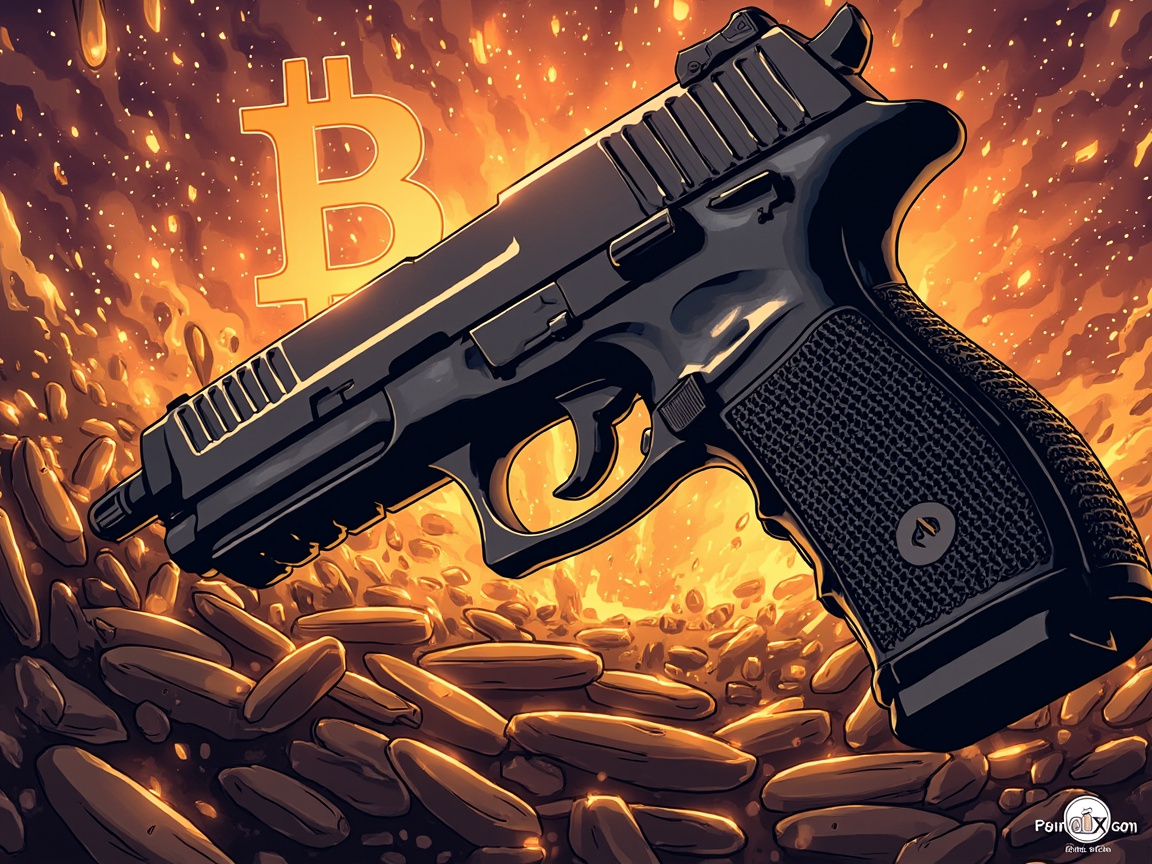
• Thai-listed company DV8 has announced plans to build a corporate treasury of 10,000 Bitcoin.
• Blockchain AI Convergence: Fact-Check & Market Guide (2026)
• Anthropic Discontinues Subscription Support for Third-Party Tools
• DoorDash, Chainlink & Oblong Market Shifts Guide (2026)
• DoorDash, Chainlink & Oblong Market Shifts Guide (2026)
• SEC v. Ripple Case Ends: XRP Outlook & Monero 51% Attack (2026)
• XRP ETF Forecasts & Bitmine’s $20B ETH Bet: 2026 Analysis
• PsiQuantum has started building its million-qubit quantum facility. Scientists say a machine this po
• Crypto Market News: Regulatory Shifts & Corporate Volatility (March 2026)
• Crypto & Tech Market Trends 2026: Pi, XRP, Robotaxi Safety
## 1. This Isn't a Fee Cut—It's Wall Street's Direct Clearance
Bitcoin has oscillated between $60K and $73K over the past five weeks, with the Fear & Greed Index dropping to 8. Many still analyze technicals or seasonal patterns—April historically shows strength, with gains in 10 of the past 15 years averaging 20.9%.
But the data is now obsolete because the battlefield has changed.
After Trump's speech, the top ten tokens fell across the board, with SOL dropping over 5%. This is no longer mere 'news-driven impact'—it's Wall Street's mature risk-pricing models indiscriminately covering crypto assets. They don't need to understand blockchain; they just package Bitcoin, Ethereum, and SOL as 'high-risk volatile assets' into global asset allocation volatility models.
Iran tensions? The Strait of Hormuz nearly halted, blocking 20% of global seaborne crude trade, with the IEA's 32 members initiating their largest strategic reserve release in 50 years—these are traditional market scripts for oil and gold, now directly applied to Bitcoin.
When Saudi royalty says 'an unprecedented shock with almost no buffer,' Wall Street listens. So when they sell, they don't just dump oil—they sell Bitcoin, Ethereum, and BNB together. To these institutions, these are all 'risk assets' with no fundamental difference.
This is the real dimensional strike: not about fee levels, but about who controls pricing power.
## 2. The Real Game: Survival Goes to Those Closest to the Money
Many still compare which exchange has better products or which chain has stronger performance.
It's futile.
The real contest is about who is closer to clients and who can organize capital more easily. Wall Street's strength has never been technology—it's distribution networks. They have channels to pension funds, insurance capital, and family offices. This money doesn't need to understand smart contracts; it just needs a compliant product that fits existing risk-control systems.
BlackRock and Fidelity launching spot ETFs aren't doing charity—they're building pipelines. Once these pipelines are established, capital flows will no longer be driven by community sentiment but by these institutions' asset allocation models.
If the model says 'reduce risk assets,' Bitcoin falls. If it says 'increase inflation hedges,' gold rises, and Bitcoin might follow—not because Bitcoin is exceptional, but because it's categorized into the 'anti-inflation asset' basket.
This is the cruelest part: your value is no longer determined by your technology, but by others' classification.
So stop debating 'Is Bitcoin digital gold?' To Wall Street, it is. They need it to be, so it must be.
## 3. What's Next: Who Gets Squeezed, Who Gets Bargains
The market will fragment, and violently so.
**First, small-cap tokens will face sustained pressure.**
Wall Street money only recognizes liquidity. Bitcoin and Ethereum have enough depth to handle large capital flows. SOL and BNB are second-tier, but SOL's 5.2% drop post-Trump shows less liquid assets fall harder during institutional sell-offs.
Smaller tokens? They might be forgotten entirely.
**Second, exchange wars will shift from retail to institutional clients.**
Exchanges once competed for retail with fees and promotions. Now they'll compete for institutional clients with compliance, custody, and clearing capabilities. Survival goes to those securing 'supplier' status within Wall Street's system—no amount of retail volume can offset a single pension fund order.
**Third, volatility will become more 'predictable.'**
Crypto volatility was once emotion-driven and erratic. Now it will increasingly resemble traditional markets: moving with macro data, interest rate expectations, and geopolitical risk premiums.
Trump's speech is just the beginning. Upcoming Fed meetings, non-farm payrolls, and CPI releases will become 'reasonable reasons' for Bitcoin's moves—because Wall Street needs these to adjust model parameters.
**What should investors watch?**
Stop staring at charts—watch capital flows.
Monitor ETF net inflows/outflows, on-chain large transfer address types, and institutional holding reports. This data will grow more transparent and critical, because where money comes from determines where prices go.
One final note: Crypto isn't dead—it's just grown up. The cost of growing up is learning to play by others' rules. Adapt or exit.
| DISCLAIMER: The information on this website is provided as general market commentary and does not constitute investment advice. We encourage you to do your own research before investing. |
Recommended reading







Ethereum
2026-02-26
Latest News