• Blockchain AI Convergence: Fact-Check & Market Guide (2026)
• SEC v. Ripple Case Ends: XRP Outlook & Monero 51% Attack (2026)
• XRP ETF Forecasts & Bitmine’s $20B ETH Bet: 2026 Analysis
• PsiQuantum has started building its million-qubit quantum facility. Scientists say a machine this po
• DoorDash, Chainlink & Oblong Market Shifts Guide (2026)
• Crypto Market News: Regulatory Shifts & Corporate Volatility (March 2026)
• DoorDash, Chainlink & Oblong Market Shifts Guide (2026)
• Crypto & Tech Market Trends 2026: Pi, XRP, Robotaxi Safety
• China's central bank says it will firmly maintain the stable operation of financial markets
• Corporate Crypto Treasuries: ETH & BTC Strategy Guide (2026)
# Digital Asset Markets: A Clear Guide to China’s Regulatory Shift and Ethereum’s Growth

In the evolving landscape of global finance, digital assets continue to present both significant opportunities and complex challenges. The current market phase is one of maturation, where institutional adoption is increasing even as regulators tighten their oversight to prevent instability. For any participant in this space, understanding recent shifts—from China's renewed focus on stablecoins to Ethereum's price milestones—is essential for navigating the risks and rewards effectively.
## Understanding China’s Latest Regulatory Interventions
China has maintained a consistently firm stance toward decentralized digital assets for several years. Recently, this posture has intensified as financial regulators directed local brokerage firms and think tanks to halt the promotion and research of stablecoins [as reported by financial news outlets](https://coincentral.com/china-orders-local-firms-to-halt-stablecoin-promotions-and-research/12025-08-08). This move is part of a broader strategy to cool what authorities perceive as a "frenzy" surrounding these dollar-pegged assets.
### The Rationale Behind the Research Halt
The China Securities Regulatory Commission (CSRC) and the People’s Bank of China (PBOC) have expressed concerns that stablecoins could become vehicles for fraudulent activities and illicit fundraising [according to sources familiar with the matter](https://www.businesstimes.com.sg/companies-markets/banking-finance/china-tells-brokers-stop-touting-stablecoins-cool-frenzy-sources). In late July and early August 2025, leading institutions received guidance to cancel seminars and stop sharing research reports related to the asset class [based on these same reports](https://www.businesstimes.com.sg/companies-markets/banking-finance/china-tells-brokers-stop-touting-stablecoins-cool-frenzy-sources).
Several factors appear to be driving this caution:
* **Preventing Herd Mentality**: Policymakers are concerned that a "herd rush" into assets that investors may not fully understand could lead to systemic instability .
* **Capital Controls**: Stablecoins, particularly those backed by the U.S. dollar, can facilitate unregulated capital outflows, which challenges the integrity of China’s exchange rate management [as analyzed in policy discussions](https://english.ckgsb.edu.cn/knowledge/article/china-crypto-policy-and-hong-kong-digital-assets/).
* **Protection of the e-CNY**: The rise of private "right of coinage" through stablecoins is viewed as a direct challenge to China’s official digital currency project, the e-CNY [following concerns raised by Beijing](https://www.electronicpaymentsinternational.com/news/chinese-tech-giants-halt-stablecoin-plans/).
### The Role of the "Two-Zone" Strategy
Despite the mainland’s strict prohibitions, China has utilized Hong Kong as a "regulatory sandbox" or a controlled laboratory for digital asset experimentation [in a strategic approach](https://english.ckgsb.edu.cn/knowledge/article/china-crypto-policy-and-hong-kong-digital-assets/). On August 1, 2025, Hong Kong officially launched a comprehensive licensing regime for stablecoin issuers through the Hong Kong Monetary Authority (HKMA) [as detailed in their official framework](https://www.sidley.com/en/insights/newsupdates/2025/08/hong-kong-implements-new-regulatory-framework-for-stablecoins).
This creates a unique "two-zone" approach:
* **Mainland China**: Zero-tolerance for domestic trading and promotion to maintain stability and centralized control .
* **Hong Kong**: A regulated gateway allowing state-backed firms and international players to test blockchain-based innovations under strict supervision .
However, even this experimental path has faced headwinds. Major Chinese tech companies like Ant Group and JD.com reportedly paused their plans to issue stablecoins in Hong Kong following briefings from PBOC officials [as industry news indicated](https://www.electronicpaymentsinternational.com/news/chinese-tech-giants-halt-stablecoin-plans/). This highlights the ongoing tension between financial innovation and the state's desire to maintain a centralized financial architecture.
## Security Risks in DeFi: The CrediX Finance Incident
While regulatory shifts provide the framework for the market, the technical security of individual protocols remains a primary concern for investors. On August 4, 2025, the decentralized finance (DeFi) protocol CrediX Finance experienced a significant exploit that resulted in the loss of approximately $4.5 million [in a major security breach](https://coincentral.com/credix-team-disappears-after-4-5-million-exploit-and-website-goes-offline/12025-08-08).
### Anatomy of the Exploit
The breach involved a compromise of the protocol’s multisig admin wallet. According to blockchain security firm CertiK, this compromise allowed the attackers to grant themselves administrative and "bridge" roles via the ACLManager [as detailed in their analysis of the incident](https://coincentral.com/credix-team-disappears-after-4-5-million-exploit-and-website-goes-offline/12025-08-08). With these permissions, the attackers were able to:
1. Mint unbacked tokens.
2. Use these tokens as collateral to drain liquidity pools.
3. Transfer the stolen assets from the Sonic network to Ethereum addresses .
In response to the exploit, the CrediX team initially paused their website and communicated through social media that they had reached an agreement with the attacker to return the funds in exchange for a treasury payment . They reassured users that a reimbursement airdrop would occur within 24 to 48 hours .
### The Disappearance and Market Impact
Unfortunately, the situation took a concerning turn when the CrediX team went silent. The official website remains offline, and social media accounts have become inactive, leading to fears of an "exit scam" . This incident has significantly impacted investor confidence within the DeFi sector, which has already seen billions of dollars lost to similar exploits in 2025 .
Currently, Stability DAO is leading an investigation into the incident, collaborating with legal authorities and other protocols like Sonic Labs and Euler to trace the stolen funds . This serves as a reminder that even protocols with "multisig" protections require rigorous oversight and transparency to ensure user safety.
## Ethereum’s Milestone: Reaching the $4,000 Mark

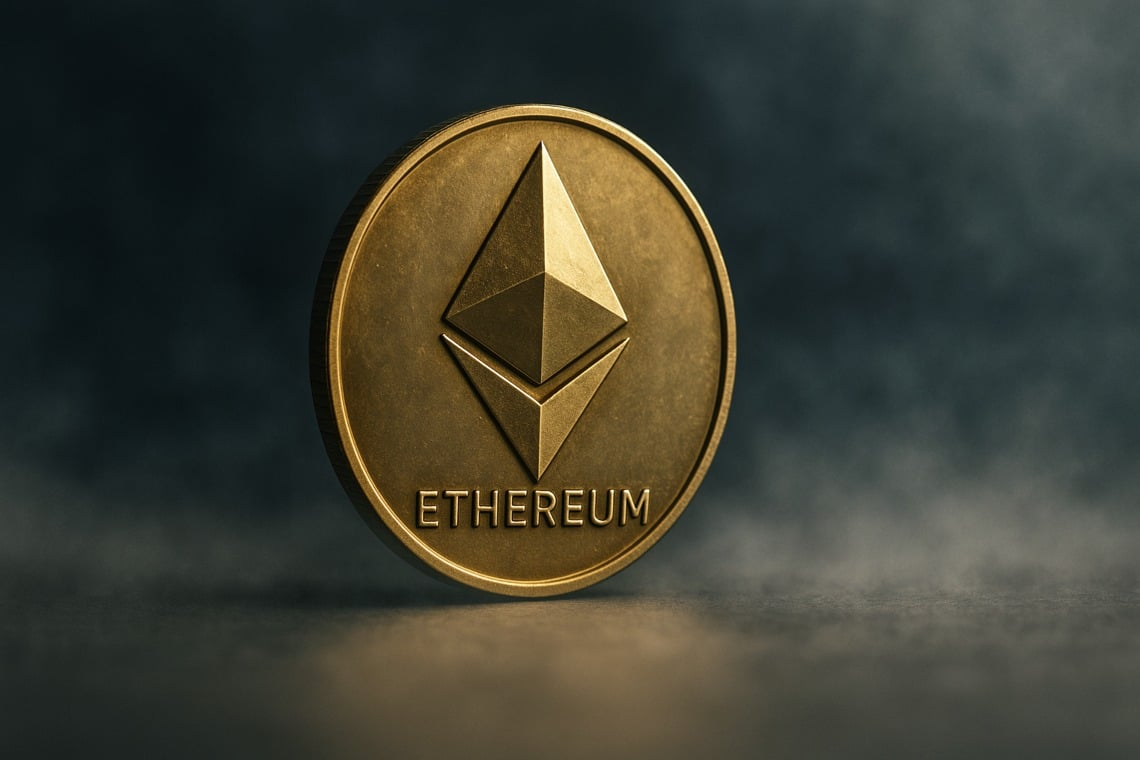
On a more positive note for the ecosystem, Ethereum (ETH) reached a significant price milestone on August 8, 2025, breaking the $4,000 mark for the first time in eight months [marking a key recovery](https://coincentral.com/ethereum-price-breaks-4000-mark-for-first-time-since-december-2024/12025-08-08). This rally reflects a 50% gain over a 30-day period, driven by a combination of institutional interest and increased network activity.
### Factors Driving the Price Surge
Several developments have contributed to Ethereum’s recent performance:
* **Institutional Accumulation**: Large entities have begun incorporating ETH into their corporate treasuries. For example, SharpLink Gaming recently added $265 million in ETH, bringing its total holdings to nearly $1.9 billion [as part of this trend](https://coincentral.com/ethereum-price-breaks-4000-mark-for-first-time-since-december-2024/12025-08-08).
* **Increased Network Utility**: Blockchain activity has surged, with a significant increase in users participating in staking and DeFi applications .
* **Market Dominance**: As Bitcoin’s market dominance dipped below 61%, Ethereum’s share of the total crypto market cap has continued to rise, signaling a shift in investor preference toward the leading smart-contract platform .
### Looking at the Technical Signs
Analysts have noted that Ethereum’s market dominance (ETH.D) has been forming a "falling wedge" pattern on monthly charts, which often precedes a breakout to the upside . While ETH remains roughly 18% below its 2021 all-time high of $4,878, the current momentum suggests a strong macro uptrend .
| Metric | Current Value (Aug 8, 2025) | 30-Day Change |
| :--- | :--- | :--- |
| **ETH Price** | $4,000+ | +50% |
| **Market Dominance** | Rising | Outpacing Bitcoin |
| **Network Transactions** | Projected >12 Million/week | Significant Increase |
### The Role of Institutional Treasuries in Market Stability
One of the most notable trends in 2025 is the adoption of Ethereum as a treasury asset, a strategy popularized by Bitcoin-focused firms like MicroStrategy. The inclusion of billions of dollars worth of ETH by companies such as SharpLink Gaming and BitMine Immersion suggests that Ethereum is increasingly viewed as a "blue-chip" digital asset .
Generally speaking, institutional backing provides a level of price support that retail trading alone often cannot maintain. These large-scale purchases are often part of a long-term strategy, reflecting confidence in the network's future upgrades and its role in the global financial infrastructure.
However, it is important to consider that institutional participation also brings a different set of dynamics to the market, including increased correlation with traditional financial indices and potential sensitivity to broader macroeconomic shifts.
## Considerations for the Future
As we look ahead, the interplay between innovation and regulation will likely define the next phase of the digital asset market. The contrast between China’s restrictive mainland policies and Hong Kong’s new regulatory framework provides a fascinating case study in how different jurisdictions manage financial risk.
### Key Factors to Watch
* **Hong Kong Licensing Outcomes**: While over 40 applications have been submitted for stablecoin licenses, the HKMA has indicated that only a small number may be approved initially [as outlined in their implementation plan](https://www.hkma.gov.hk/eng/news-and-media/press-releases/2025/07/20250729-4/).
* **Regulatory Evolution in the US**: Recent federal legislation in the United States aims to "cement American dominance" in the stablecoin space, which may prompt further responses from Chinese regulators .
* **DeFi Security Standards**: The CrediX exploit highlights the need for more robust, standardized security protocols to protect retail investors from administrative compromises .
### A Balanced Perspective
It's important to recognize that no investment is without risk. While Ethereum’s surge to $4,000 is an encouraging sign of growth, the sudden disappearance of the CrediX team serves as a stark reminder of the vulnerabilities inherent in less-regulated corners of the market.
Always ensure you are looking for signs of transparency and third-party security audits when exploring new protocols. An investor should scrutinize the security and regulatory standing of a digital asset with care.
## Conclusion
The recent developments in China, the exploit of CrediX Finance, and Ethereum’s price recovery illustrate a market that is simultaneously professionalizing and facing growing pains. China’s move to halt stablecoin promotion emphasizes a priority on stability and state-led digital currency, while Ethereum’s growth demonstrates the enduring appeal of decentralized utility for institutional investors.
It's important to consult with a financial advisor or a qualified professional before making significant changes to your investment strategy. Every individual’s financial health depends on a plan tailored to their specific goals and risk tolerance. Generally speaking, a balanced approach—prioritizing security and staying informed of regulatory shifts—is the most sustainable way to participate in the digital asset ecosystem.
| DISCLAIMER: The information on this website is provided as general market commentary and does not constitute investment advice. We encourage you to do your own research before investing. |
Recommended reading


Ethereum
2026-03-16
Ethereum
2026-03-20
Latest News