• Blockchain AI Convergence: Fact-Check & Market Guide (2026)
• SEC v. Ripple Case Ends: XRP Outlook & Monero 51% Attack (2026)
• XRP ETF Forecasts & Bitmine’s $20B ETH Bet: 2026 Analysis
• PsiQuantum has started building its million-qubit quantum facility. Scientists say a machine this po
• DoorDash, Chainlink & Oblong Market Shifts Guide (2026)
• Crypto Market News: Regulatory Shifts & Corporate Volatility (March 2026)
• DoorDash, Chainlink & Oblong Market Shifts Guide (2026)
• Crypto & Tech Market Trends 2026: Pi, XRP, Robotaxi Safety
• China's central bank says it will firmly maintain the stable operation of financial markets
• Corporate Crypto Treasuries: ETH & BTC Strategy Guide (2026)
# Ethereum's August Surge Meets September Reality Check: A Market Analysis

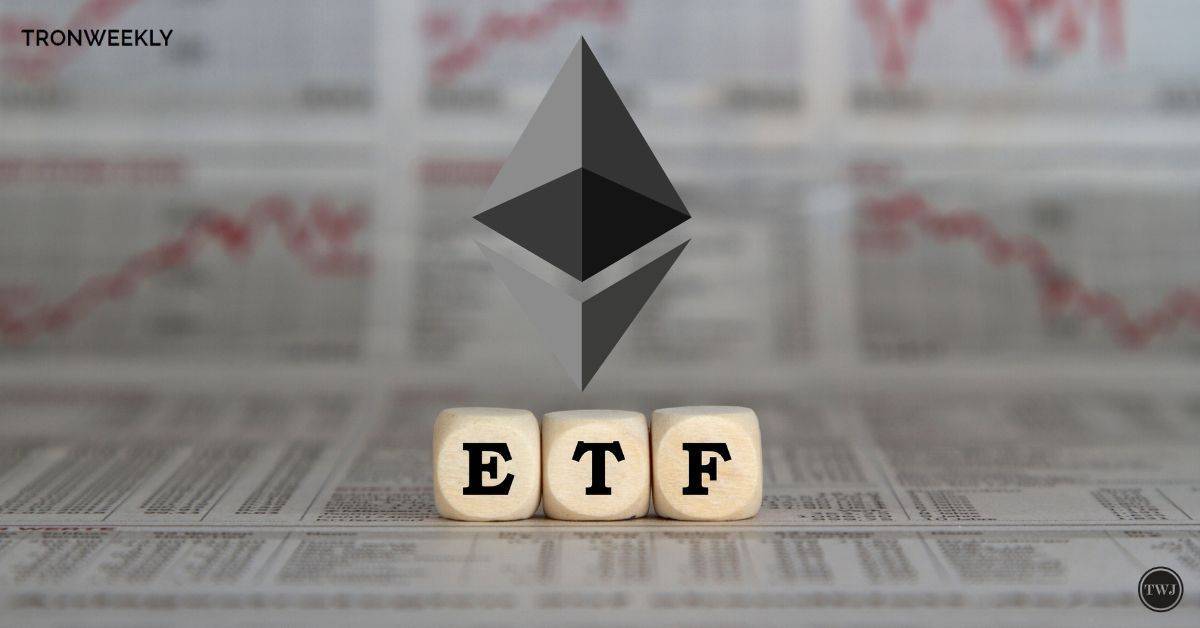
**Answer Capsule**: The cryptocurrency market in August 2025 was defined by a powerful institutional rush into Ethereum, driven by record ETF inflows and a massive $1.34 billion whale purchase, pushing ETH toward its all-time high. However, September delivered a sharp reversal, with ETF inflows collapsing from $3.9 billion to just $285 million and the price experiencing significant volatility. This analysis explores the key drivers of this dramatic swing, including macroeconomic catalysts, contrasting asset performance, and significant ecosystem developments, highlighting the nascent and sentiment-sensitive nature of the institutional crypto market.
The cryptocurrency market in August 2025 was dominated by a powerful narrative: the unstoppable rise of Ethereum. Fueled by record-breaking institutional inflows and a landmark whale purchase, ETH appeared poised to shatter its all-time high. However, the subsequent month delivered a stark reminder of market volatility, as momentum sharply reversed. This analysis explores the key developments that defined this period, from the peak of institutional frenzy to the sobering September slowdown, and examines the underlying market dynamics at play.
## A Record-Setting August: Institutional Demand and Whale Activity

August 2025 will be remembered as a month of extraordinary institutional accumulation for Ethereum. Data from VanEck indicates that Ethereum Exchange-Traded Products (ETPs) attracted over $4 billion in net inflows during the month, a figure that starkly contrasted with approximately $600 million in outflows from Bitcoin ETPs [according to their monthly recap](https://www.vaneck.com/us/en/blogs/digital-assets/matthew-sigel-vaneck-crypto-monthly-recap-for-august-2025/). This massive capital movement helped push the total net assets across U.S. spot Ether ETFs to a record $29.22 billion and contributed to a significant drop in Bitcoin's market dominance from 65% to 57% [as reported by TradingView](https://www.tradingview.com/news/cointelegraph:3e38064e1094b:0-spot-ether-etfs-rack-up-3b-in-august-as-eth-hits-yearly-high/).
The fervor was not limited to regulated funds. Crypto intelligence platform Lookonchain reported a stunning accumulation by a single, newly emerged entity. Over eight days, this "whale" purchased 312,052 ETH, worth approximately $1.34 billion, through ten newly created wallets [in a move detailed by CoinCentral](https://coincentral.com/crypto-whale-buys-1-34b-in-ethereum-ahead-of-key-us-inflation-data/12025-08-12). This purchase volume notably exceeded the $1 billion single-day net inflow record set by U.S. spot Ether ETFs earlier in the same period. Analysts suggested such aggressive buying could propel Ethereum toward testing its previous all-time high of $4,890, as the price rallied to a yearly peak of $4,765.83.
This institutional rush was part of a broader trend of Digital Asset Treasury (DAT) strategies. In August alone, strategic reserve companies increased their share of ETH's supply by 50%, adding roughly 1.4 million ETH to corporate treasuries. This activity underscored a growing narrative of Ethereum as a viable, yield-generating treasury asset for corporations.
## The Inflation Data Catalyst and Conflicting Economic Views
The aggressive accumulation in early August occurred against a backdrop of anticipation for key U.S. inflation reports. Market participants were keenly watching the Consumer Price Index (CPI) and Producer Price Index (PPI) data for clues on the Federal Reserve's upcoming interest rate decision . The released CPI figure of 2.7% for July, slightly below the 2.8% forecast, was interpreted by many as a positive signal that could pave the way for interest rate cuts, potentially boosting risk assets like cryptocurrencies [as noted in market analysis](https://coincentral.com/strong-cpi-results-dispute-robert-kiyosakis-great-depression-outlook/12025-08-12).
This data sparked a public divergence in economic outlooks. Venture capitalist Anthony Pompliano pointed to the strong CPI number and record market highs as evidence disputing predictions of an imminent economic collapse. His view contrasted sharply with the persistent warnings of author Robert Kiyosaki, who reiterated his forecast of an approaching "Great Depression," citing concerns over bond market downgrades and a flight to assets like gold and Bitcoin . This debate highlighted the uncertain macroeconomic environment within which crypto markets were operating.
## The September Reversal: Momentum Collapses

The exuberance of August met a sharp correction in September. According to Blockworks Research, monthly inflows into Ethereum ETFs collapsed from $3.9 billion in August to just $285 million in September, marking one of the steepest reversals since the funds launched [as their report details](https://blockworks.co/news/ethereum-etf-momentum-collapses). This slowdown was part of a broader negative trend; the final week of September saw Ethereum ETFs lose $800 million in outflows, while Bitcoin ETFs posted $900 million in outflows.
The price action mirrored this flow reversal. ETH experienced a peak-to-trough drawdown of nearly 20% in September before a late-month rally softened the blow, leaving the token down approximately 3.5% for the month overall . Analysts described the market as "flows-driven," where secondary market activity in the ETFs was dictating near-term price action . James Butterfill, Head of Research at CoinShares, noted that options expirations at month-end can precipitate outflows, a pattern that may have contributed to the September shift .
The divergence between Bitcoin and Ethereum ETFs widened during this period. Bitcoin ETFs demonstrated more resilience, rebounding to $3.5 billion in net inflows for September despite the weak final week . Butterfill linked some of Bitcoin's relative strength to shifting macro expectations, with weaker economic data raising prospects for more aggressive Federal Reserve rate cuts .
## Ecosystem Developments and Altcoin Dynamics
Beyond ETF flows, August and September featured significant developments within specific crypto ecosystems that influenced market dynamics.
### The Shiba Inu LEASH Controversy
The Shiba Inu community was roiled by an unexpected 10% increase in the supply of its LEASH token on August 11. Developer Kaal Dhairya explained that a hidden rebase pathway in the old smart contract, previously believed to be disabled, was responsible [in a clarification reported by CoinCentral](https://coincentral.com/shiba-inu-developer-clears-the-air-on-leash-supply-adjustment-concerns/12025-08-12). The incident, which contradicted long-held beliefs about the token's fixed supply, sparked concerns over centralization and diluted value for holders. In response, Dhairya proposed a community vote via the project's Decentralized Autonomous Organization (DAO) to decide on creating a new, audited "LEASH v2" contract to prevent future surprises .
### Centralized Exchange (CEX) Tokens Outperform
Amid the volatility, tokens native to centralized exchanges posted remarkable gains. According to VanEck data, OKB and Cronos (CRO) surged 248% and 112% respectively in August, far outpacing the flat or negative returns of publicly traded CEX equities like Coinbase . These rallies were fueled by major ecosystem upgrades:
* **OKB**: OKX overhauled its X Layer network, making OKB its exclusive gas token and executing a massive token burn to fix its supply .
* **CRO**: Crypto.com's CRO benefited from an announced partnership with Trump Media & Technology Group for a DAT accumulation strategy .
Analysts caution, however, that CEX tokens carry unique risks, including potential opacity in supply dynamics and a history of catastrophic losses linked to exchange failures, as seen with FTX and Celsius .
### Solana's Technical Challenges
While Ethereum captured headlines, Solana (SOL) faced competitive headwinds. Its price significantly lagged behind ETH's surge, with the SOL/ETH ratio falling . Analysts attributed this to:
1. Ethereum's dominance in institutional narratives (like DATs and tokenization).
2. The migration of perpetual futures traders to platforms like Hyperliquid, which offered a more reliable user experience for leveraged trading .
In response, the Solana ecosystem began rolling out its "Alpenglow" upgrade, aimed at improving network speed, stability, and tokenomics .
## Market Impact and Forward-Looking Analysis
The dramatic swing from August's inflows to September's slowdown underscores the nascent and sentiment-sensitive nature of the cryptocurrency ETF market. The events demonstrate that while the introduction of regulated products has brought substantial institutional capital, it has also created a new channel for rapid capital rotation that can amplify volatility in the short term.
The contrasting performance of Bitcoin and Ethereum ETFs in September suggests that Bitcoin continues to be viewed by many institutions as the more resilient, macro-driven "digital gold" asset, while Ethereum's flows are more susceptible to shifts in risk appetite and narrative-driven trading. The resurgence of corporate treasury buying (DATs) for ETH presents a parallel, potentially more stable source of demand that could provide a floor during ETF outflow periods .
Looking ahead, several factors will be critical for Ethereum's trajectory:
* **Macroeconomic Policy**: The Federal Reserve's interest rate path remains a primary driver for all risk assets. Softer economic data that encourages rate cuts could reinvigorate institutional inflows.
* **Regulatory Clarity**: Progress on frameworks like the U.S. CLARITY Act could improve investor confidence in the broader ecosystem, including CEX-related tokens .
* **Ethereum Network Development**: Successful implementation of upgrades like Ethereum Improvement Proposal 7928, which promises parallel transaction processing, could significantly enhance the network's utility and long-term value proposition .
* **Continued Institutional Adoption**: The sustainability of the DAT trend and potential approval of spot ETFs for other assets, like Solana, will influence capital allocation across the crypto market.
The period from August to September 2025 served as a powerful case study in crypto market maturation. It showcased the profound impact of new institutional vehicles, the speed at which narratives and capital can shift, and the ongoing interplay between technological innovation, macroeconomic forces, and market psychology. While the September slowdown tempered the August euphoria, the underlying trend of increasing institutional involvement suggests that volatility, though pronounced, is now unfolding within a market of greater scale and sophistication.
| DISCLAIMER: The information on this website is provided as general market commentary and does not constitute investment advice. We encourage you to do your own research before investing. |
Recommended reading






Ethereum
2026-03-16
Ethereum
2026-03-20
Latest News