• Blockchain AI Convergence: Fact-Check & Market Guide (2026)
• SEC v. Ripple Case Ends: XRP Outlook & Monero 51% Attack (2026)
• XRP ETF Forecasts & Bitmine’s $20B ETH Bet: 2026 Analysis
• PsiQuantum has started building its million-qubit quantum facility. Scientists say a machine this po
• DoorDash, Chainlink & Oblong Market Shifts Guide (2026)
• Crypto Market News: Regulatory Shifts & Corporate Volatility (March 2026)
• DoorDash, Chainlink & Oblong Market Shifts Guide (2026)
• Crypto & Tech Market Trends 2026: Pi, XRP, Robotaxi Safety
• China's central bank says it will firmly maintain the stable operation of financial markets
• Corporate Crypto Treasuries: ETH & BTC Strategy Guide (2026)
# Digital Assets and Global Payments: A Clear Guide to Institutional Shifts

The digital asset landscape is maturing as payment giants like Visa integrate stablecoins into global infrastructure, supported by new U.S. regulatory frameworks like the GENIUS Act. While institutional players are actively accumulating assets like Solana (SOL) during periods of price consolidation, broader market leaders like Bitcoin and Ethereum continue to see strong backing through spot ETFs. This guide explores how these strategic expansions and accumulation patterns are bridging the gap between traditional finance and blockchain technology, creating a more stable and regulated environment for digital transactions and long-term investment.
## Visa Broadens Payment Infrastructure with New Stablecoin Support
In a move that underscores the growing institutional acceptance of blockchain-based assets, Visa has significantly expanded its digital payment capabilities. This development allows users to [send and receive payments](https://coincentral.com/visa-doubles-down-on-digital-payments-with-new-stablecoin-support/12025-08-01) using specific digital tokens and convert balances into traditional fiat currency through Visa's established infrastructure.
Generally speaking, the expansion of supported blockchain networks is even more impactful than the addition of individual tokens. Visa clients can now access stablecoin services via the Avalanche and Stellar networks, building upon existing support for Ethereum and Solana. This multi-chain approach reflects a strategic recognition that no single blockchain will likely dominate the future of digital payments.
### Key Factors in Visa's Expansion
Here are some factors to consider regarding this shift in the payment landscape:
- **New Stablecoin Support**: Inclusion of PayPal USD (PYUSD), Paxos-issued USDG, and Circle’s Euro Coin (EURC) .
- **Enhanced Interoperability**: Integration with Avalanche (high throughput) and Stellar (cross-border focus) .
- **Regulatory Clarity**: The passage of the GENIUS Act has provided the first comprehensive federal framework for stablecoin issuance in the U.S., allowing companies like Visa to operate with greater confidence .
- **Market Competition**: Competitors like Mastercard have reportedly tokenized 30% of their transactions, while retail giants like Walmart and Amazon explore their own digital currency solutions .
## Solana Demonstrates Resilience Amidst Institutional Accumulation

While payment networks build new rails, the underlying cryptocurrency markets are experiencing shifts in ownership. Solana (SOL) presents a compelling case of institutional conviction appearing to outweigh short-term market volatility. Despite recent price weakness, institutional players have been [accumulating the asset](https://coincentral.com/solana-sol-price-institutional-buyers-add-367-million-as-token-tests-170-support/22025-08-01) in substantial volumes.
Data reveals a striking trend in asset movement:
| Metric | Recent Data Point |
| :--- | :--- |
| Exchange Outflow | ~2.03 million SOL (~$367 million) left exchanges in one week |
| Institutional Activity | DeFi Dev Corp added 181,000 tokens to a $218M+ position |
| Critical Support Zone | Horizontal support currently sits between $170 and $175 |
| Liquidation Risk | A 5% price increase could trigger a "short squeeze" at $185-$190 |
On the other hand, it is important to note that the derivatives market tells a slightly more cautious story. While spot market accumulation is high, funding rates are approaching negative territory, suggesting that short-term traders remain hesitant .
## Broader Market Leaders Cement Their Positions
The institutional narrative extends well beyond Solana. In early 2026, the market is being defined by clear leadership from established assets, each bolstered by distinct fundamental drivers.
### Summary of Market Leaders
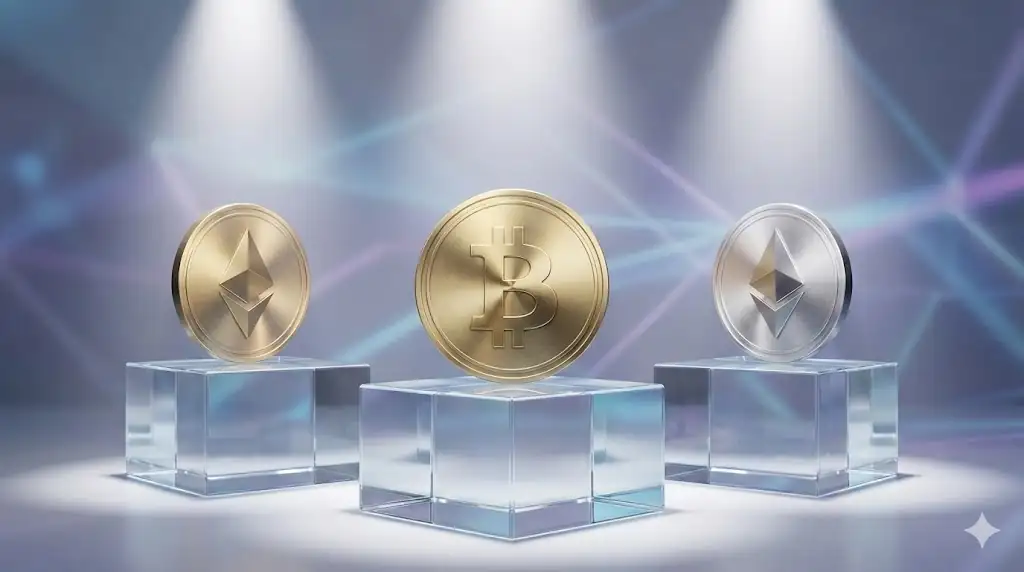
1. **Bitcoin (BTC)**: Continues to function as "digital gold." With a market cap near $2.2 trillion, consistent buying pressure from U.S. spot ETFs remains a primary catalyst for price stability within the $114,700 to $118,283 range.
2. **Ethereum (ETH)**: Solidifies its role as the leading smart contract platform. Predictions suggest a move toward $7,000 by late 2025/early 2026, driven by network demand and strategic "whale" accumulations .
3. **XRP & Cardano (ADA)**: Both assets are benefiting from enhanced regulatory standing. XRP’s inclusion in the U.S. strategic crypto reserve has provided significant credibility, while Cardano’s compliance profile supports bullish outlooks as privacy sidechain development progresses .
## Looking Ahead: A Maturing Ecosystem
The confluence of these developments paints a picture of a market entering a new phase of maturity. Visa's expansion is not an isolated corporate strategy; it reflects a broader trend toward the seamless integration of blockchain-based settlement into mainstream financial infrastructure.
For those navigating this space, it is helpful to look for signs of sustained growth rather than focusing solely on daily price fluctuations. The building blocks for institutional-driven growth—regulatory clarity, infrastructure development, and ETF accessibility—are now largely in place.
As always, the "best" approach to digital assets depends on an individual's specific goals and risk tolerance. It is important to consult with a financial advisor or market expert before making significant investment decisions, and always ensure you are using secure, reputable platforms for managing your assets.
| DISCLAIMER: The information on this website is provided as general market commentary and does not constitute investment advice. We encourage you to do your own research before investing. |
Recommended reading


Altcoins
2026-03-12
Latest News